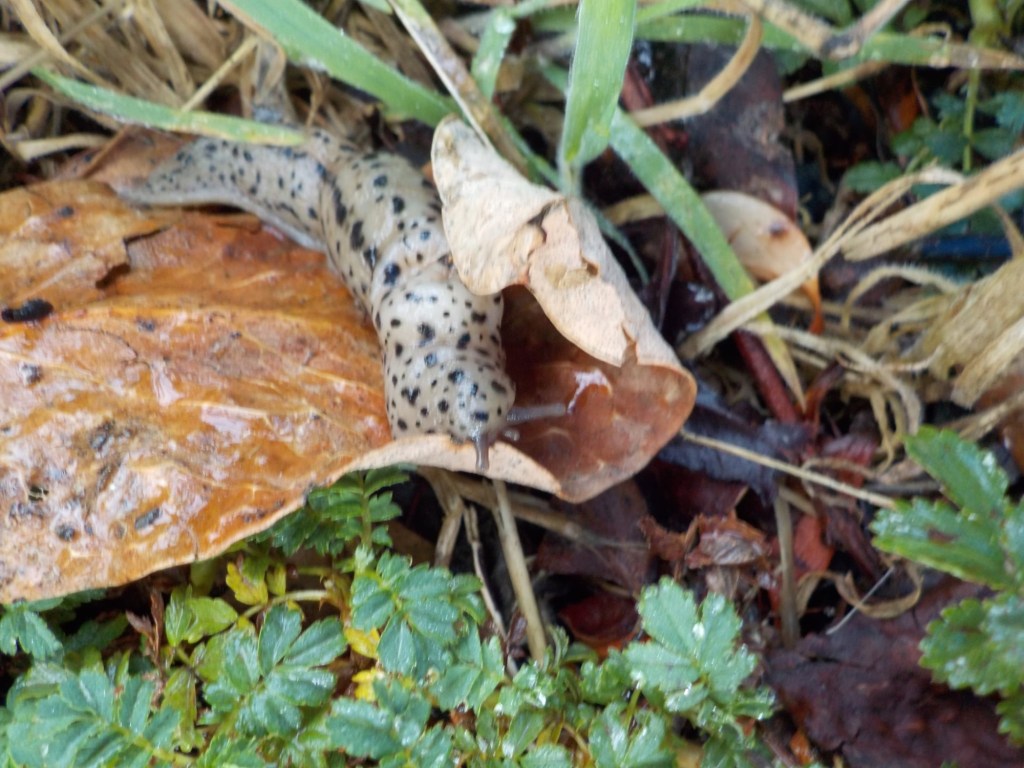
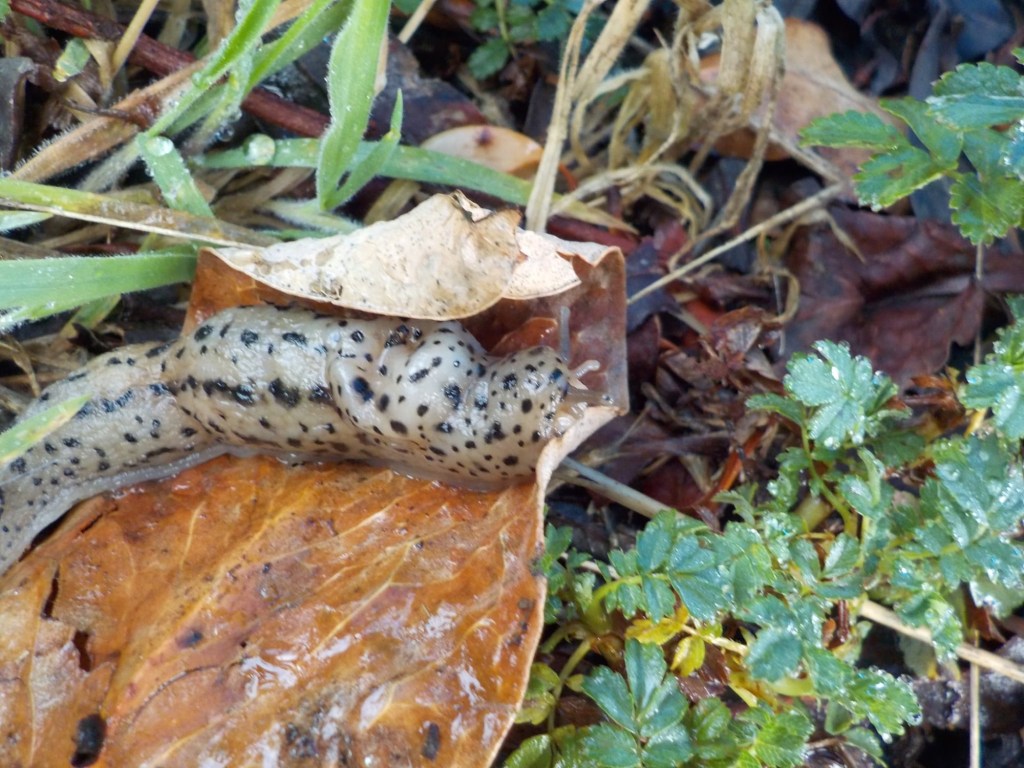
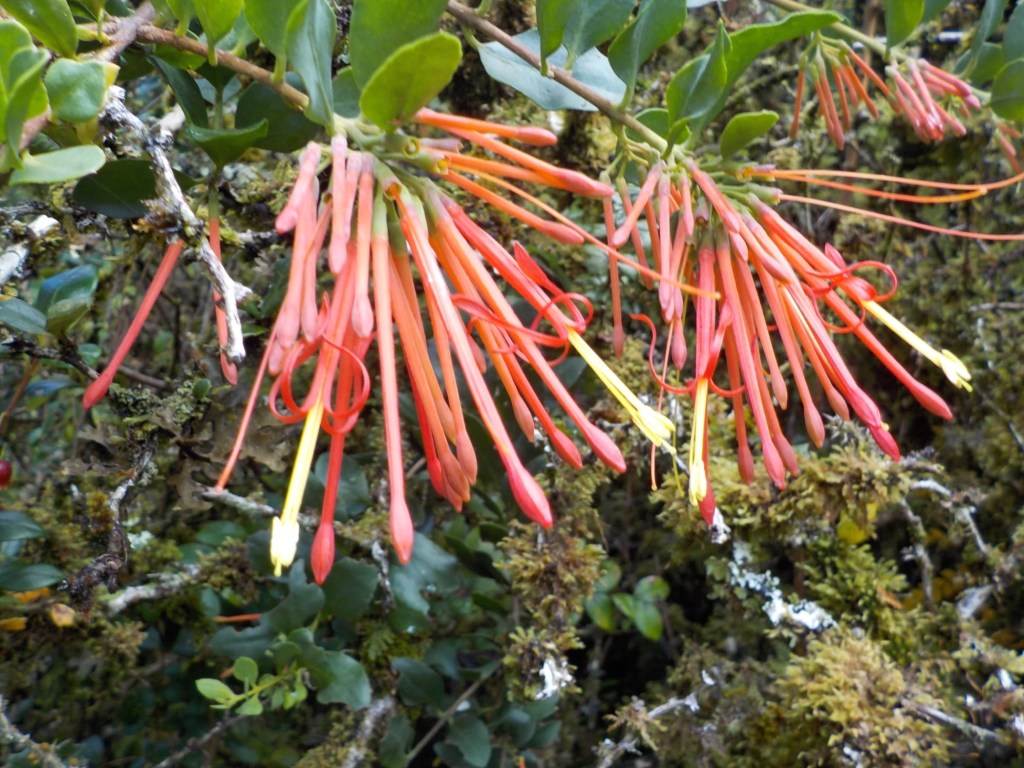
We woke up early and I found a beautiful leopard slug (Limax maximus) in the vestibule outside of our tent. We waited until the sun came out to have breakfast and watched the small hummingbird, Green-backed Firecrown (Sephanoides sephaniodes), eat nectar from the fuchsia bushes (Chilco – Fuchsia magellanica) next to our tent. We then got ready for the walk into the park and the hikes there. Nikolás told us that we were not allowed to bring the motorcycles into the park (we had paid for two vehicles for two days each of park entry as it was not mentioned on the website that motorcycles were not permitted in the park – donation for the park, I guess 😉👍)
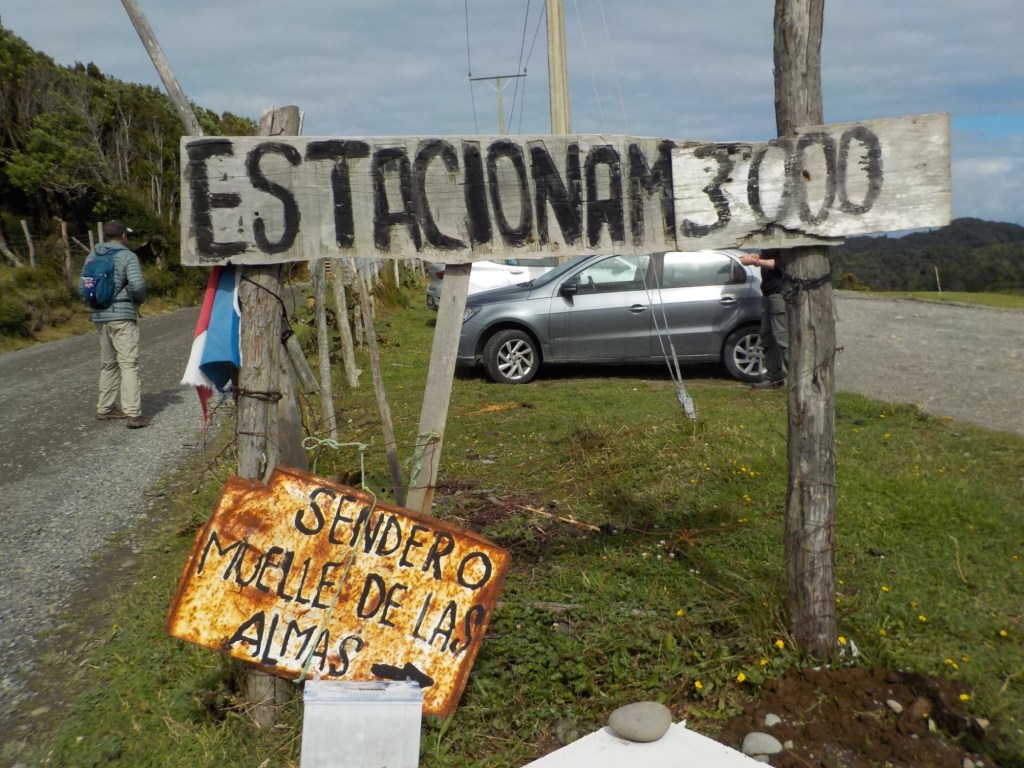
We were getting ready for the 3km walk on the road to the park entry point and checked with Nikolás before heading off what proof for entry we had to provide at the park entrance and our on-line camping booking was going to be sufficient. As we were about to head off, a couple walked in and asked for information about the hike – he was South African with Australian citizenship and his partner was from New Zealand. We kept running into them at various parts of the hikes all day.
We walked to the ranger station and were glad we did not bring the bikes as it was on a steep hill with limited parking and it would have been difficult to park the bikes there. The ranger checked our campground booking and all was in order.
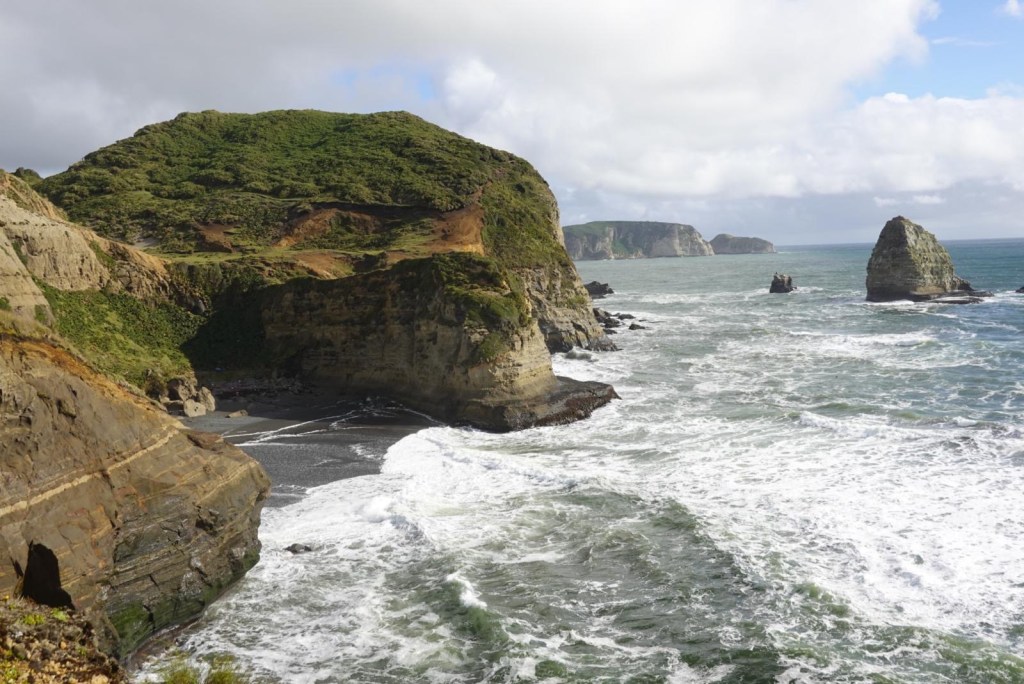
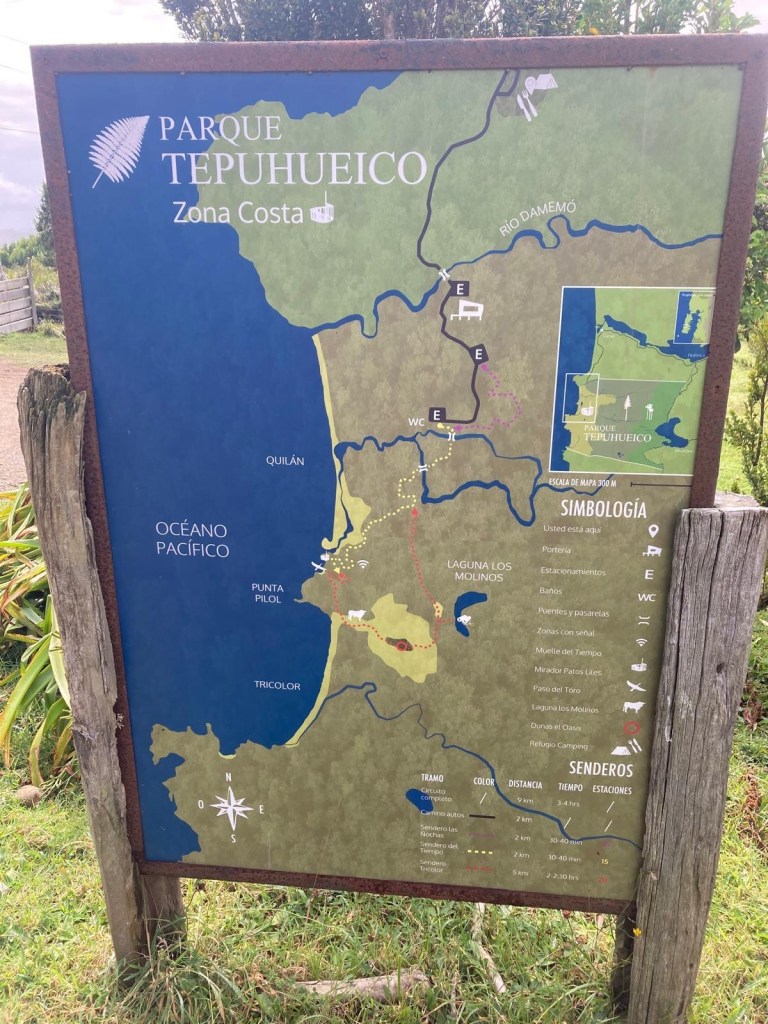
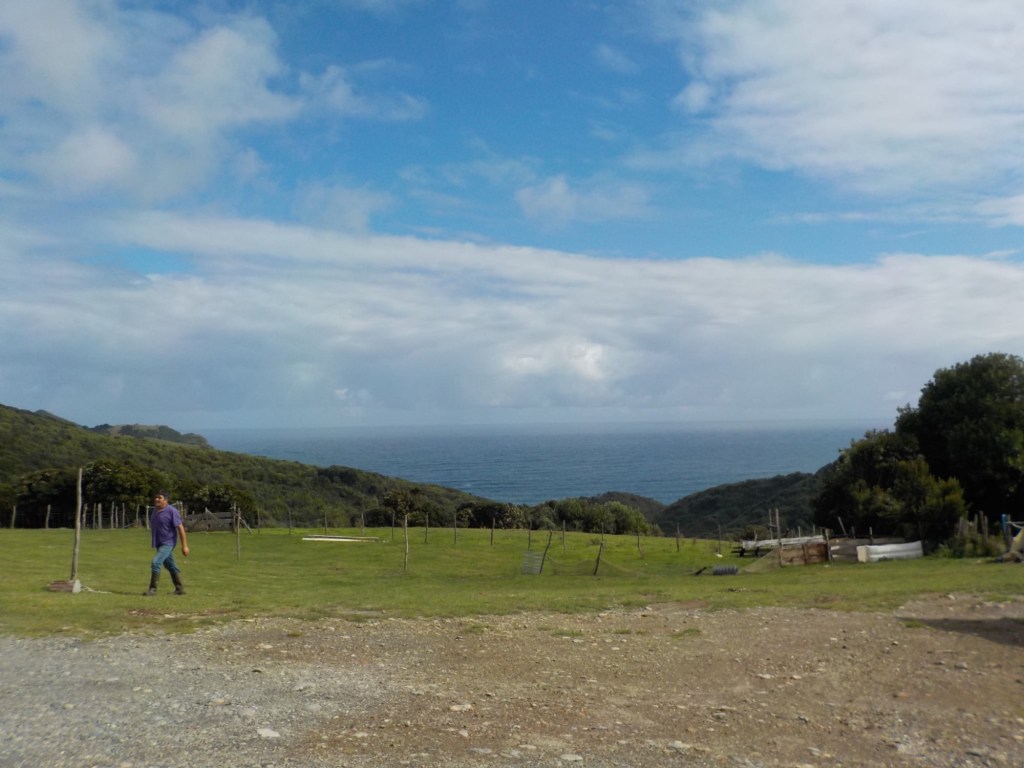
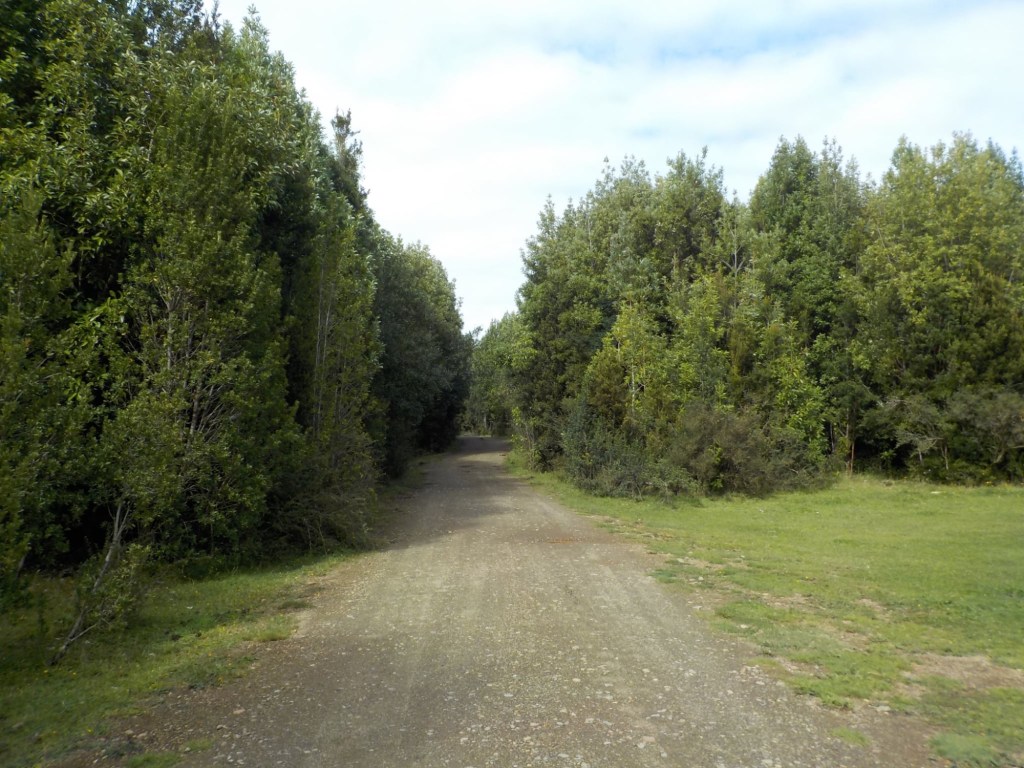
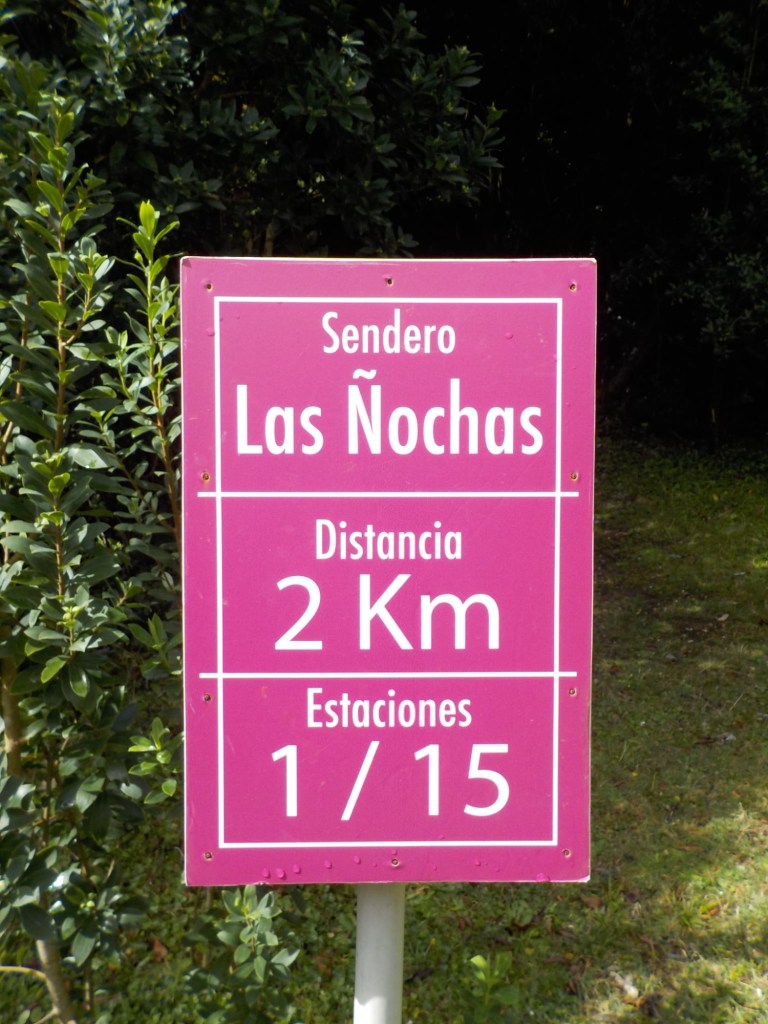
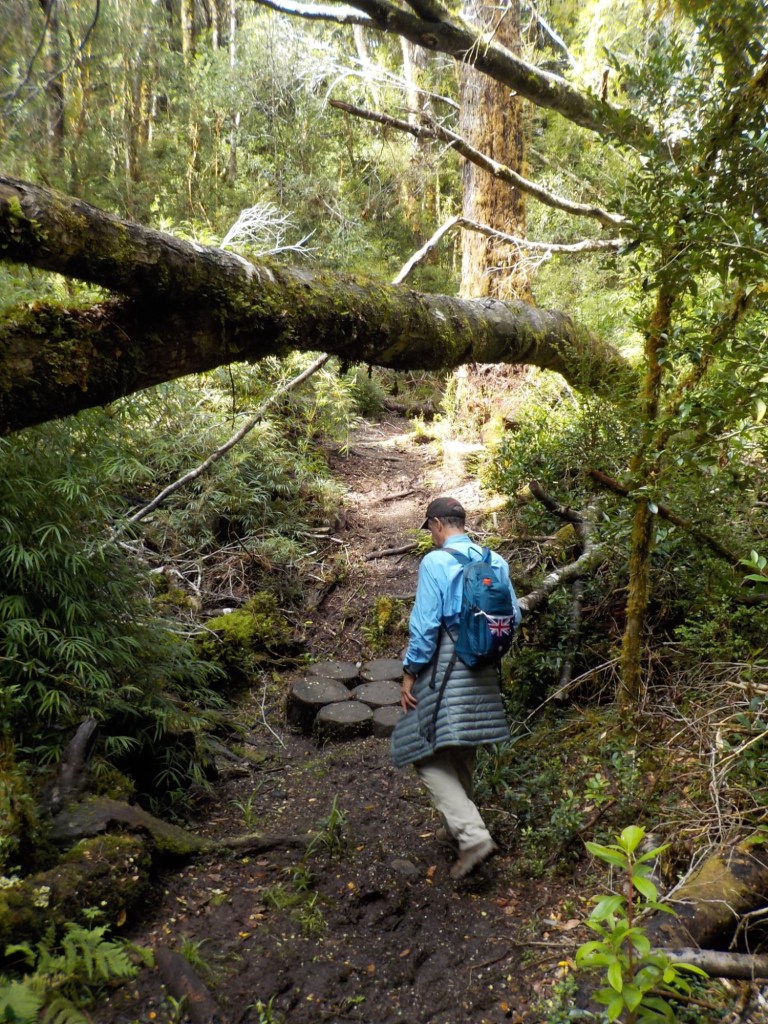
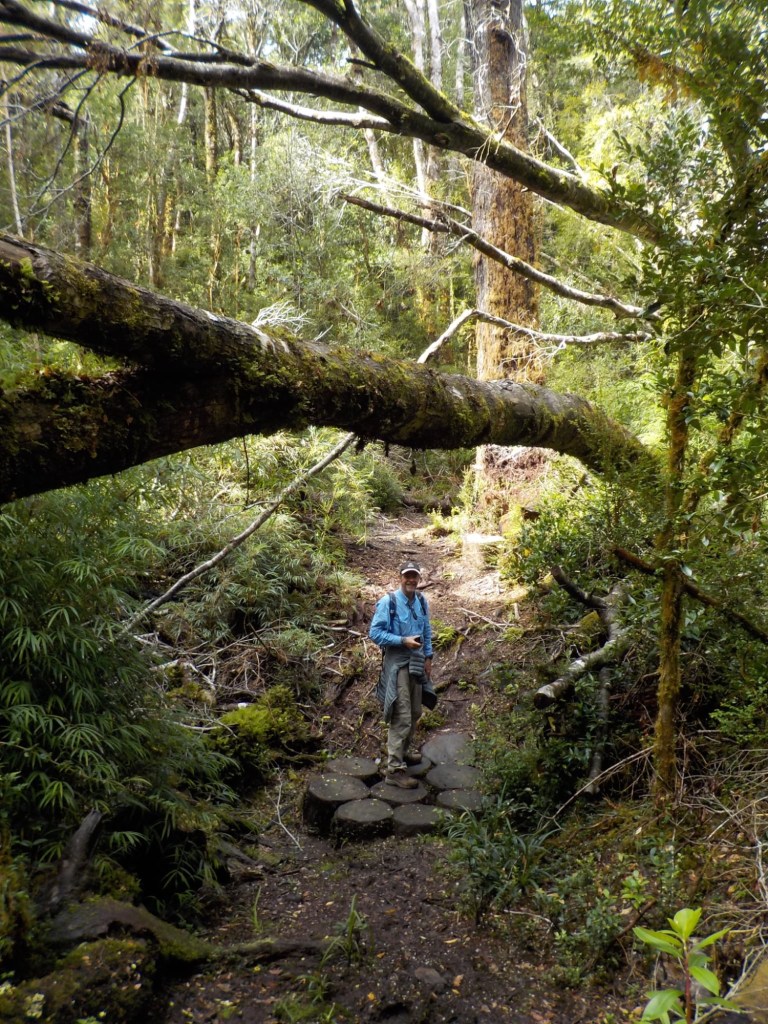
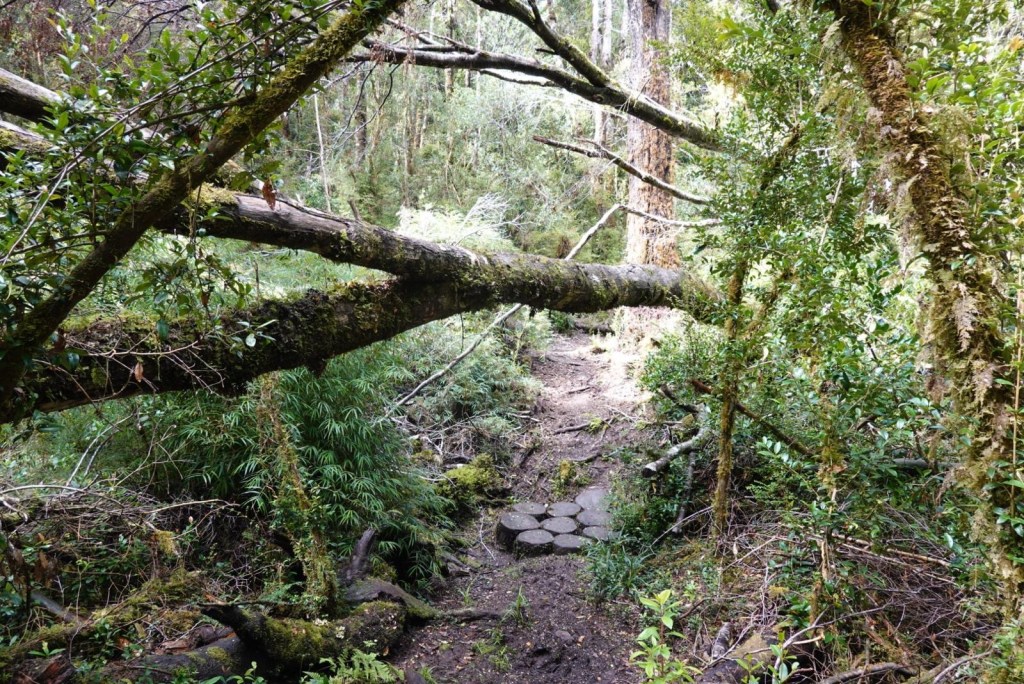
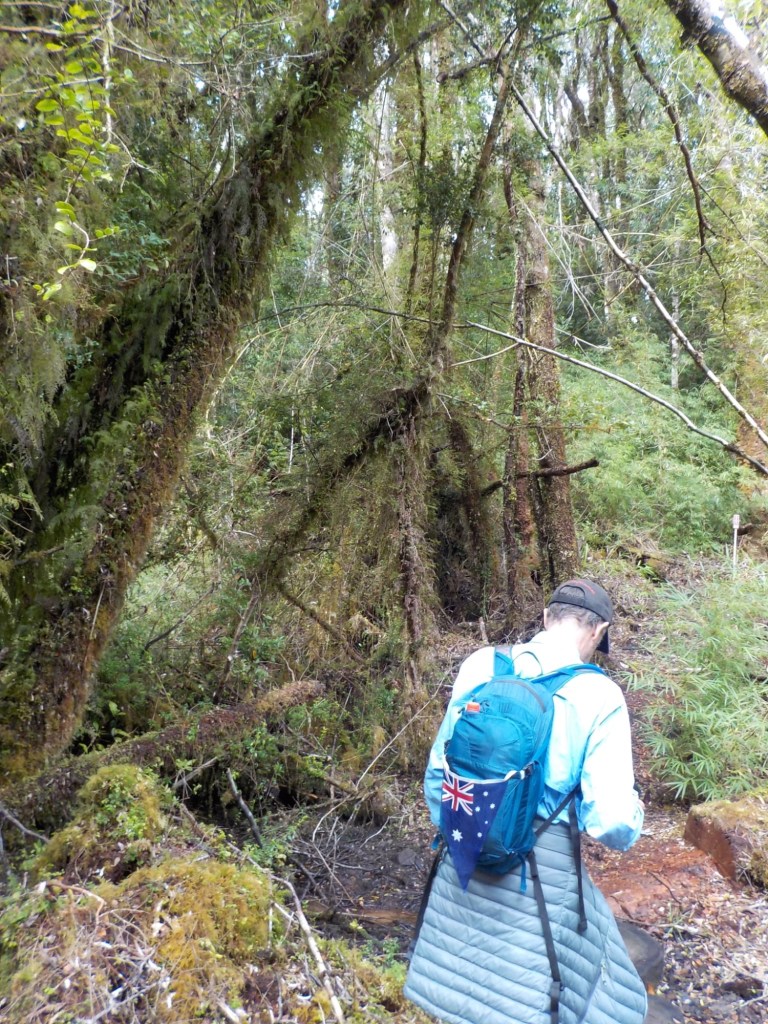
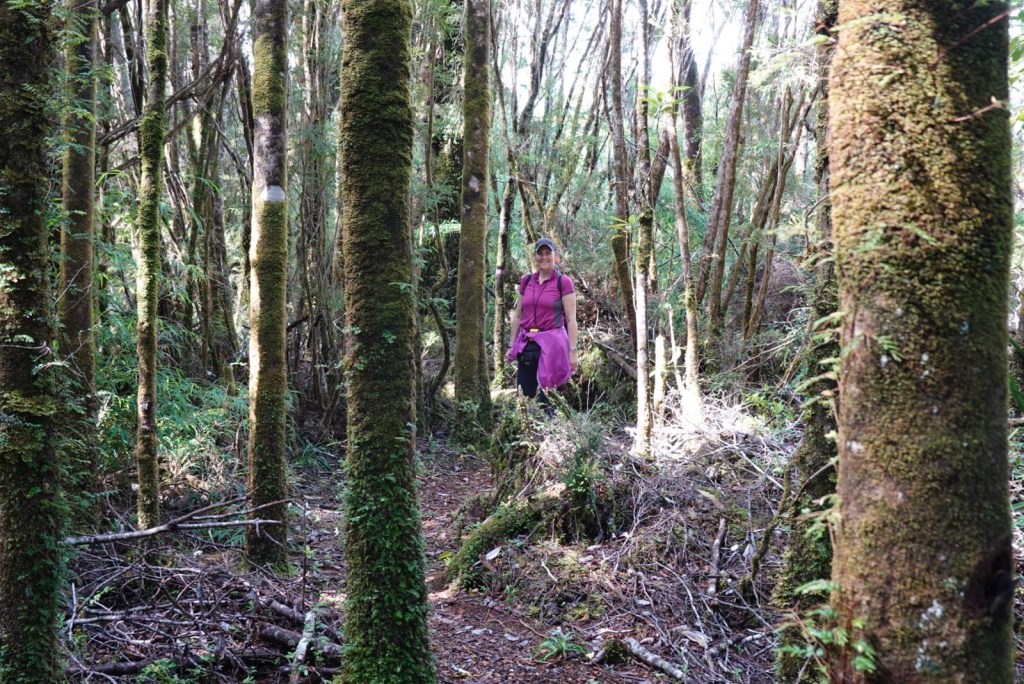
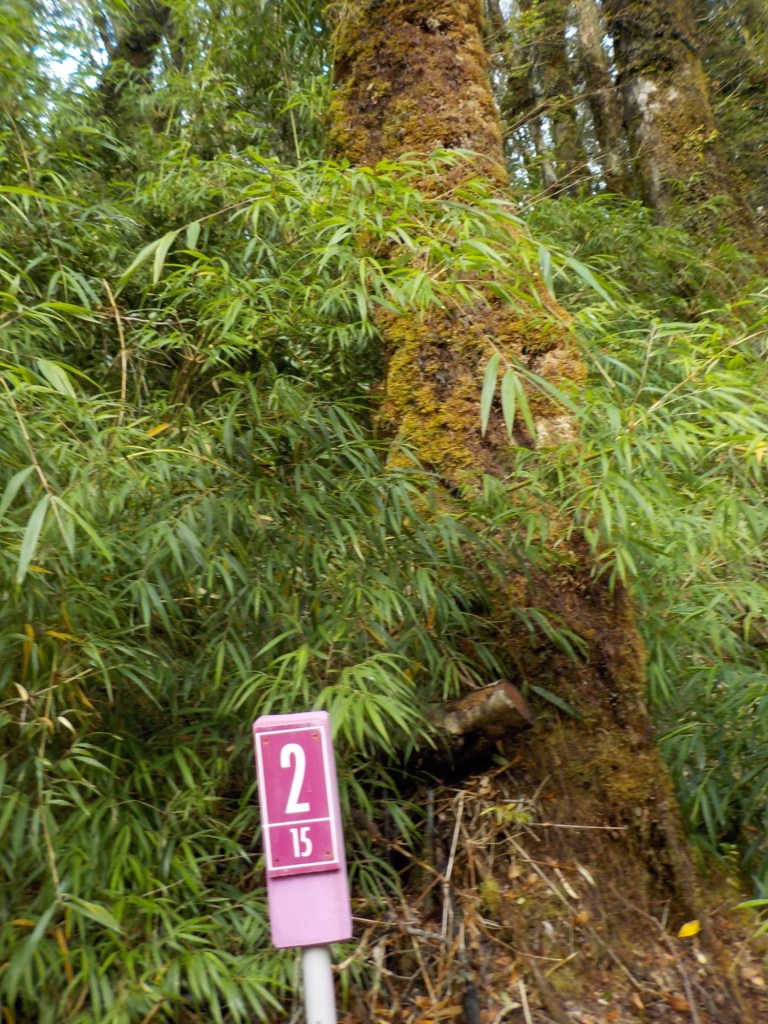
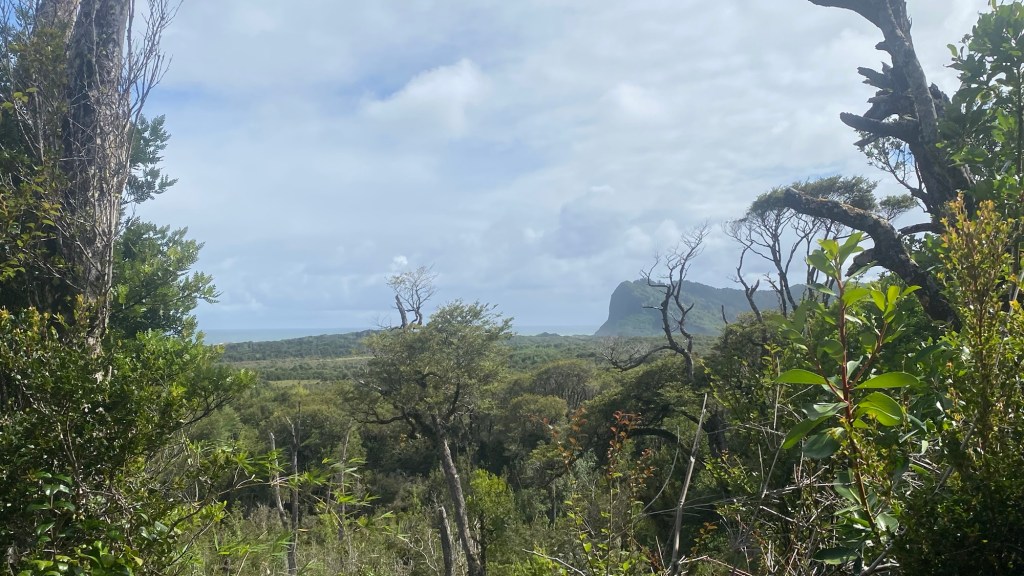
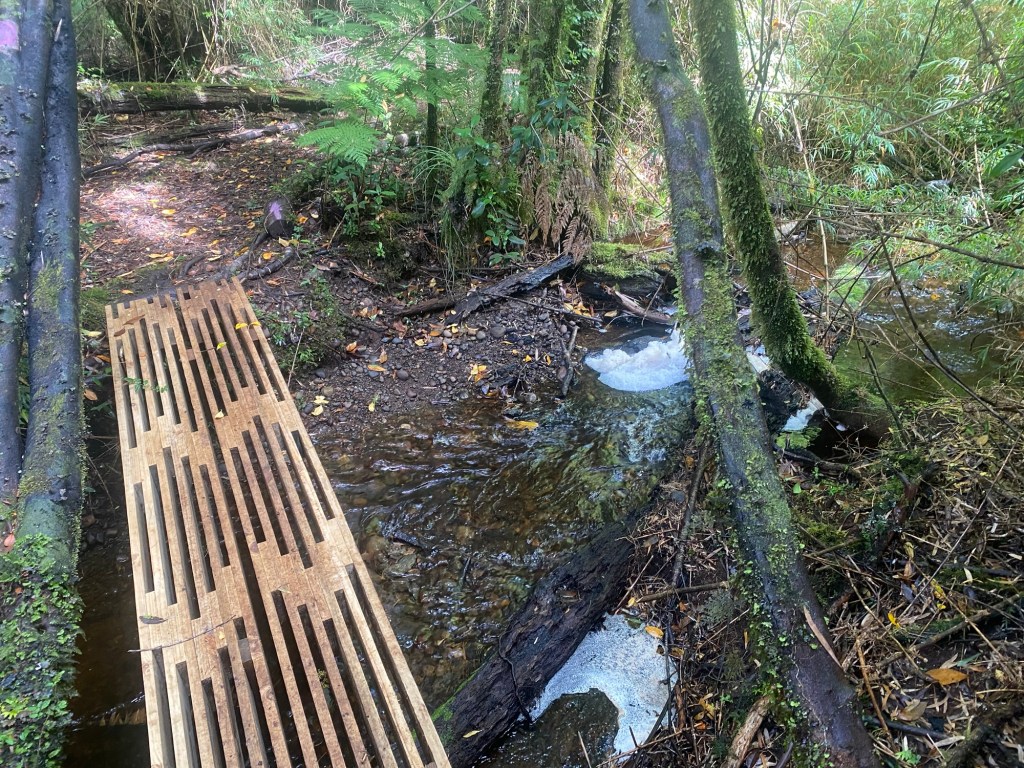
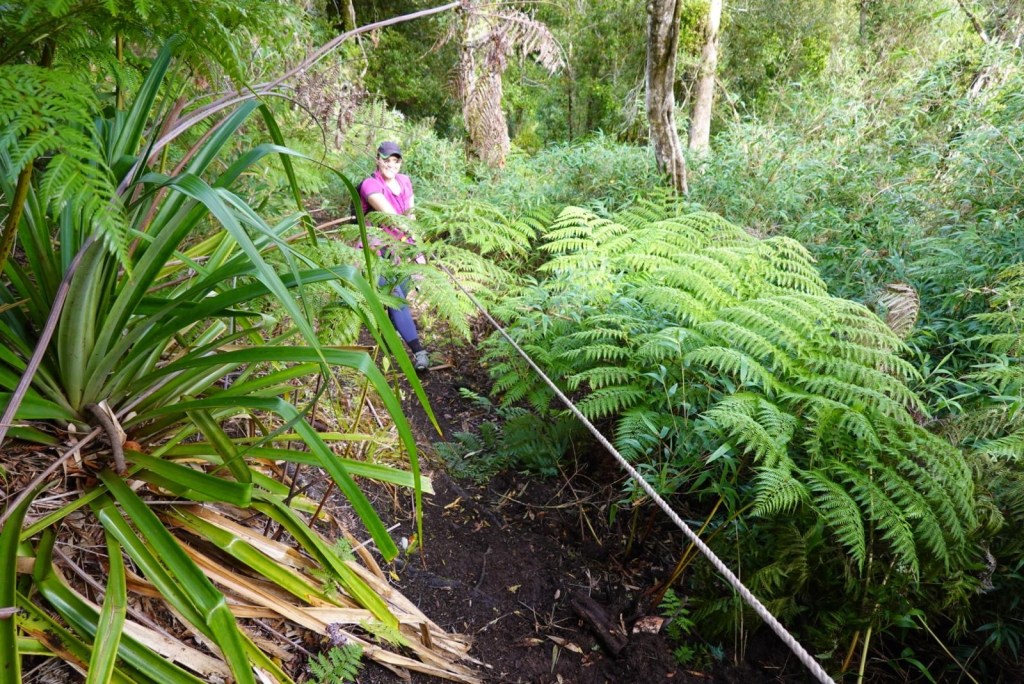
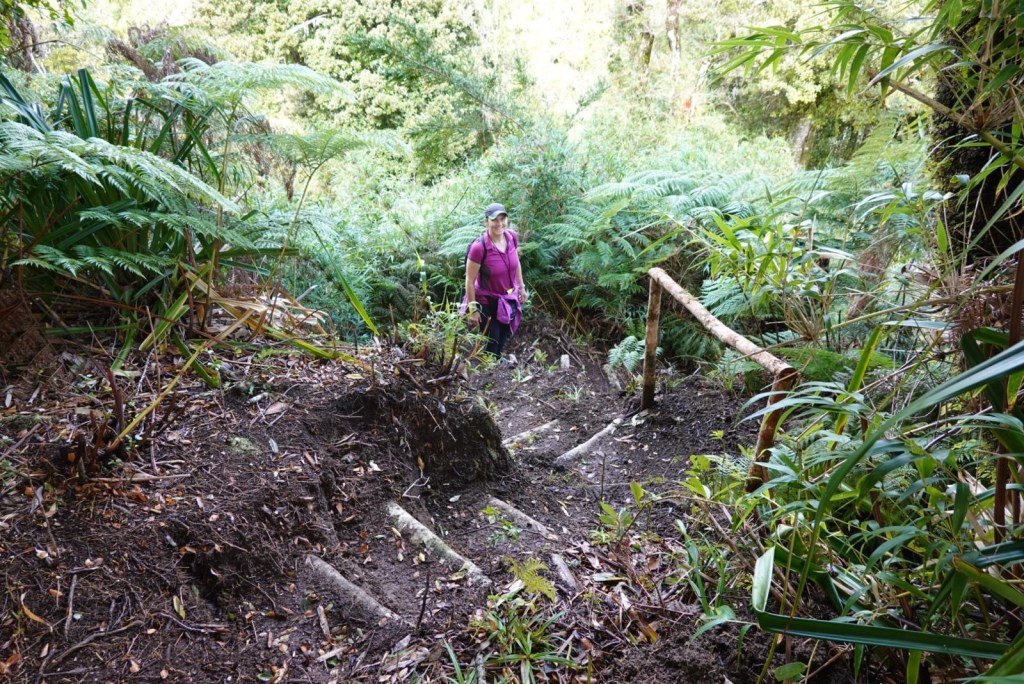
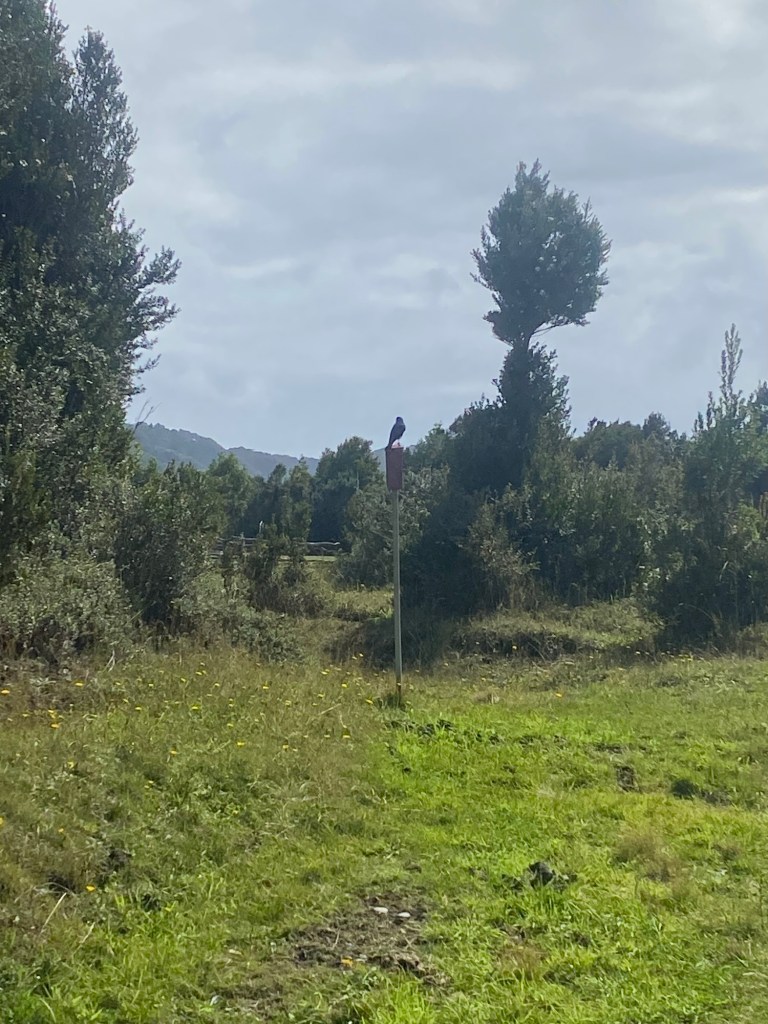
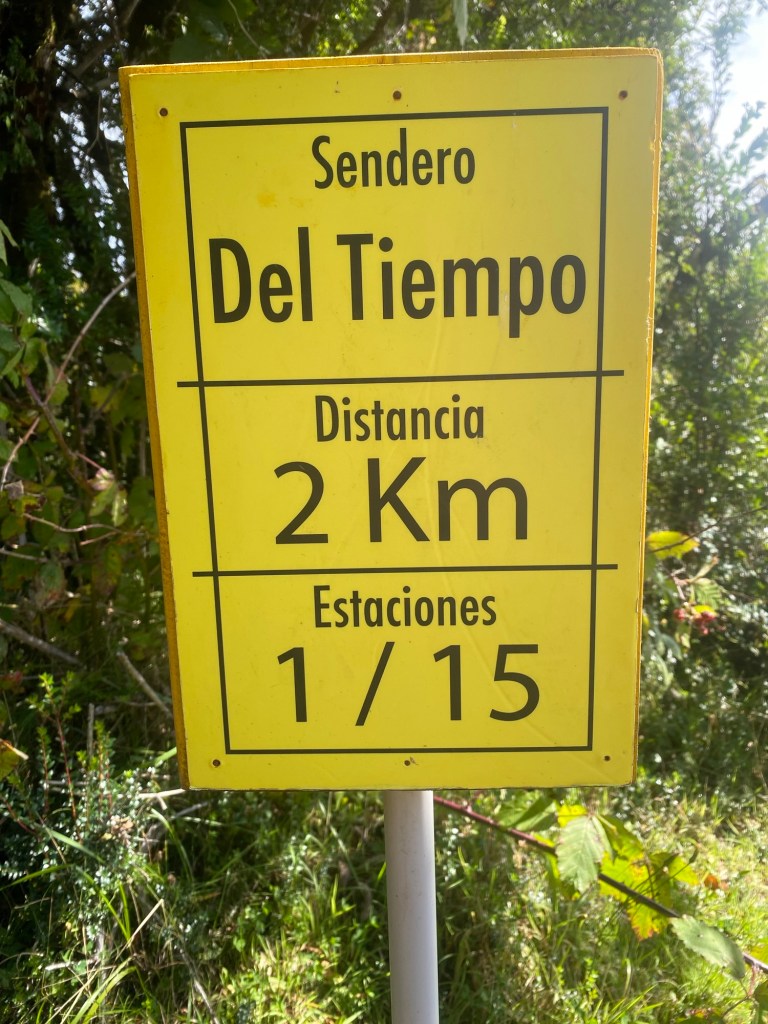
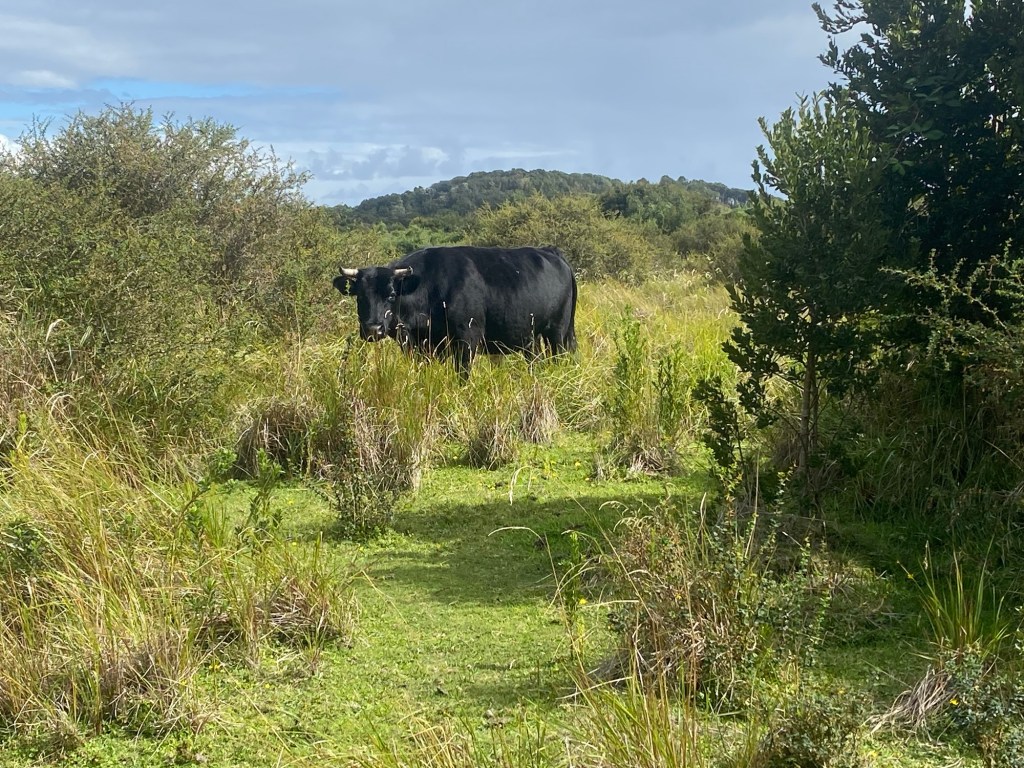
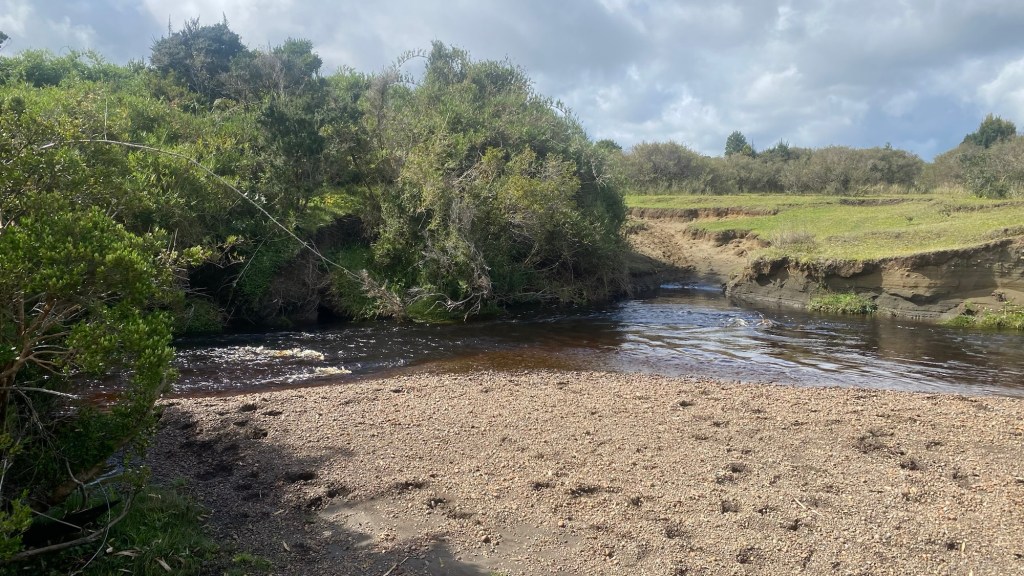
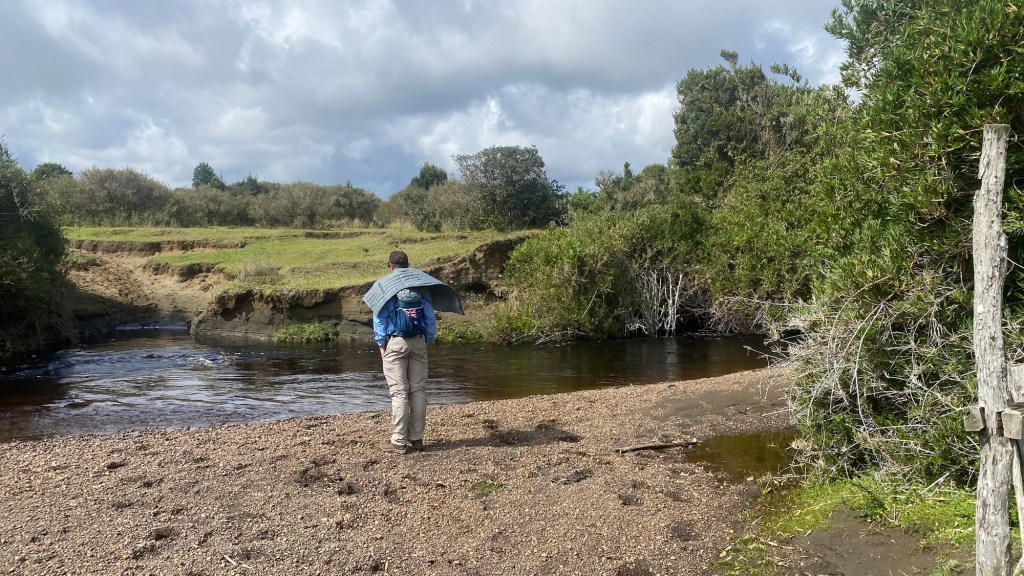
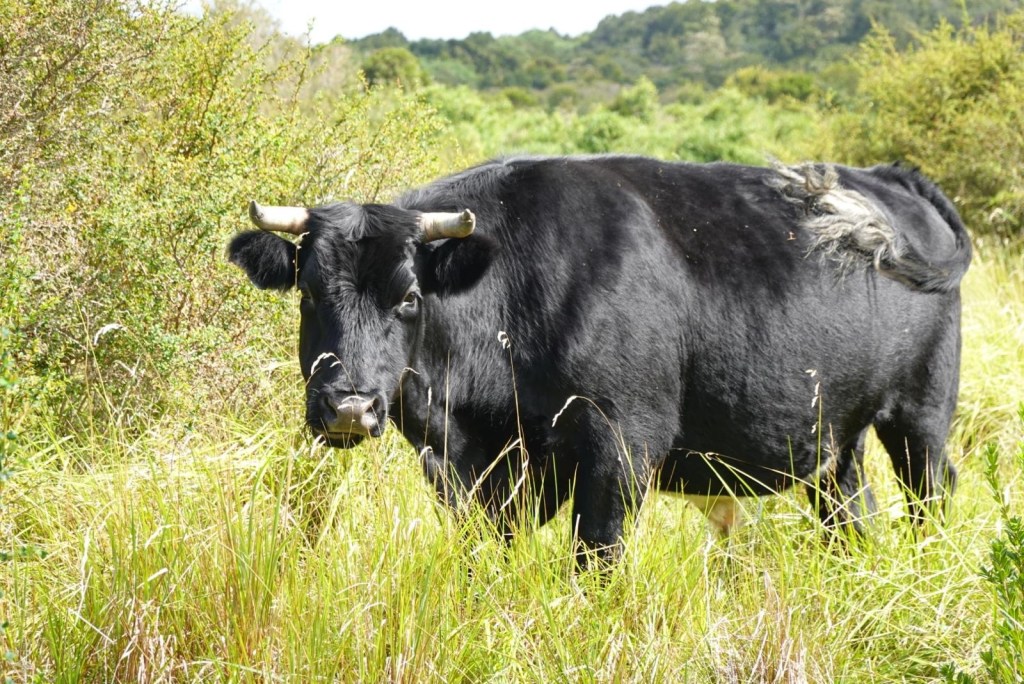
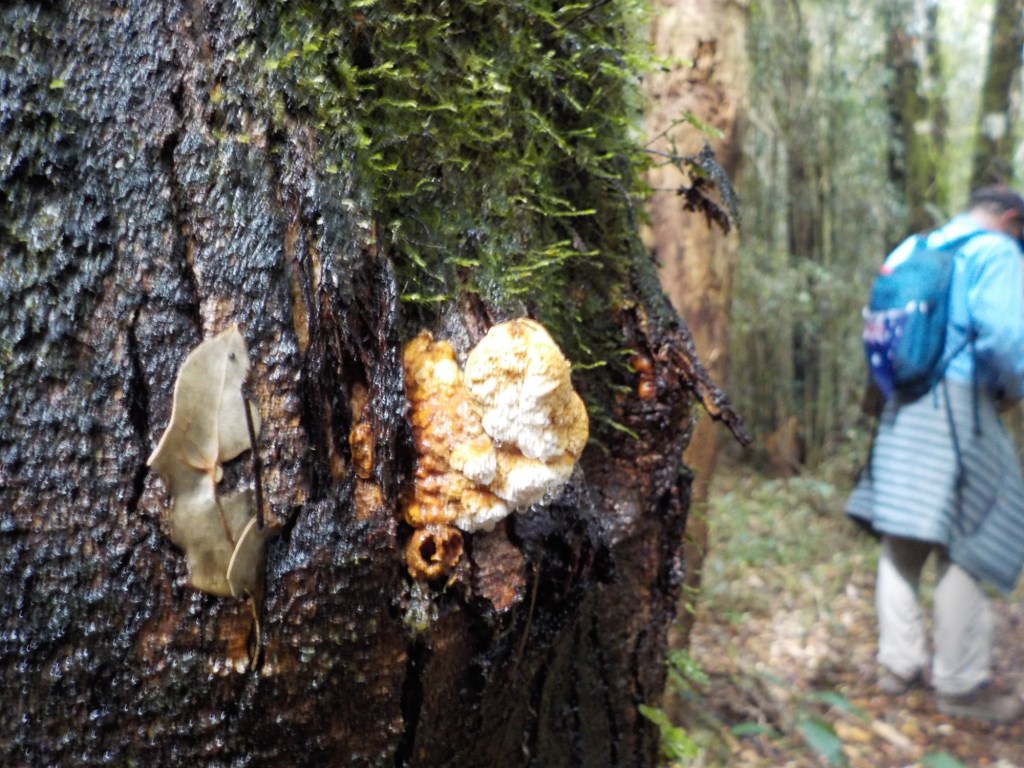
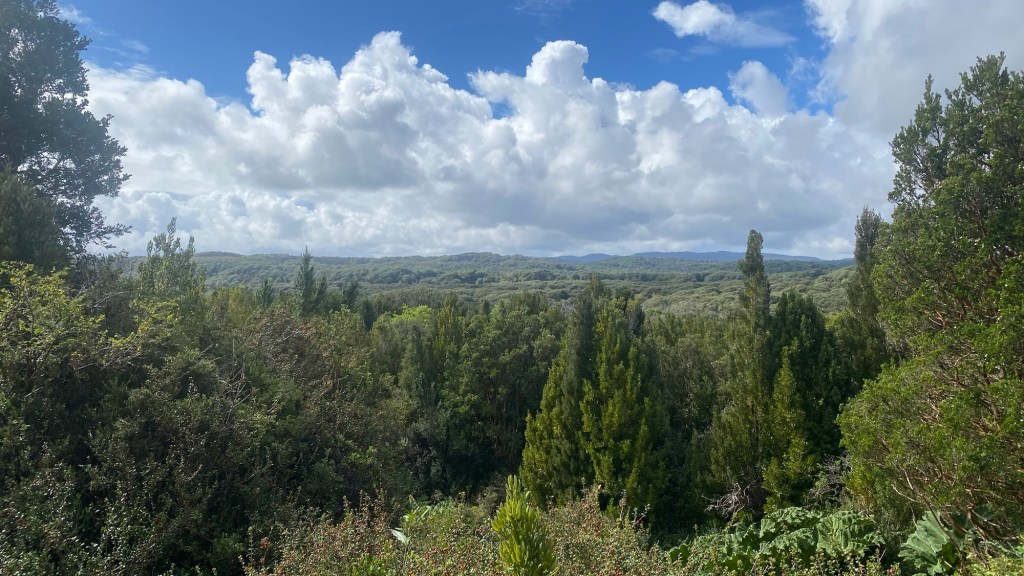
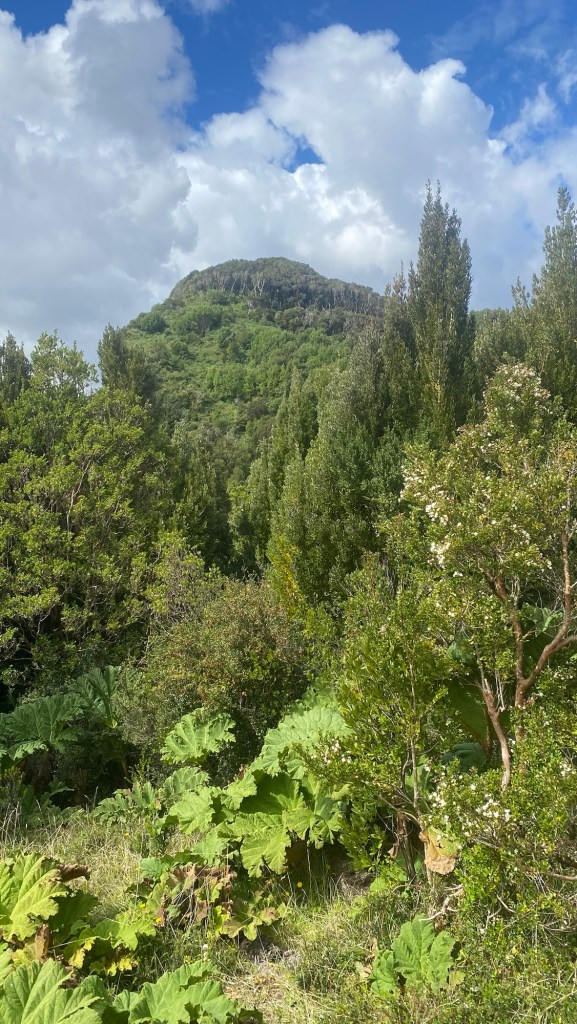
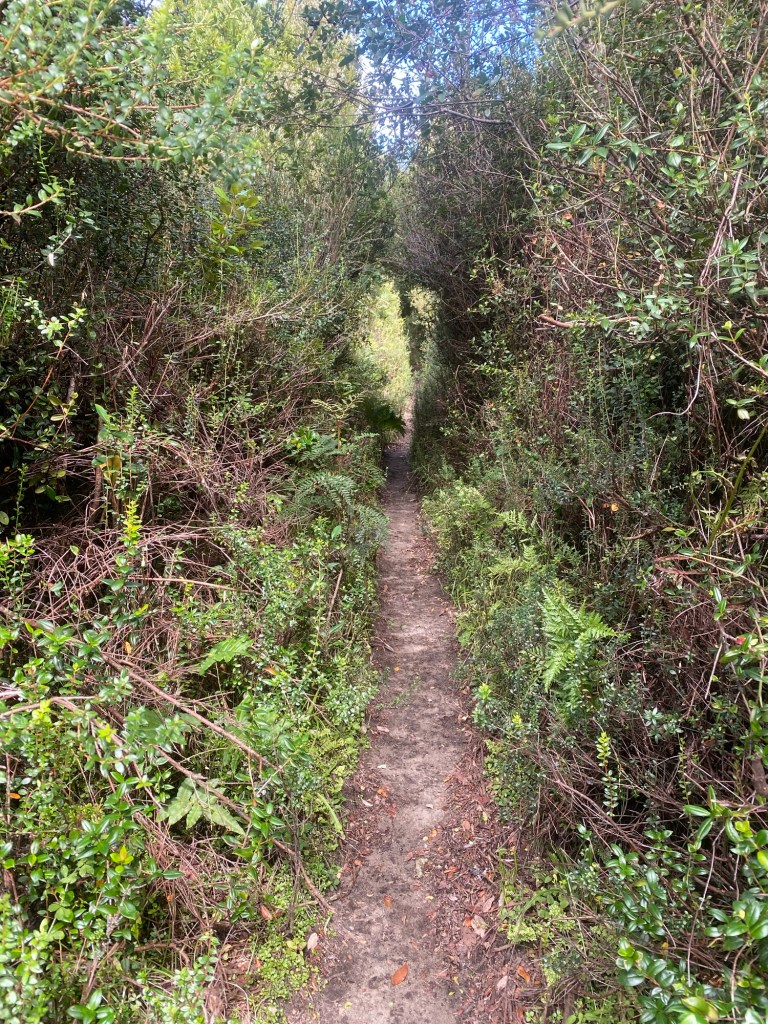
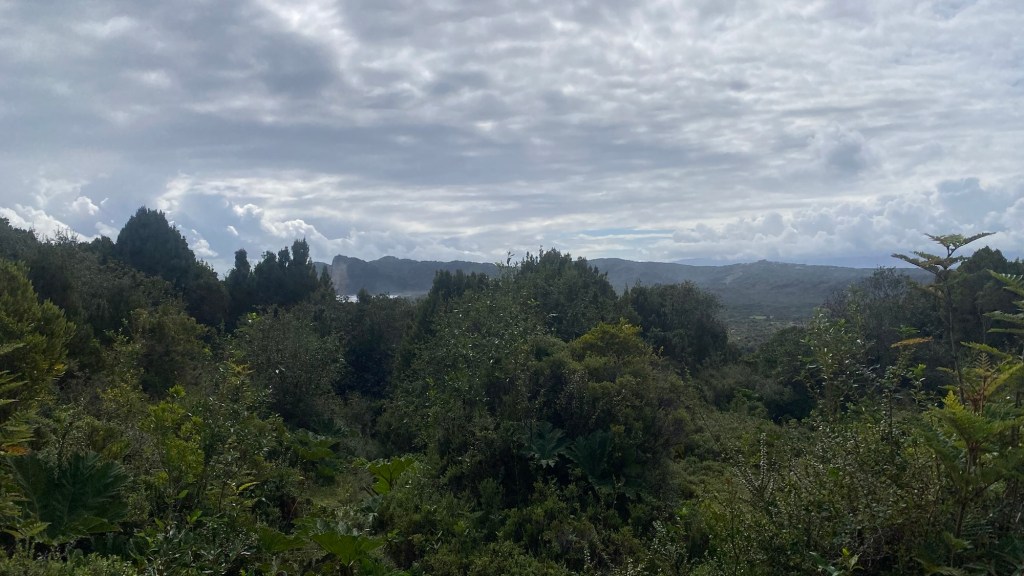
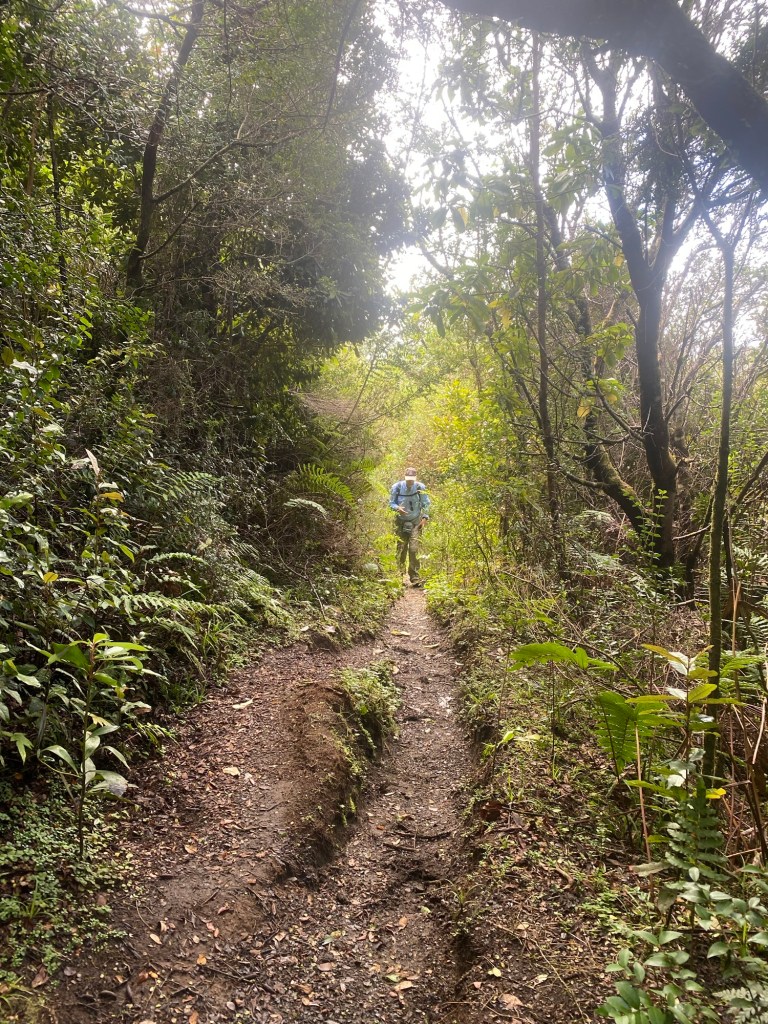
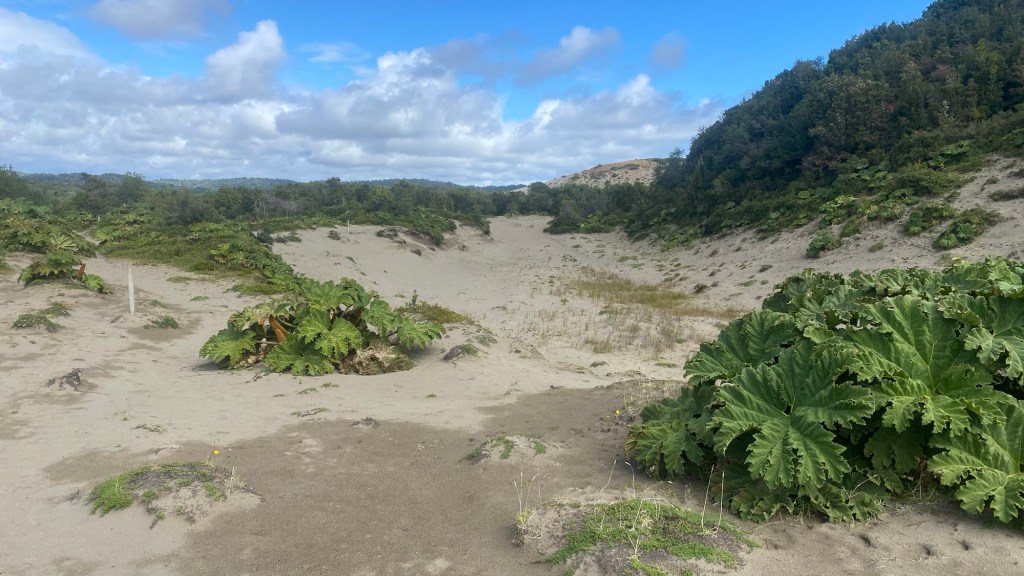
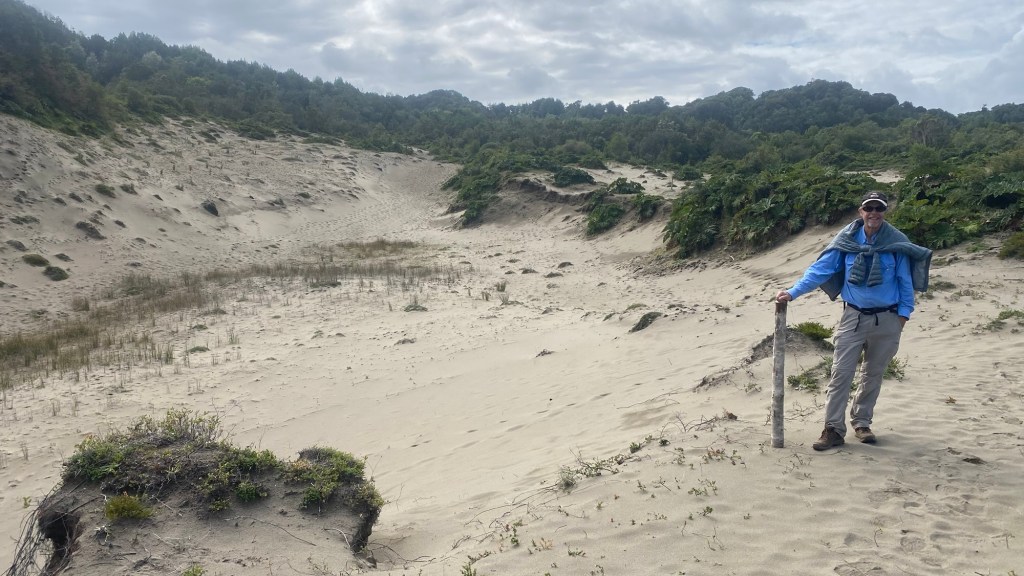
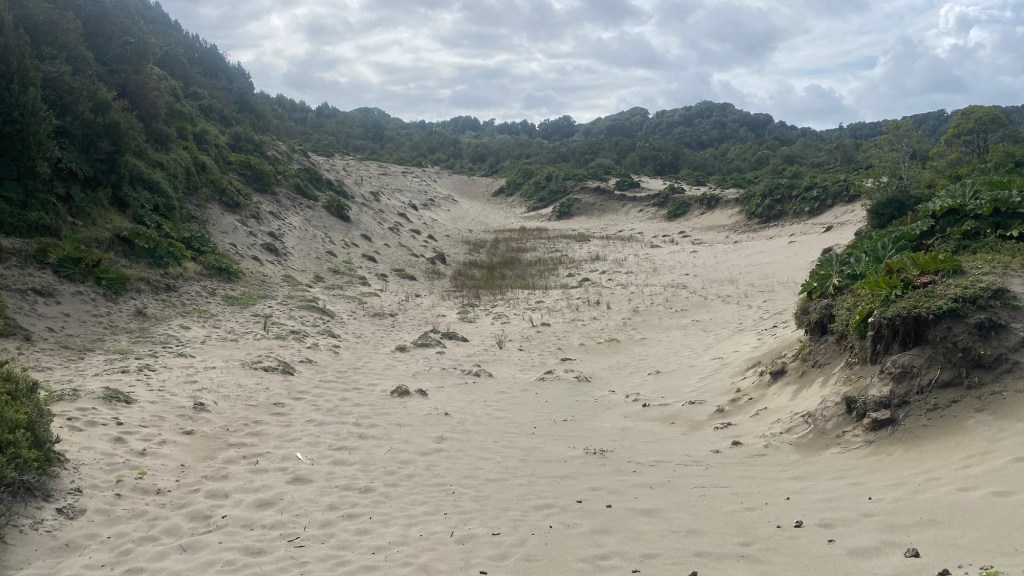
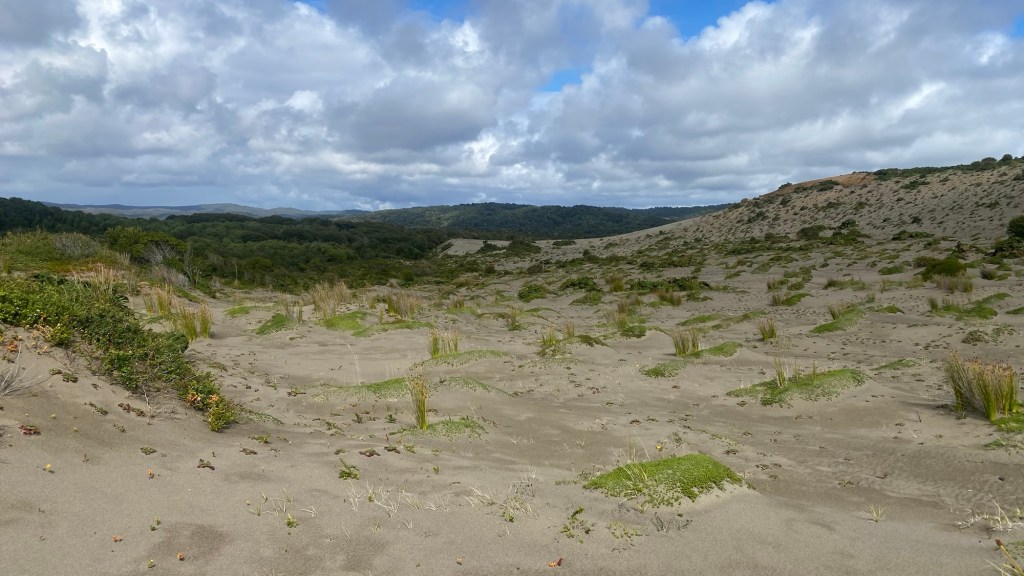
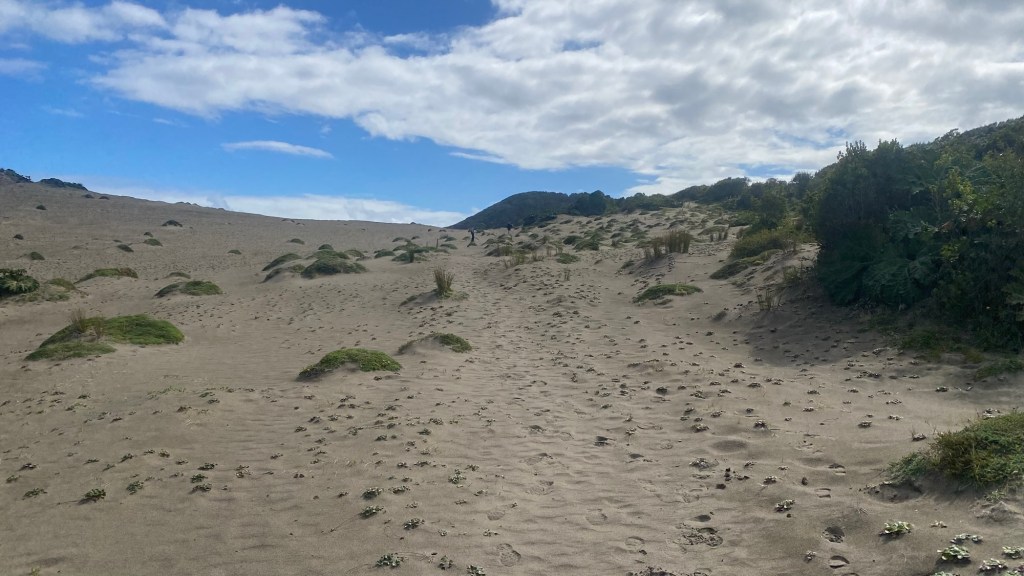
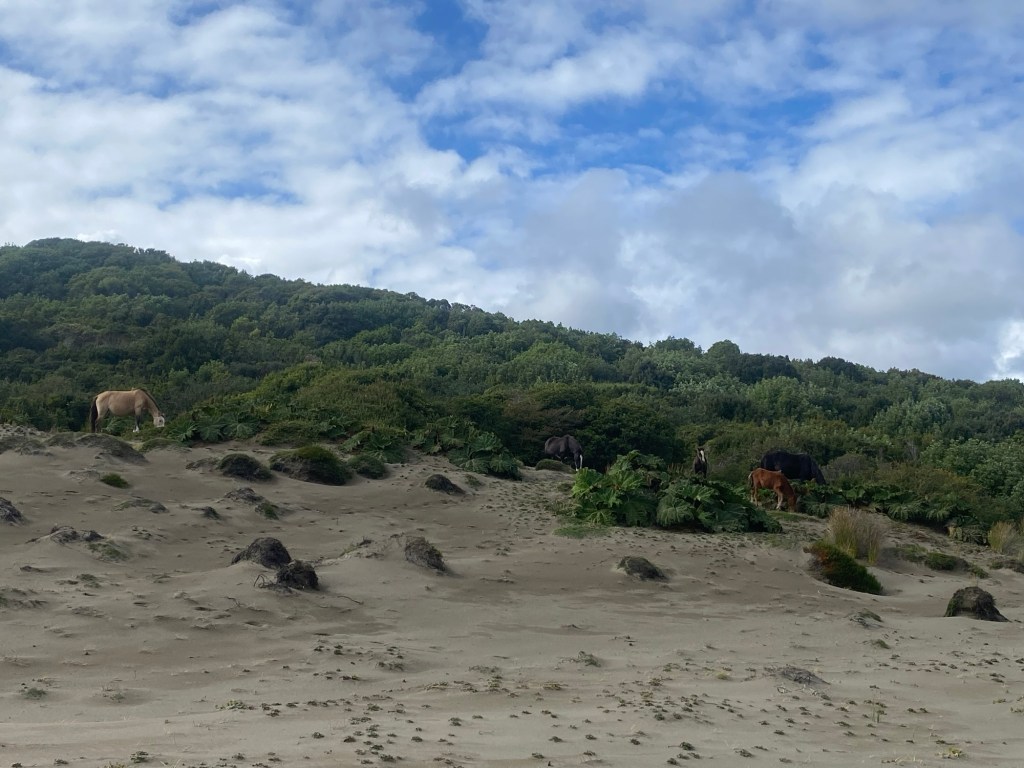
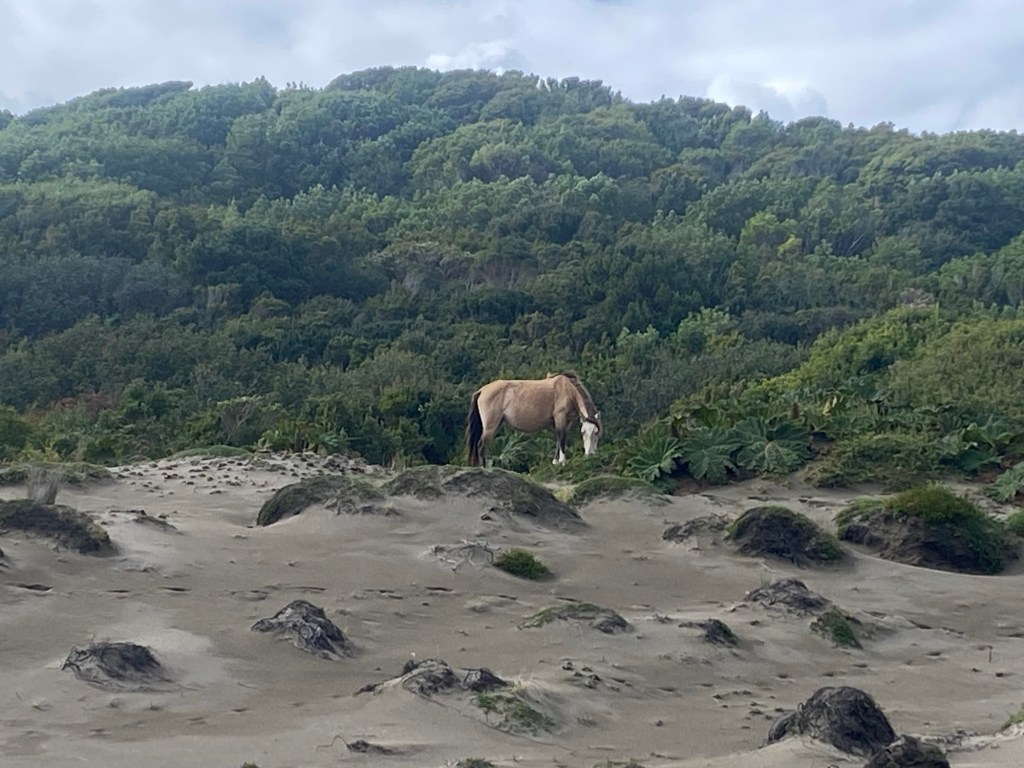
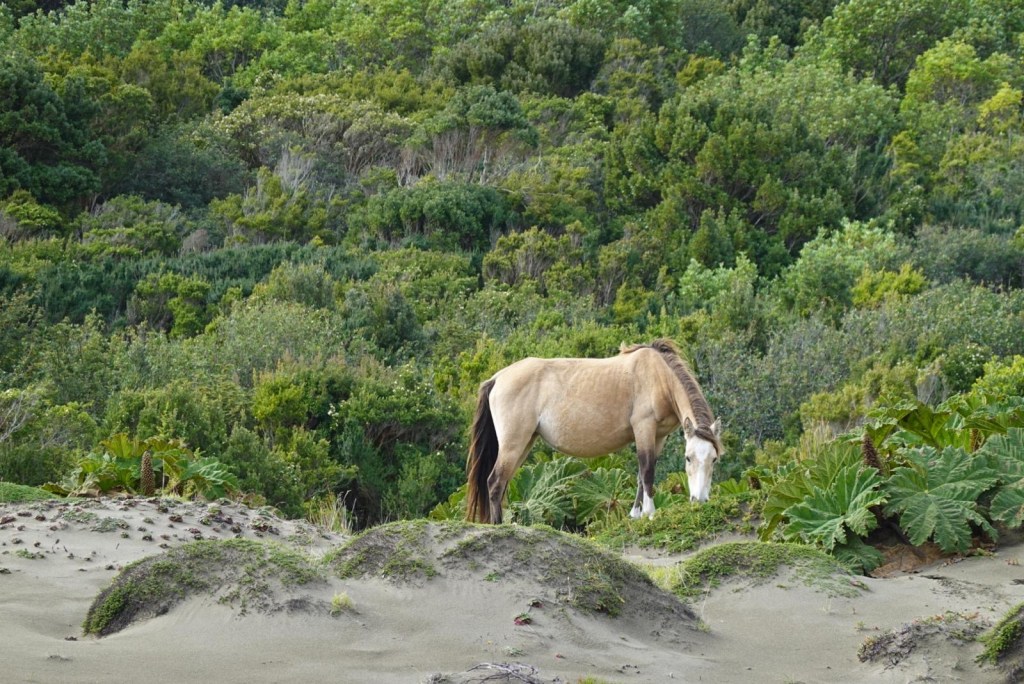
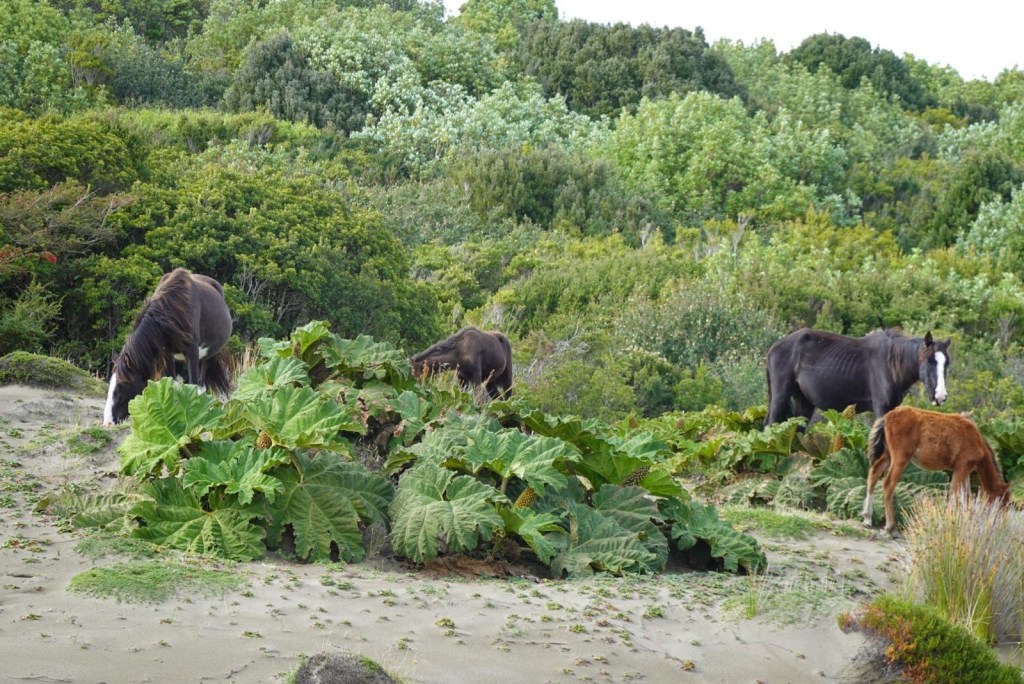
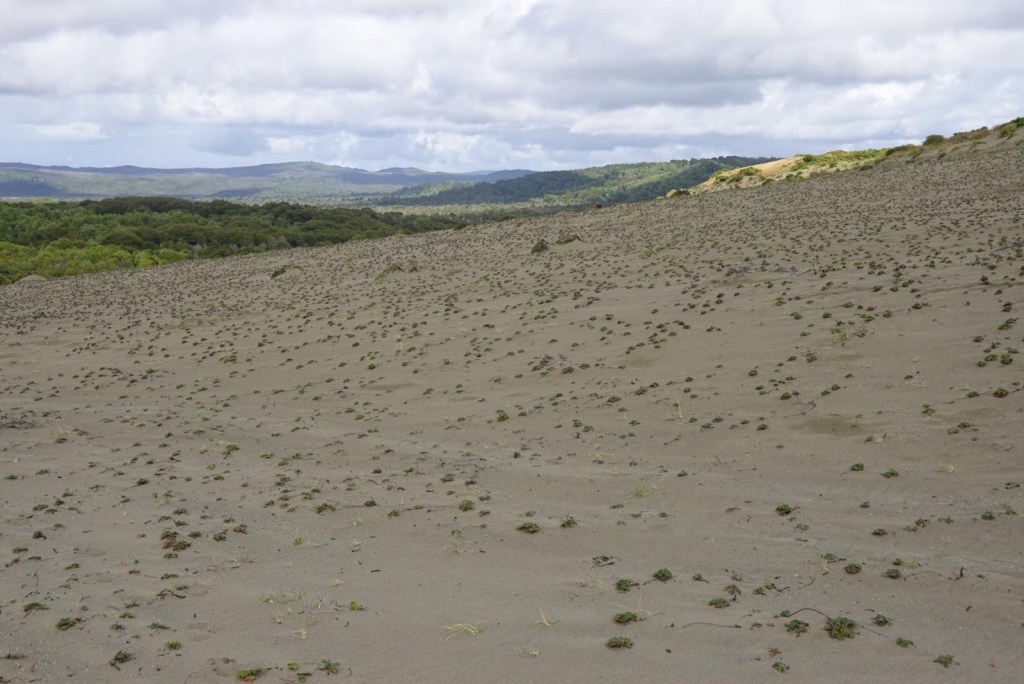
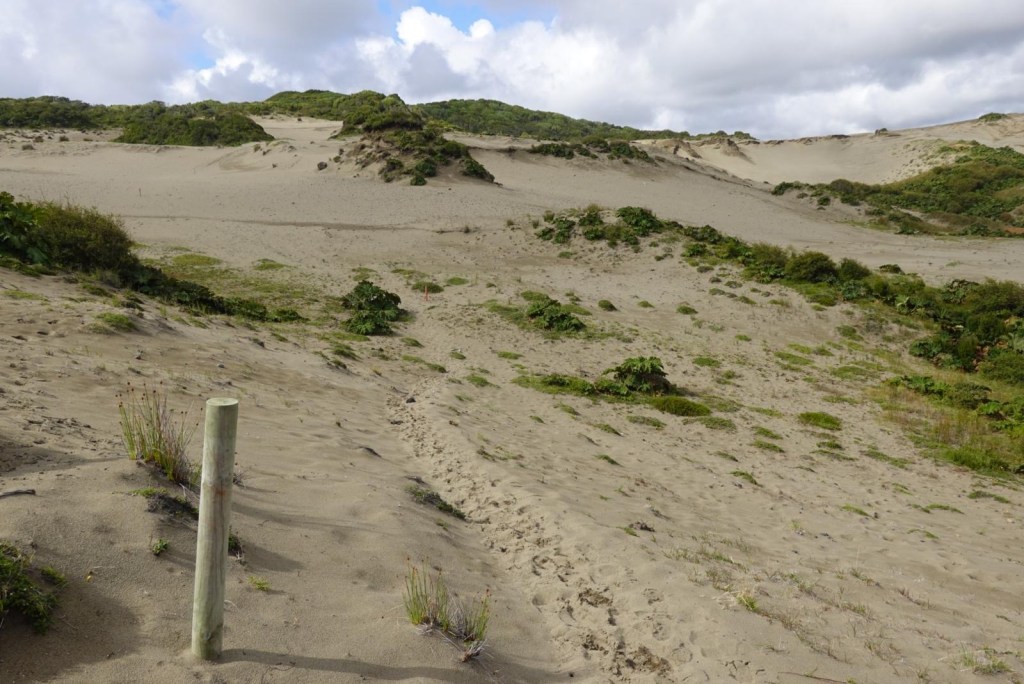
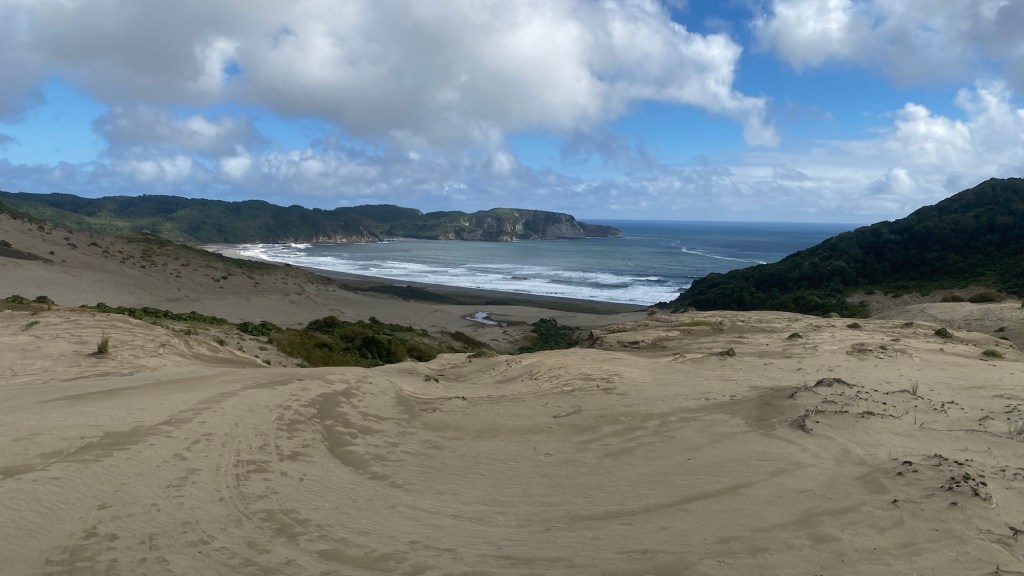
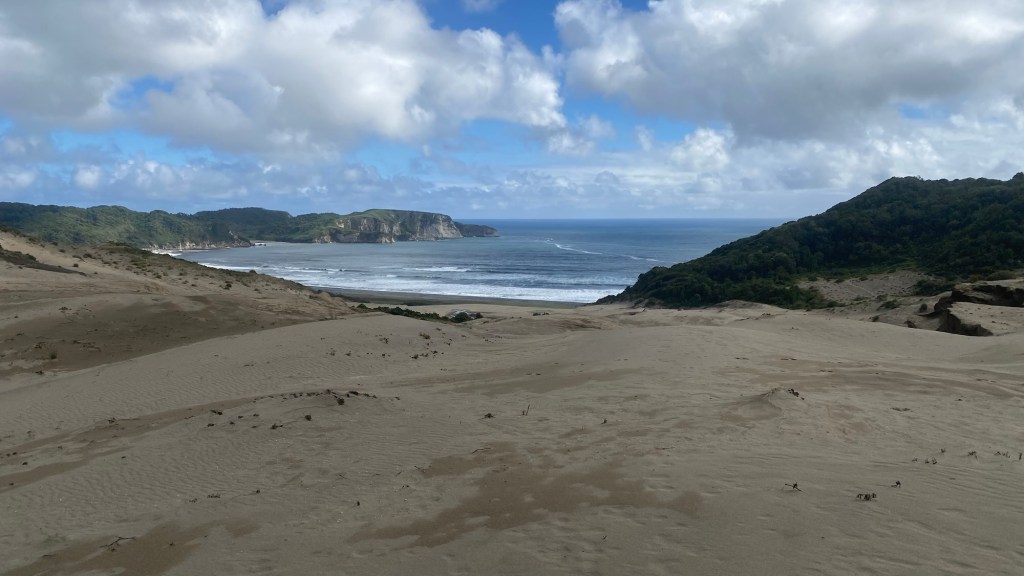
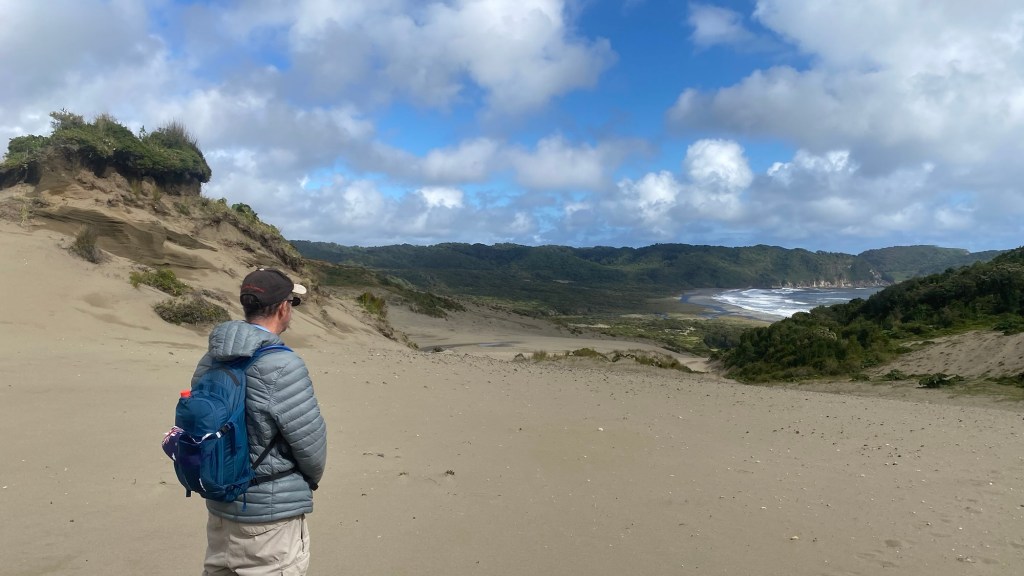
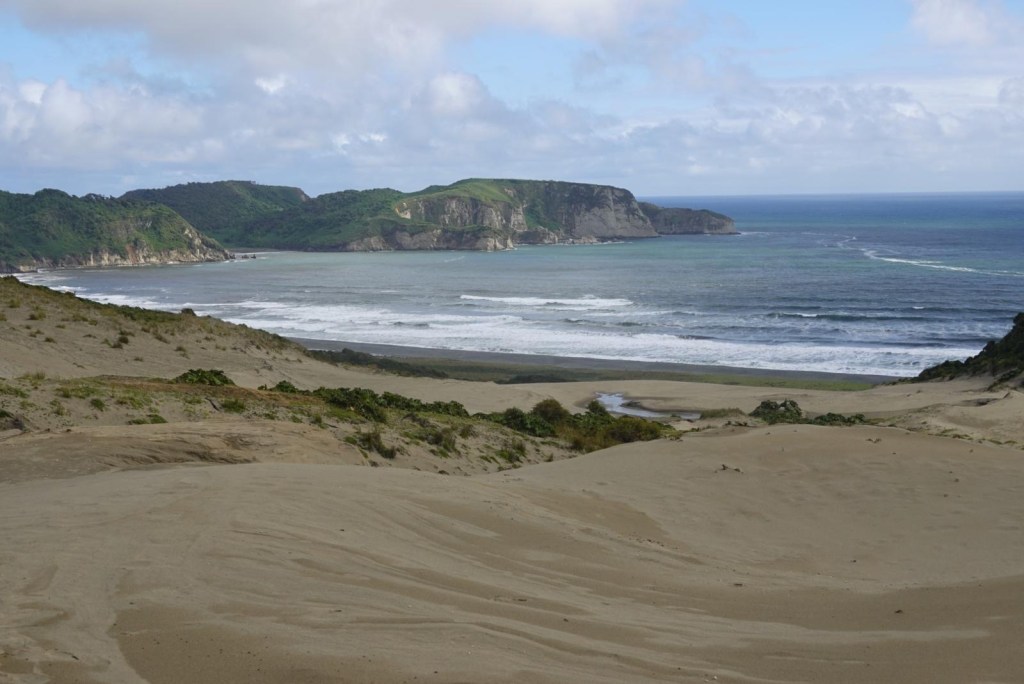
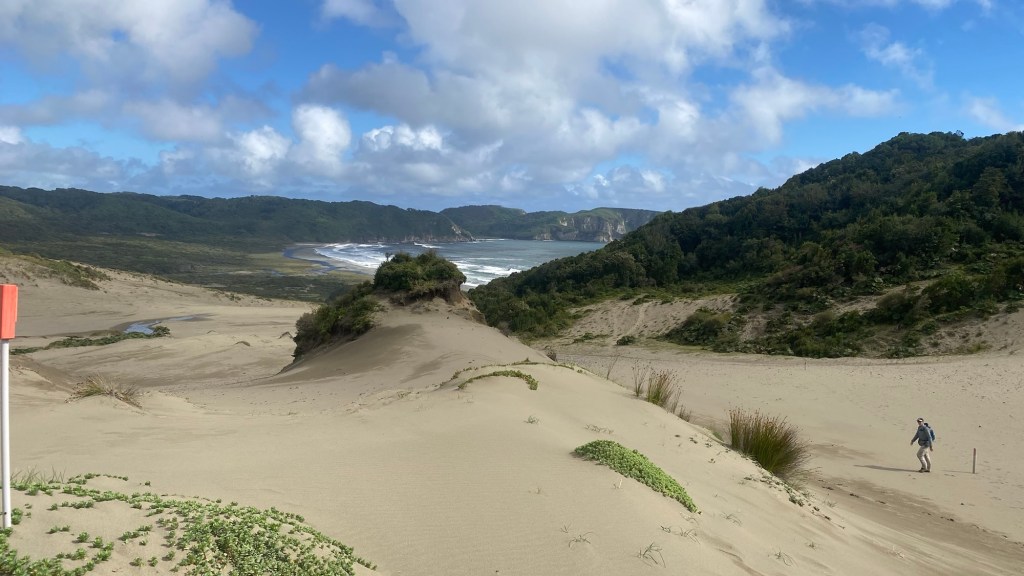
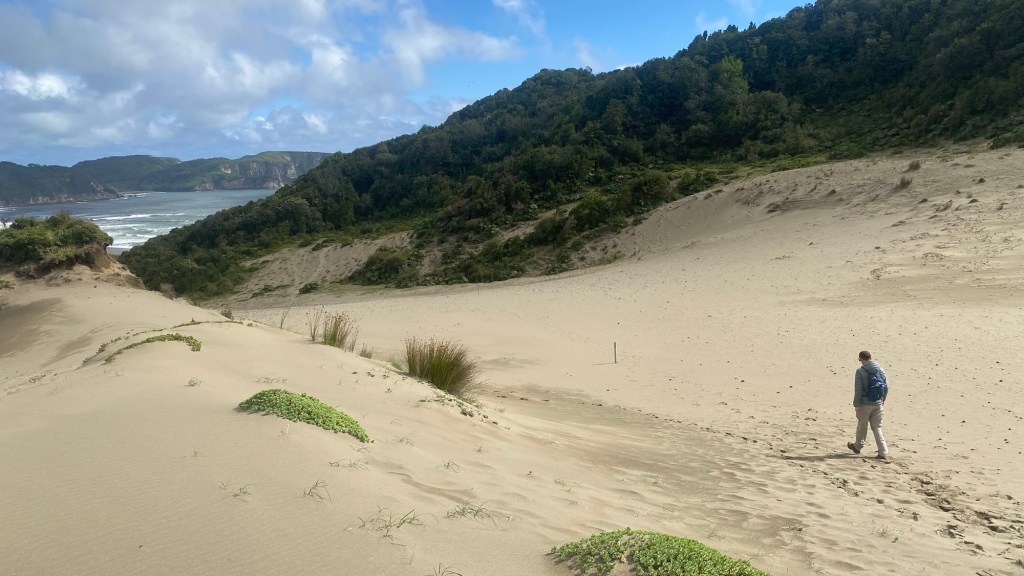
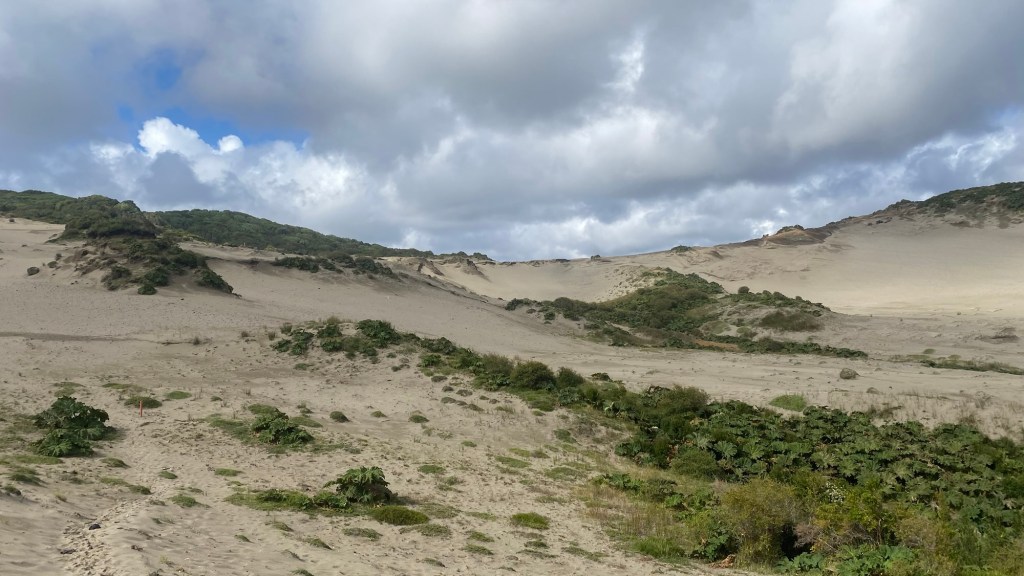
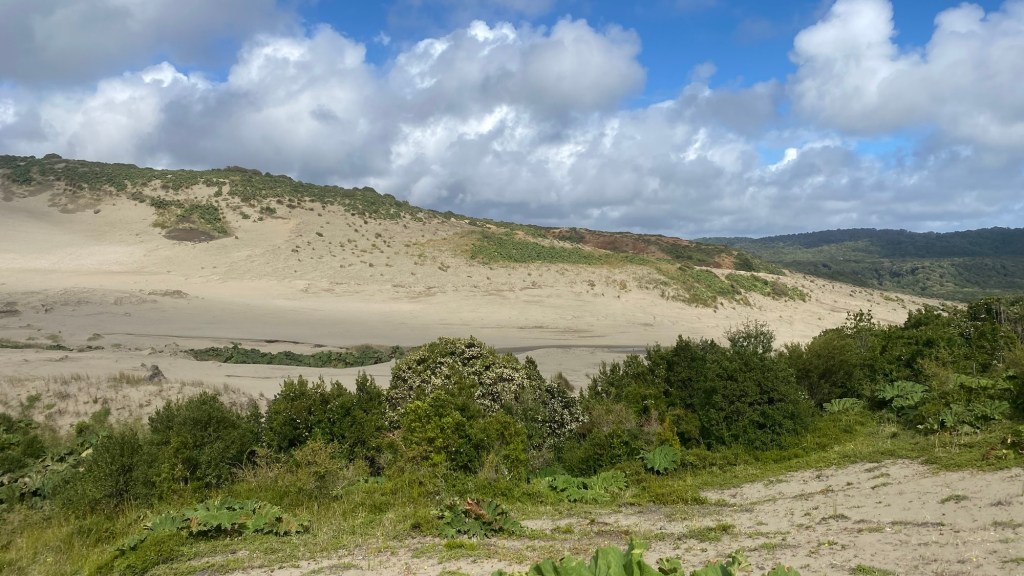
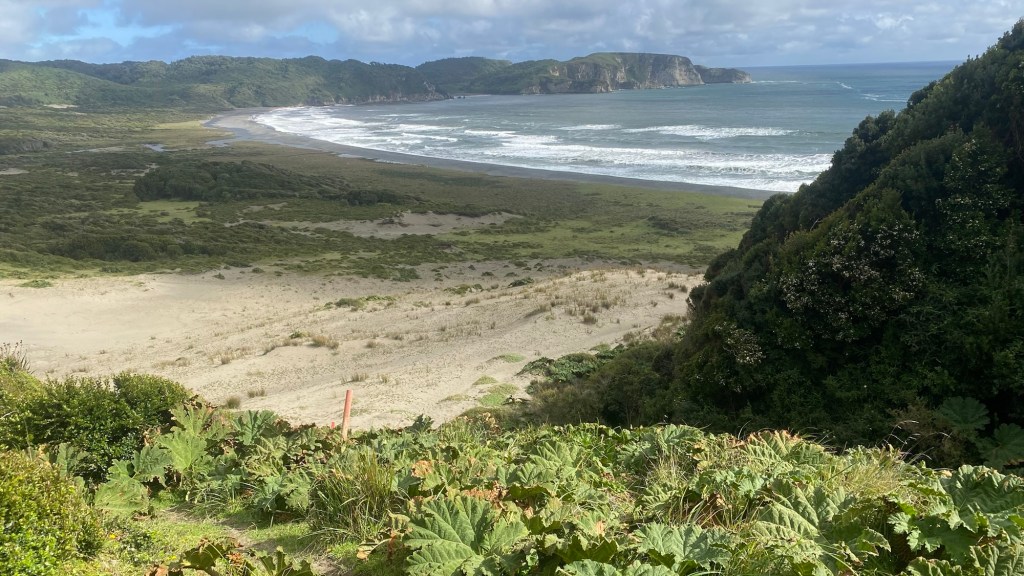
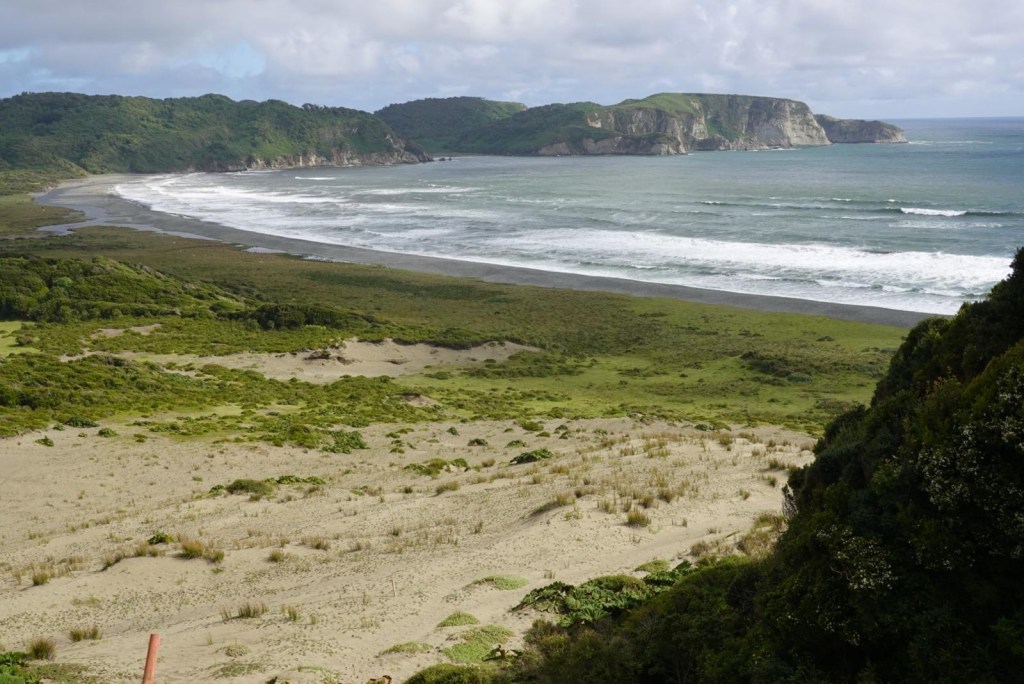
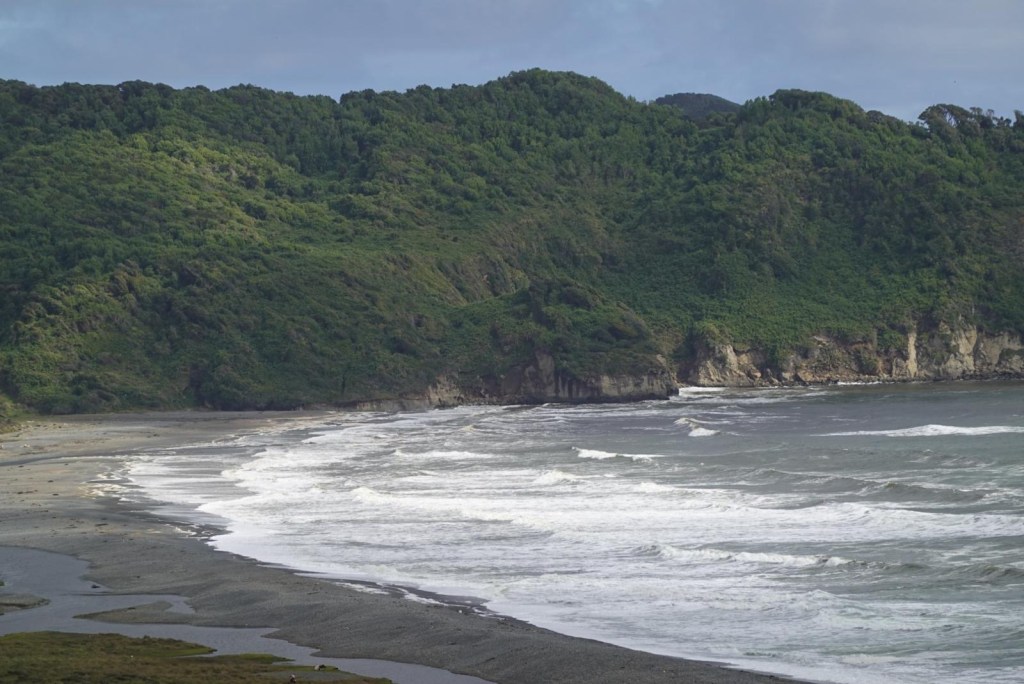
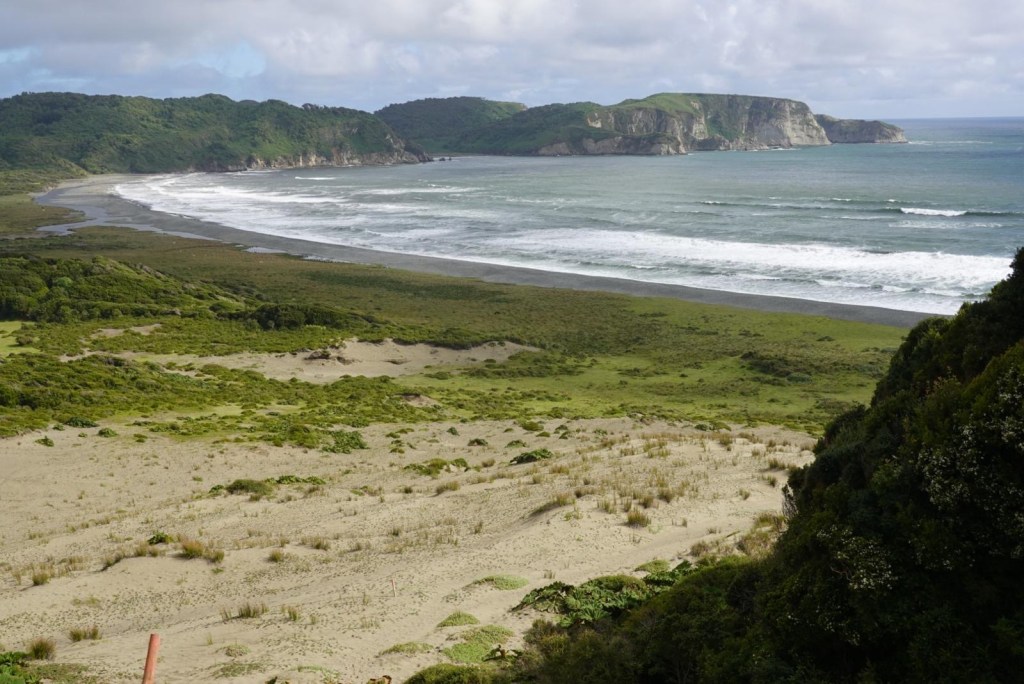
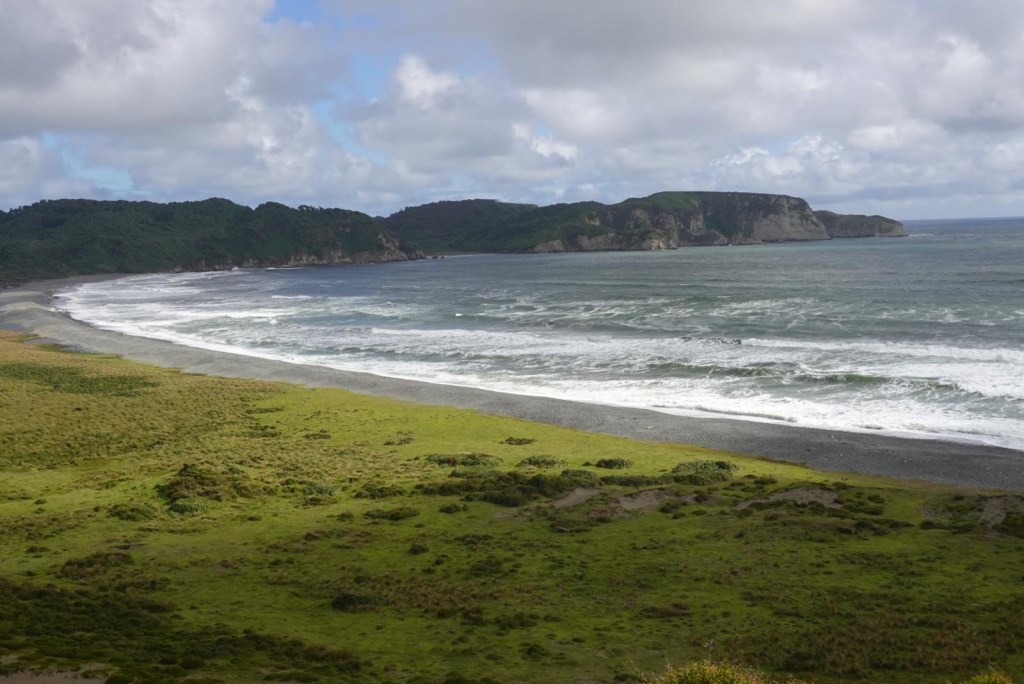
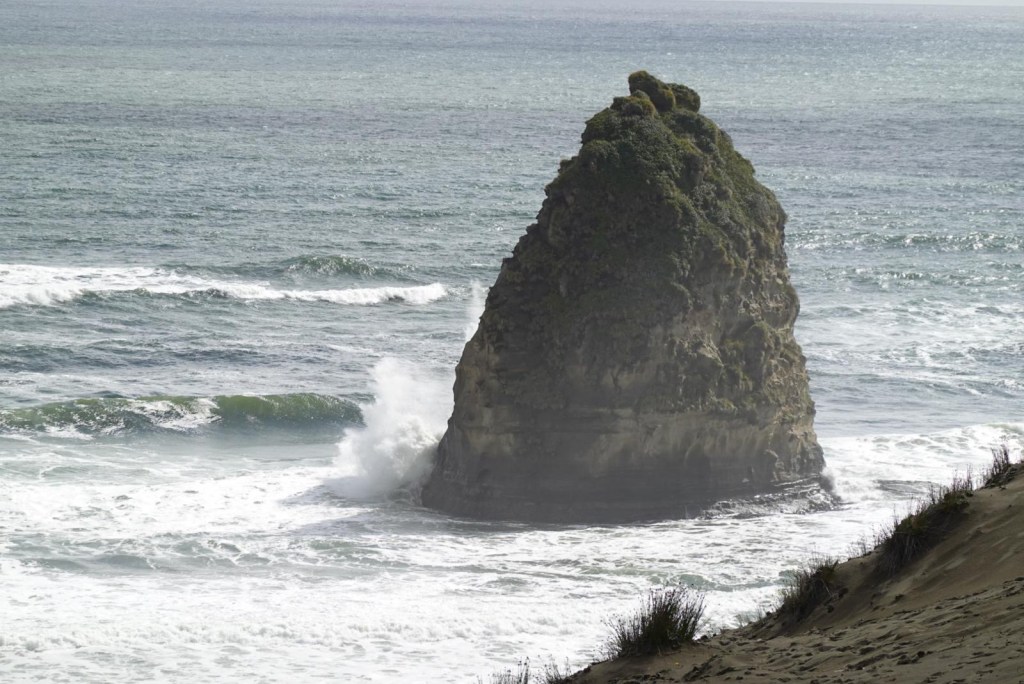
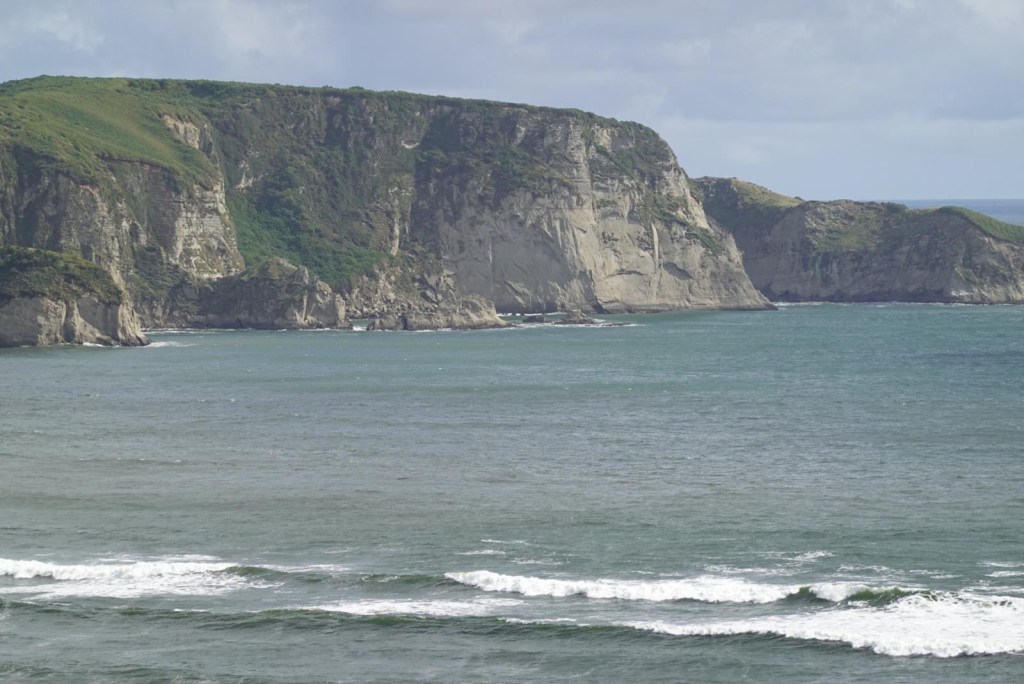
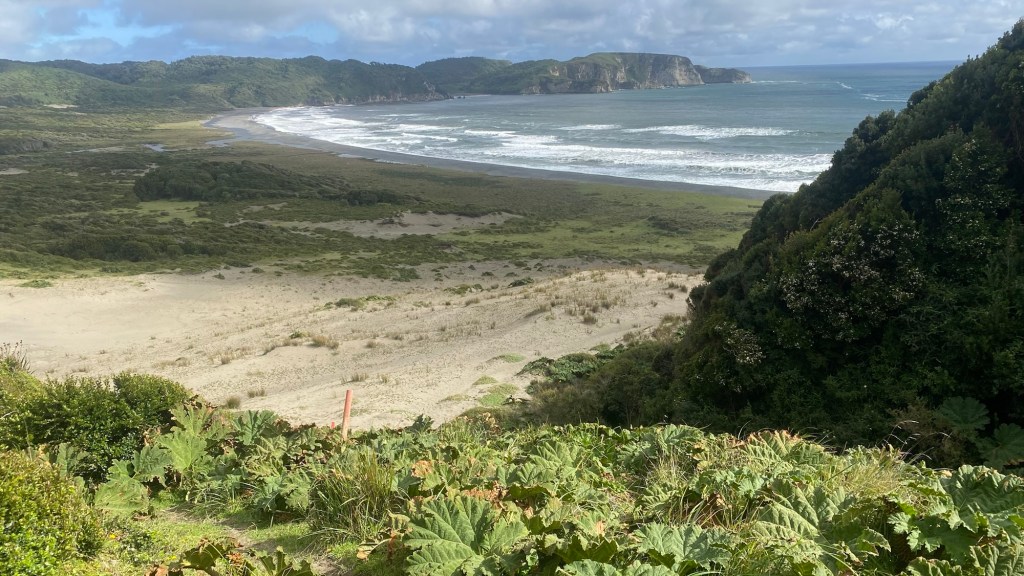
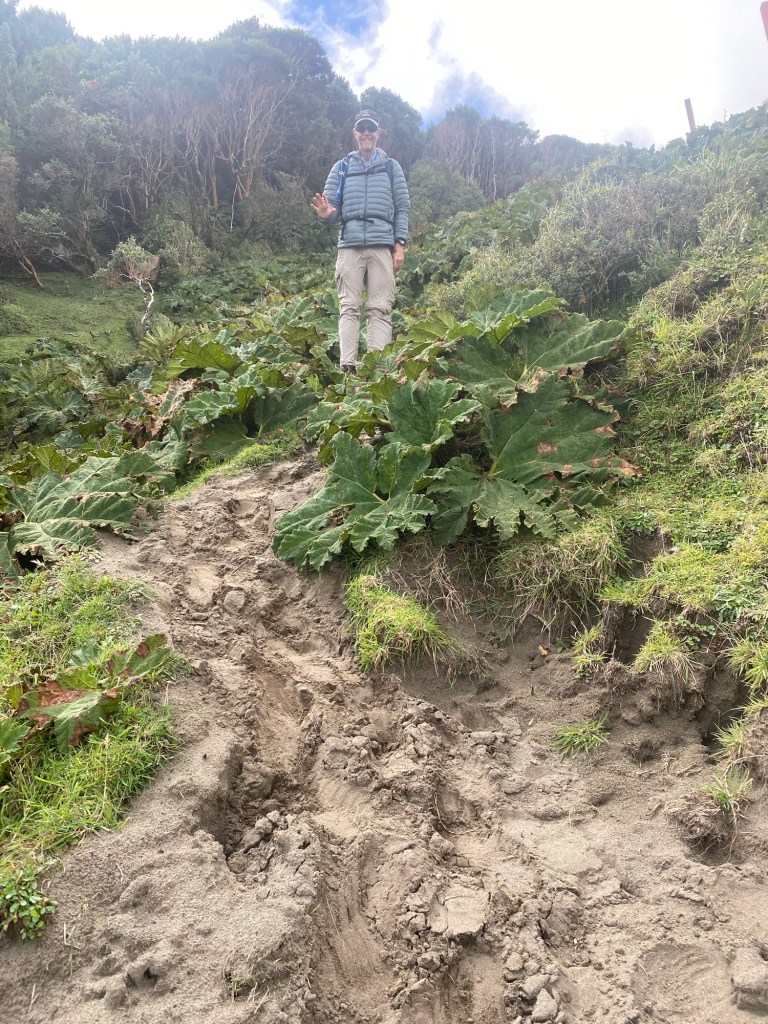
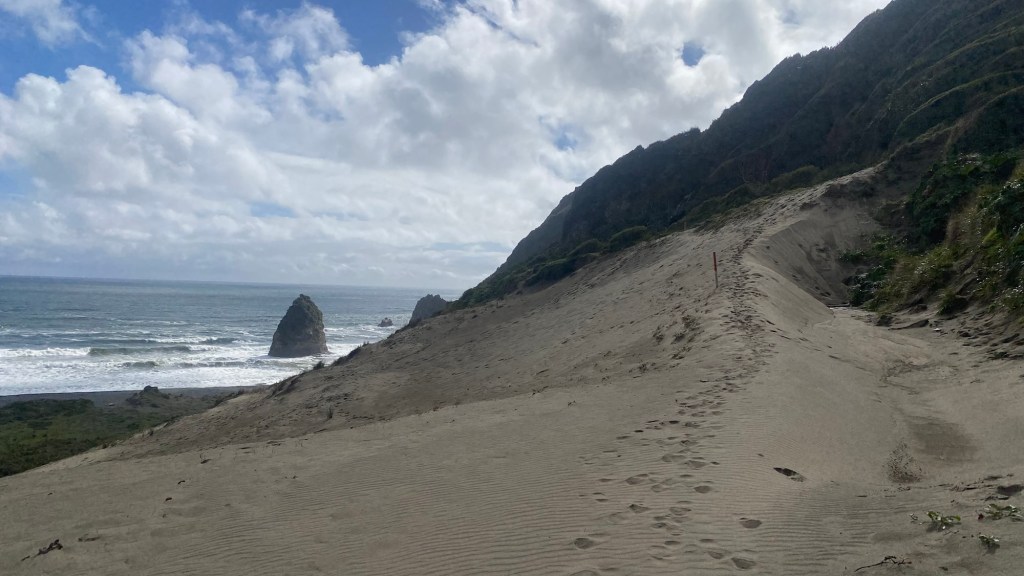
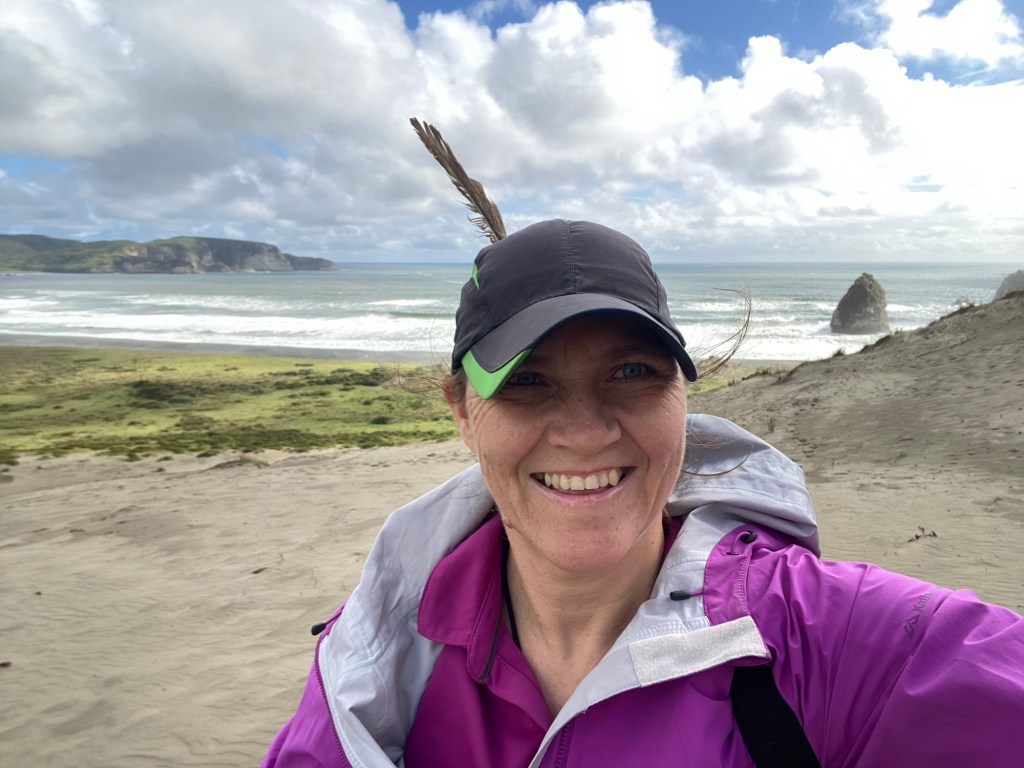
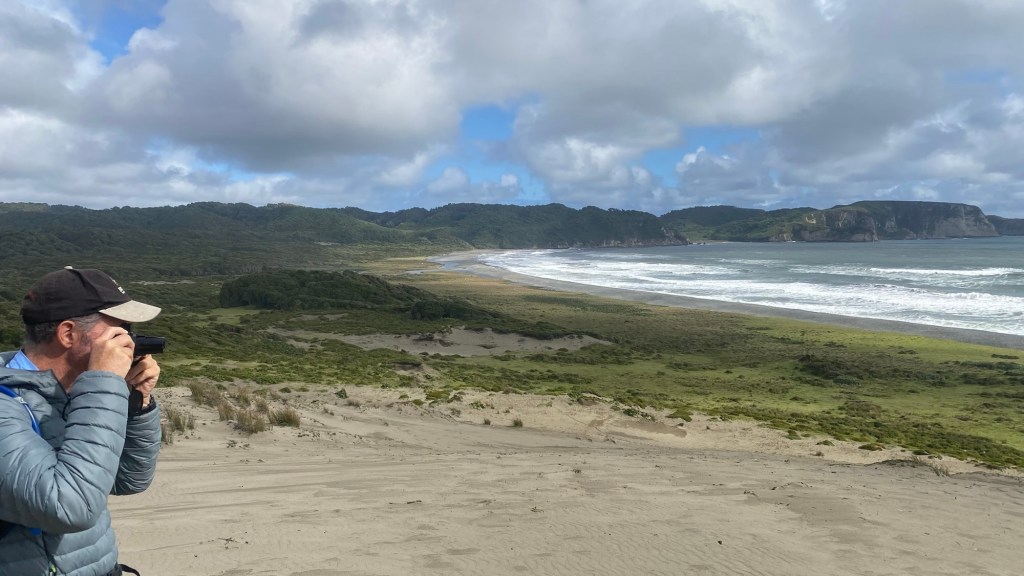
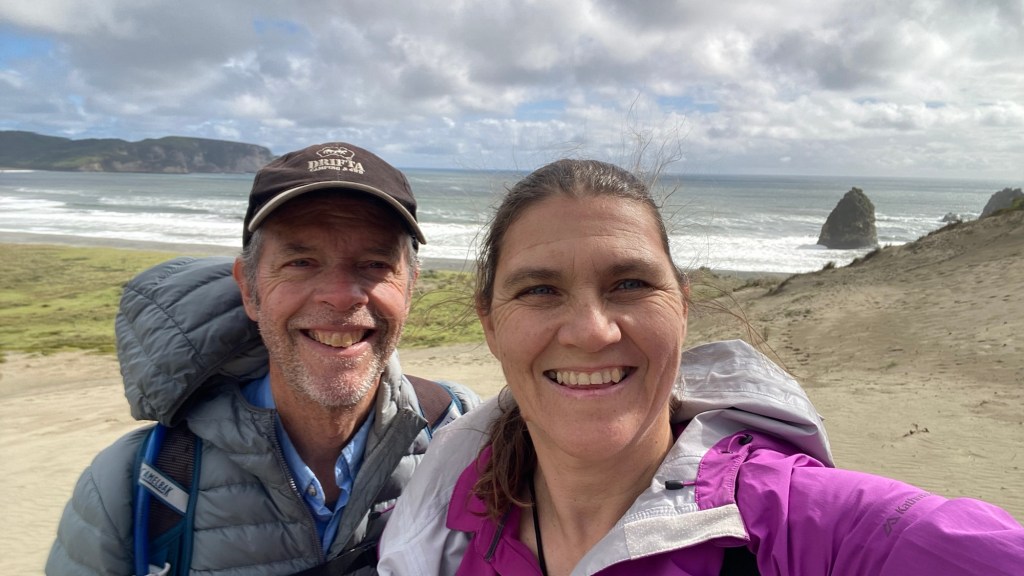
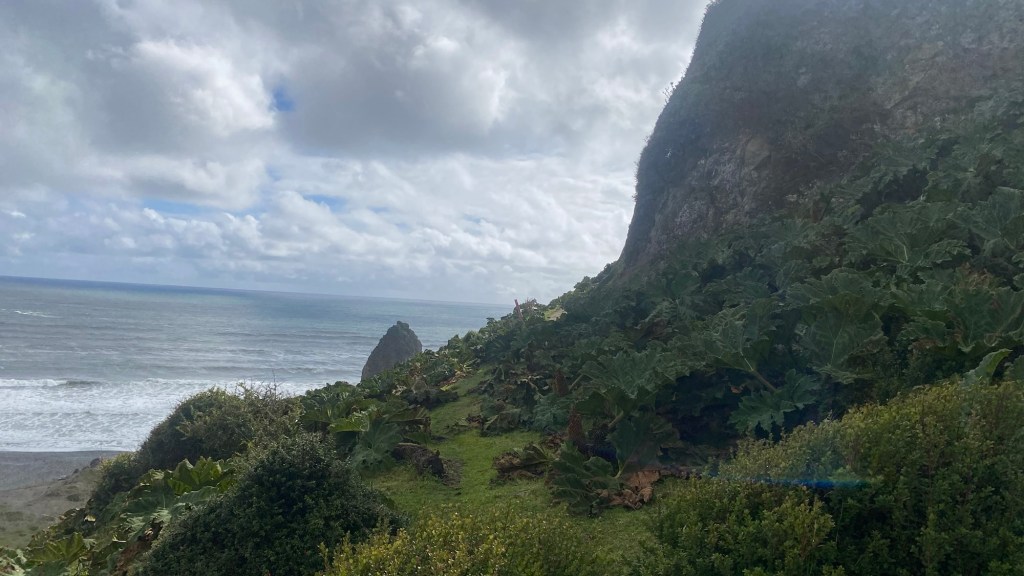
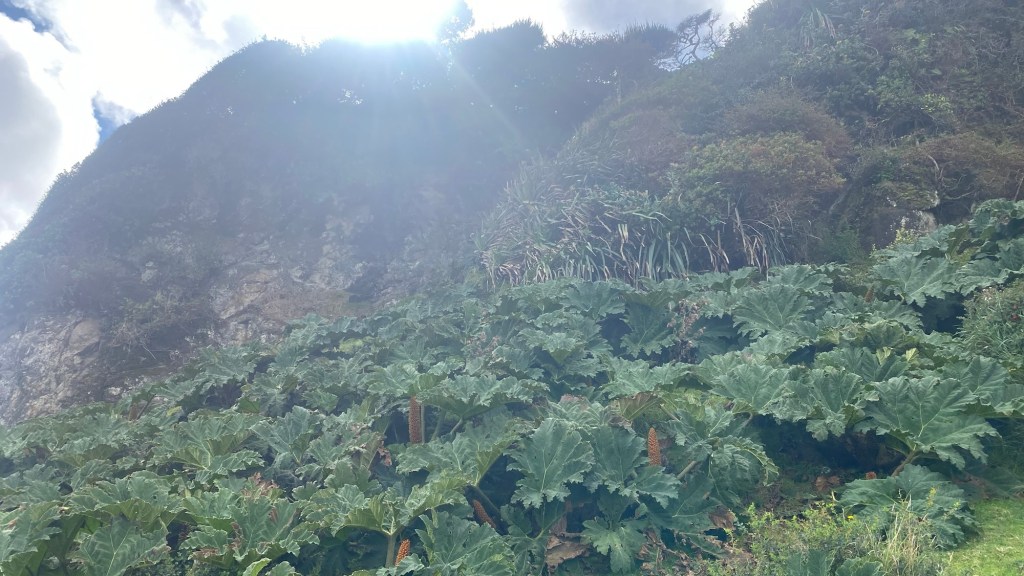
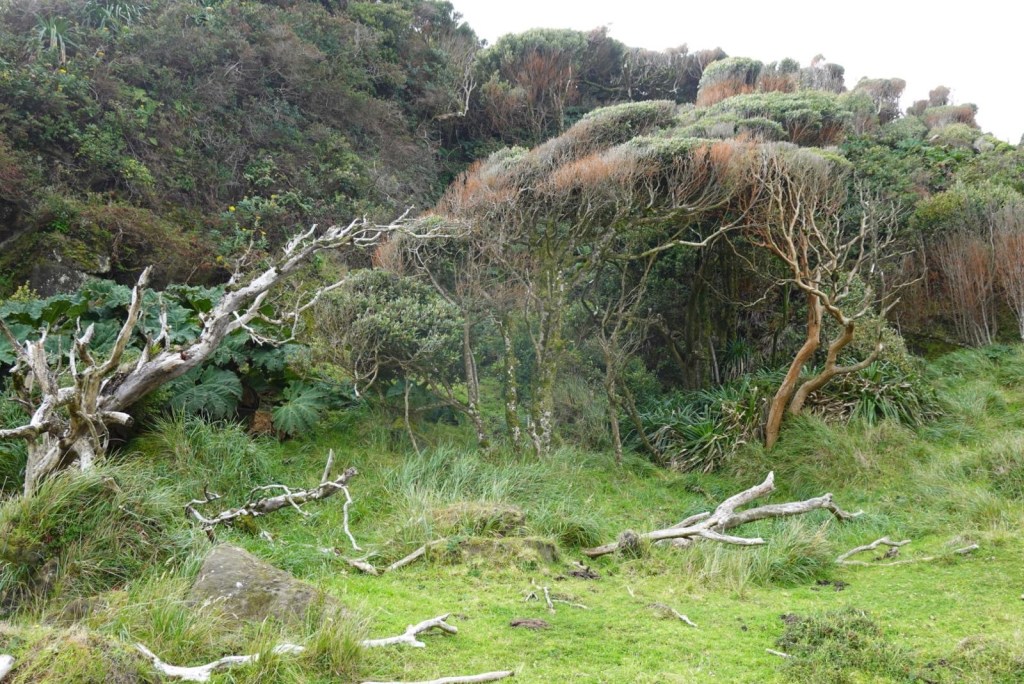
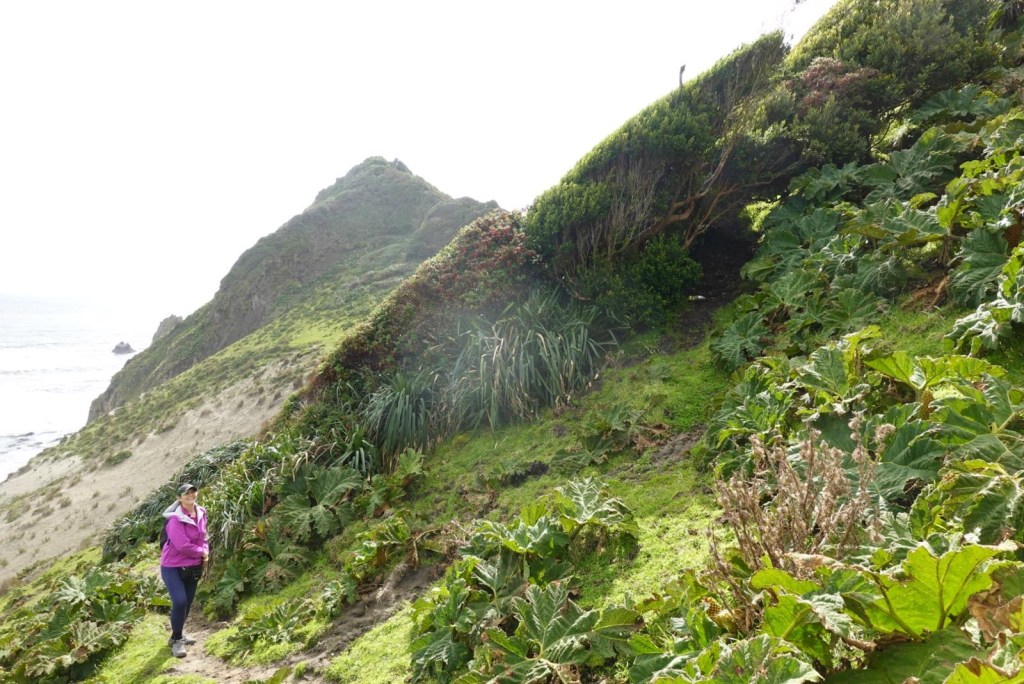
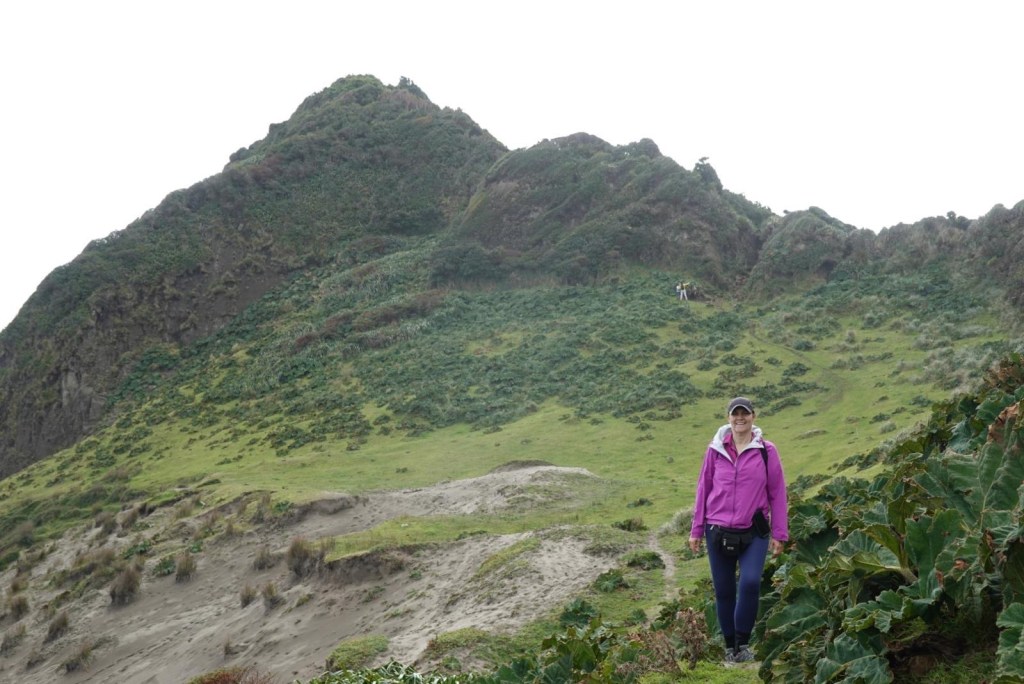
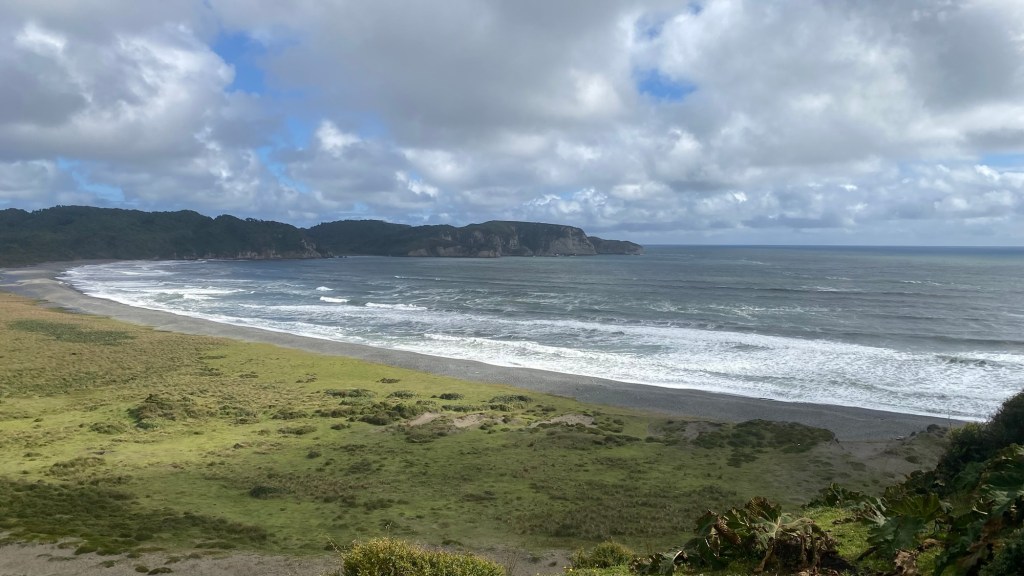
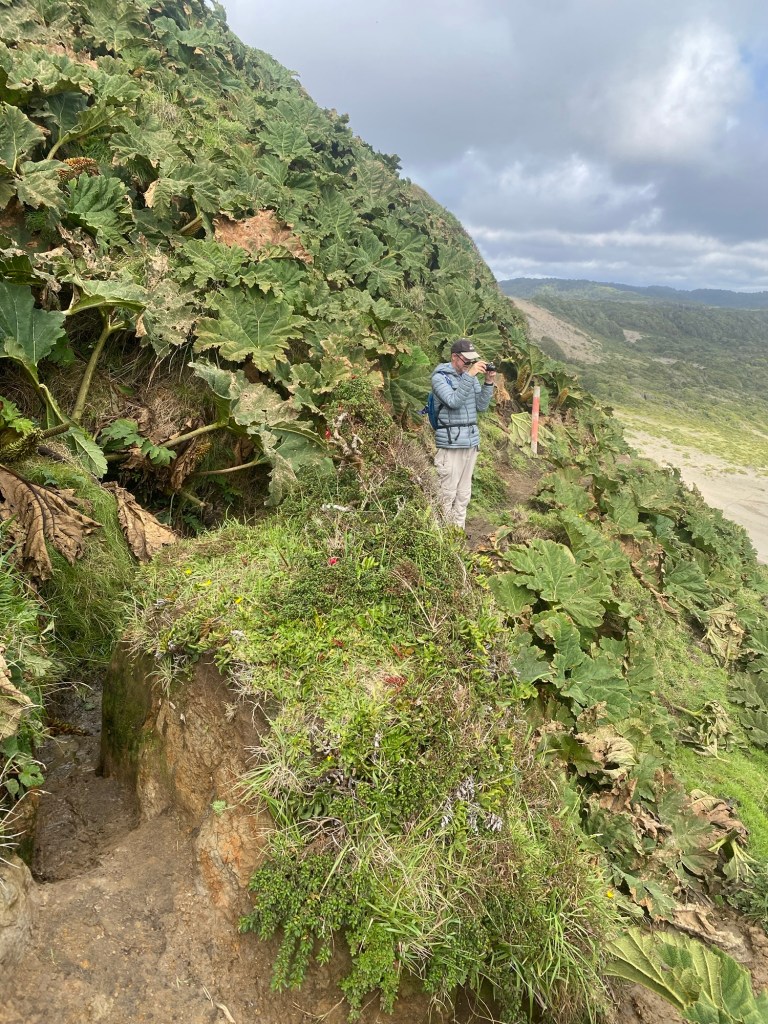
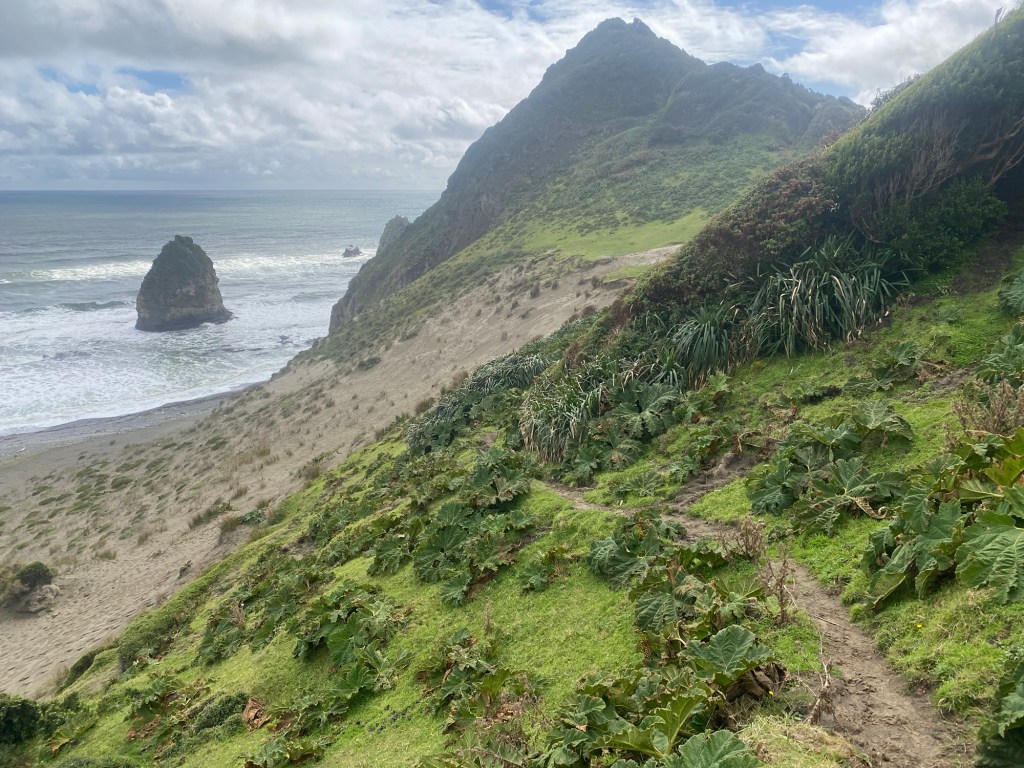
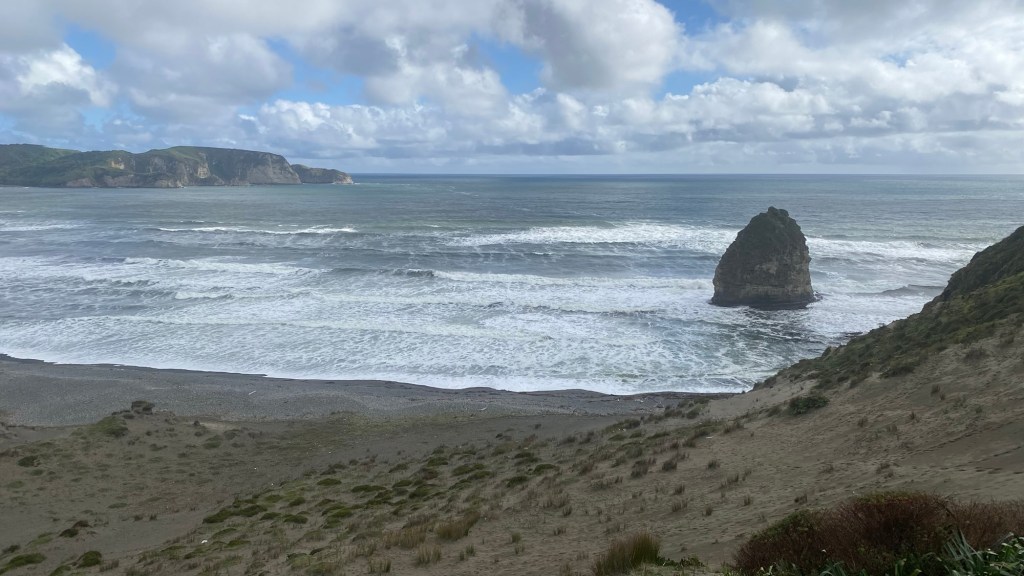
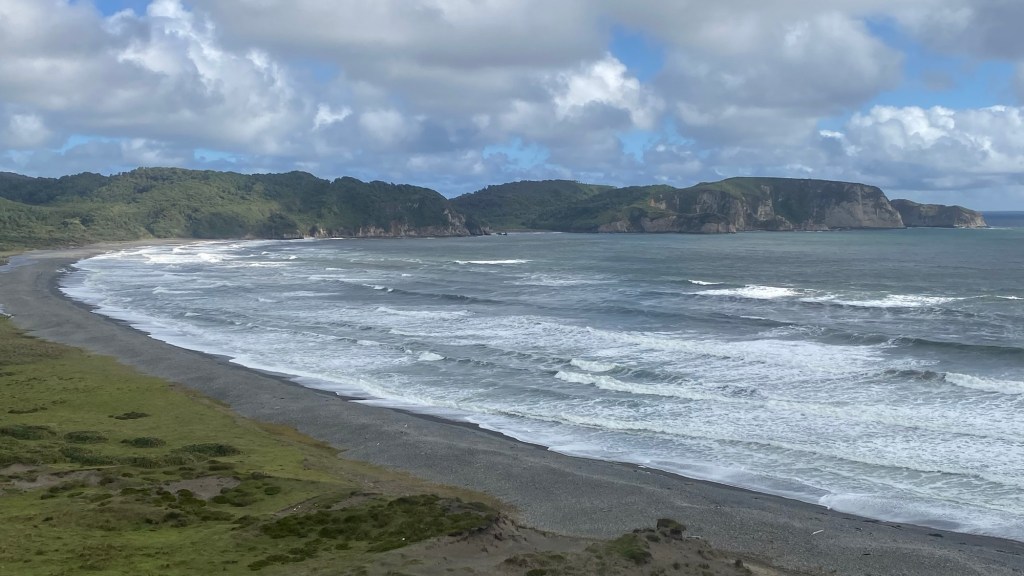
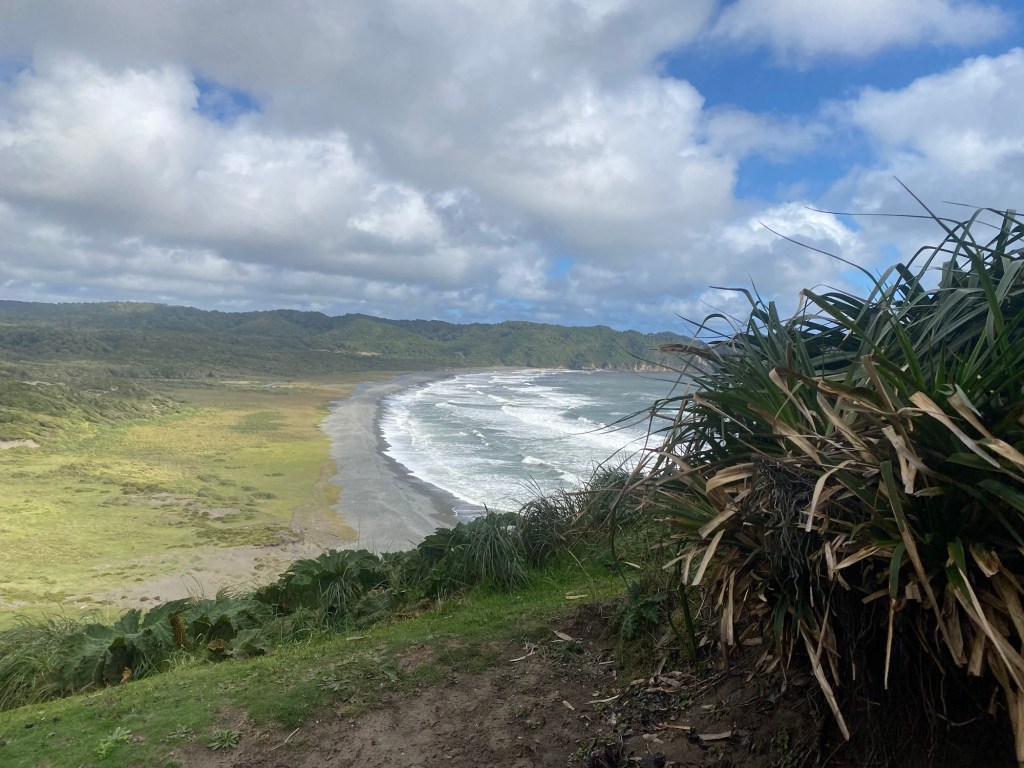
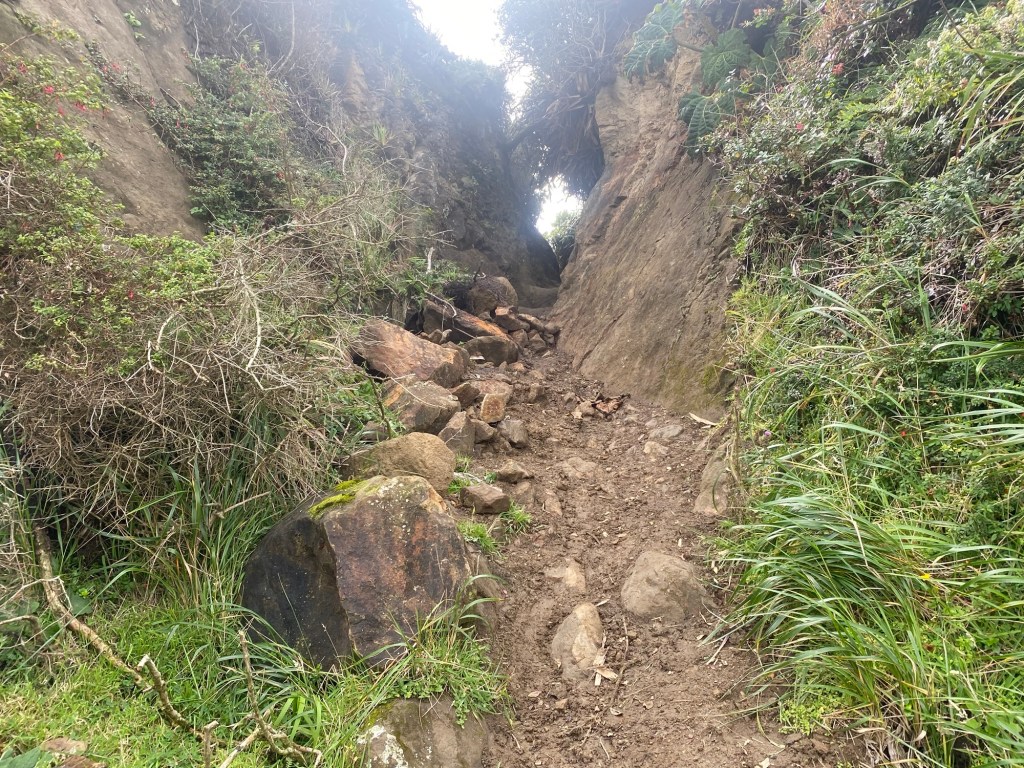
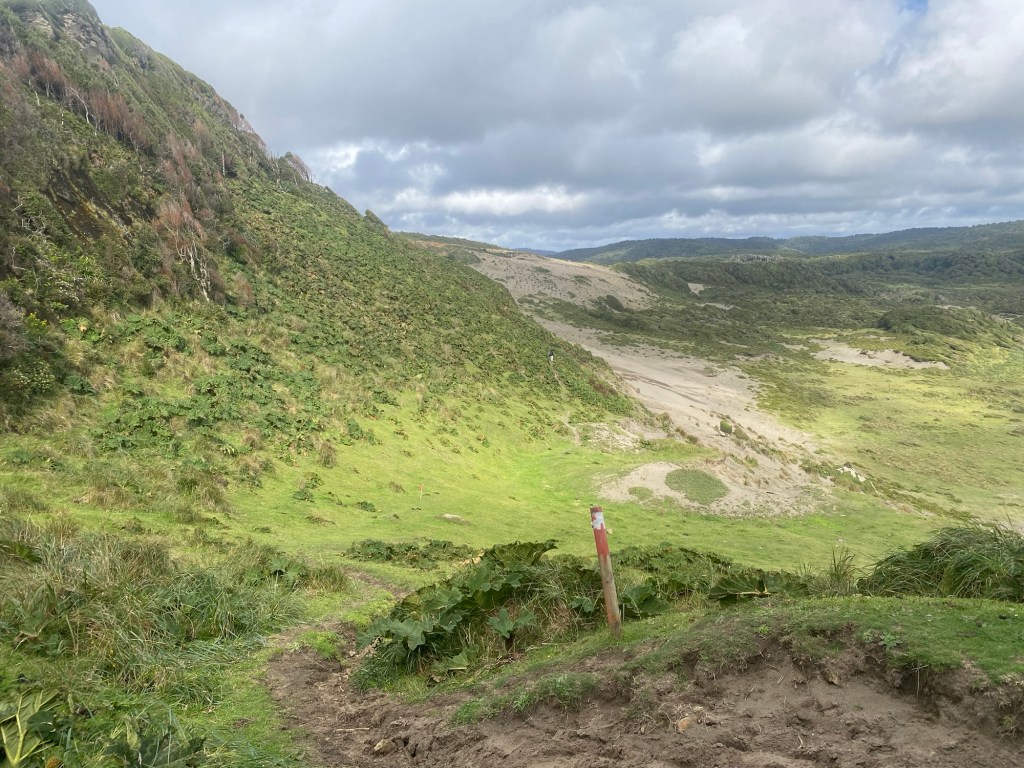
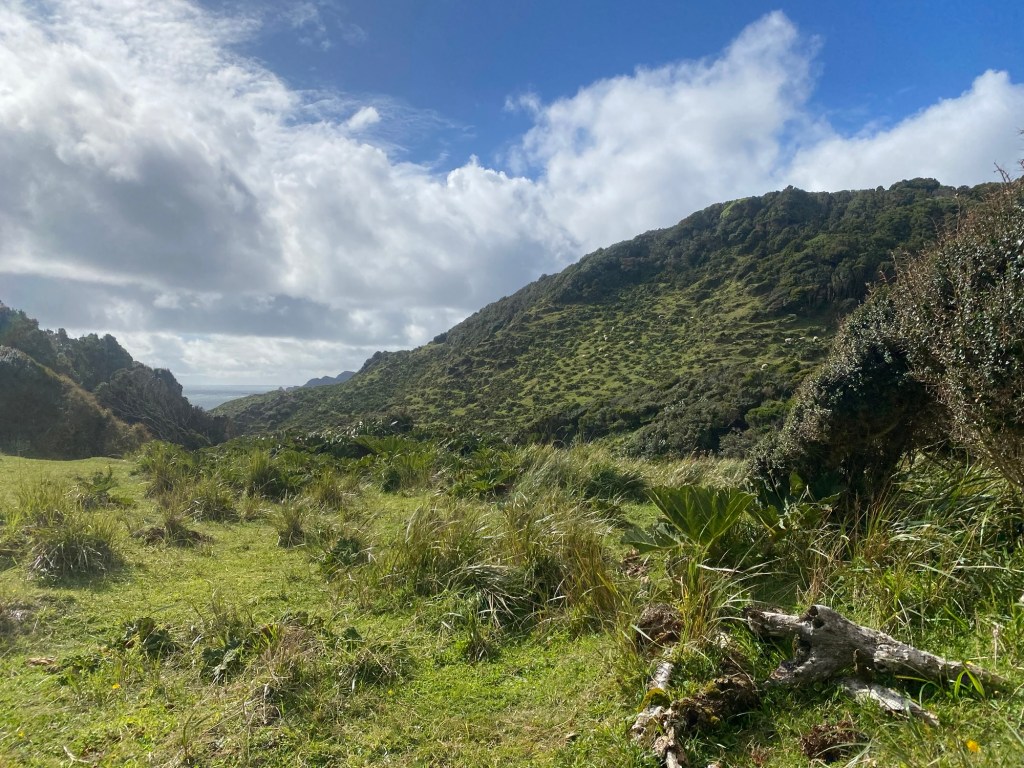
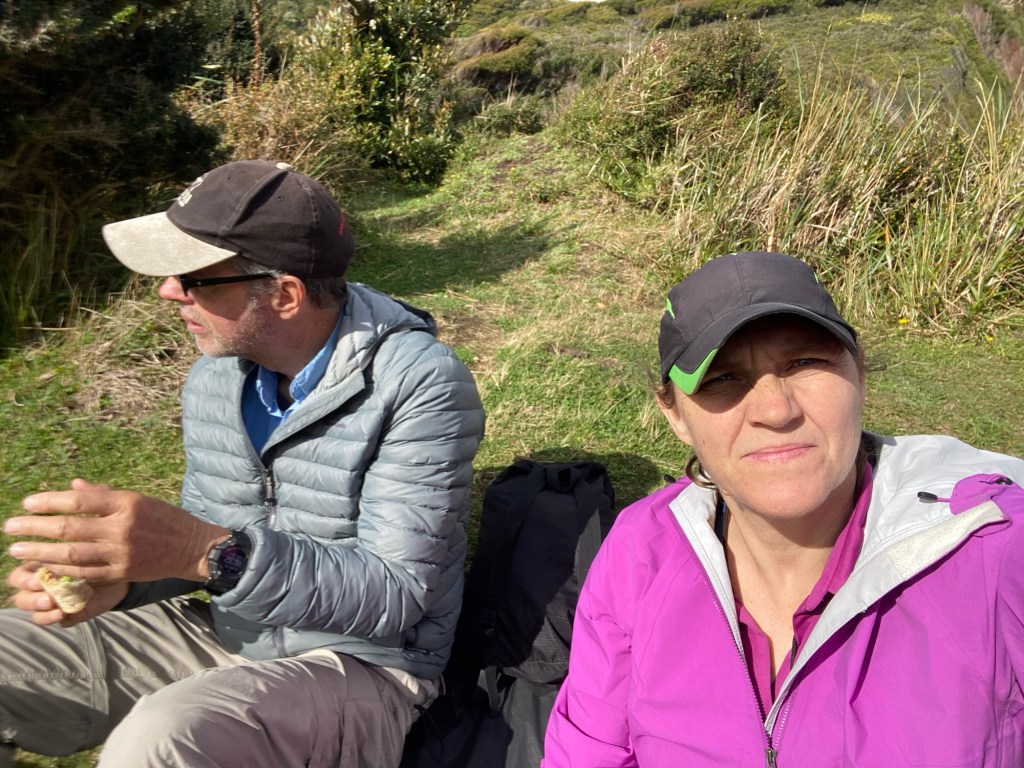
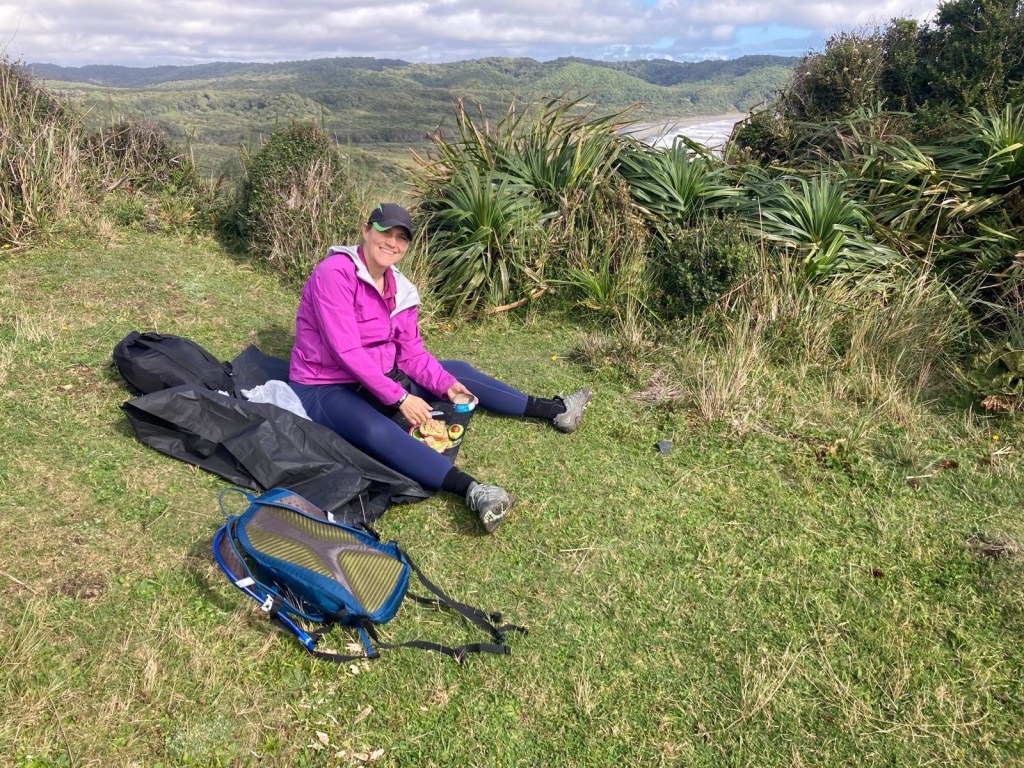
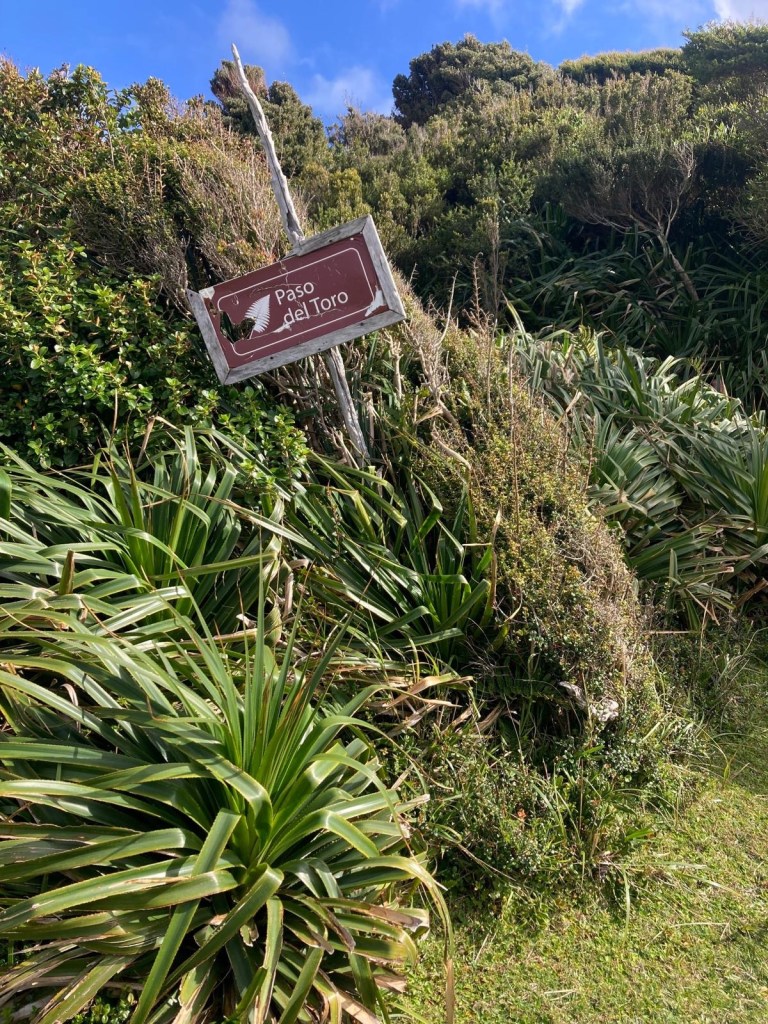
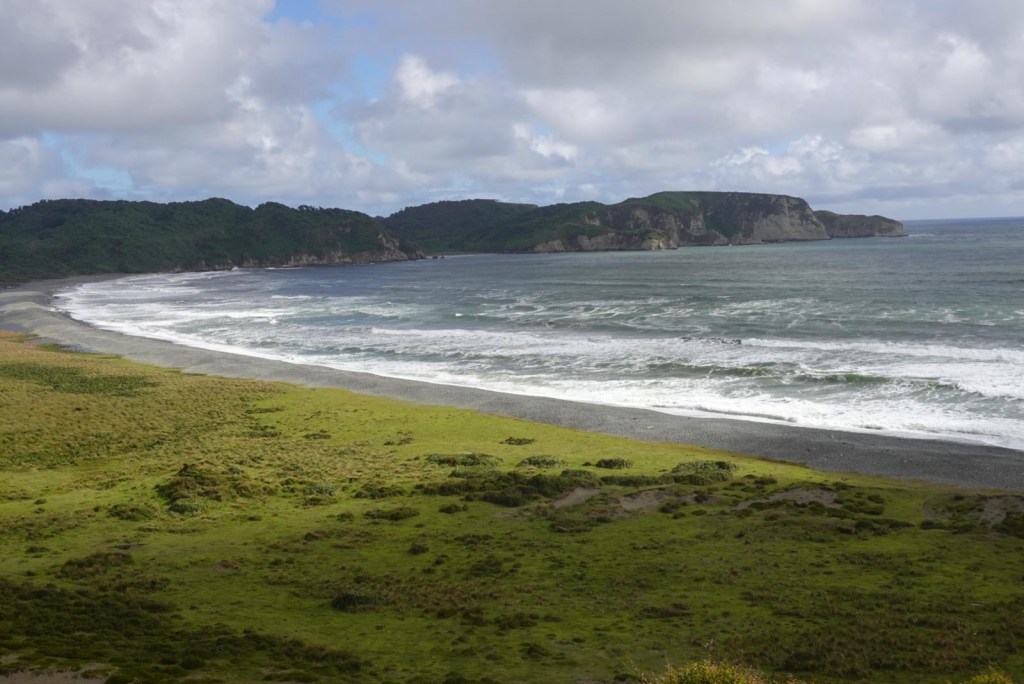
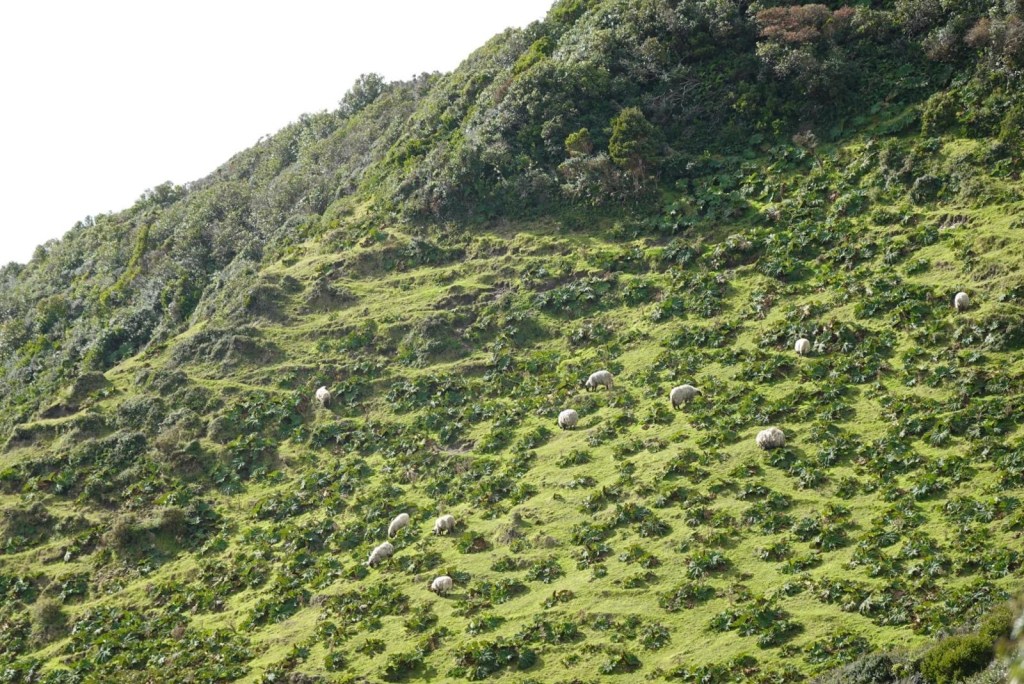
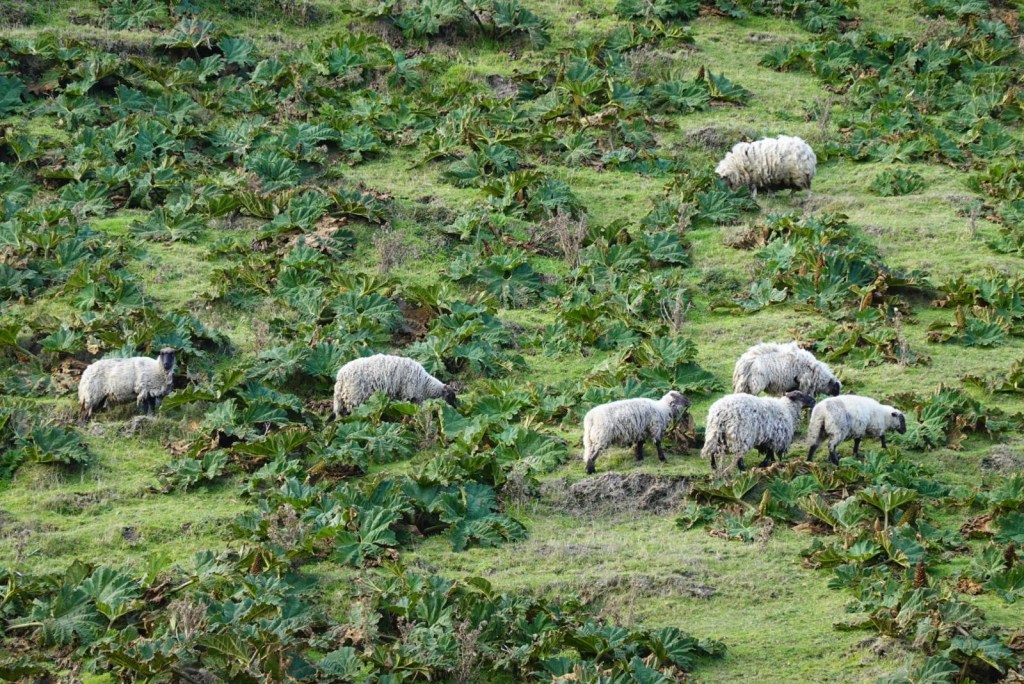
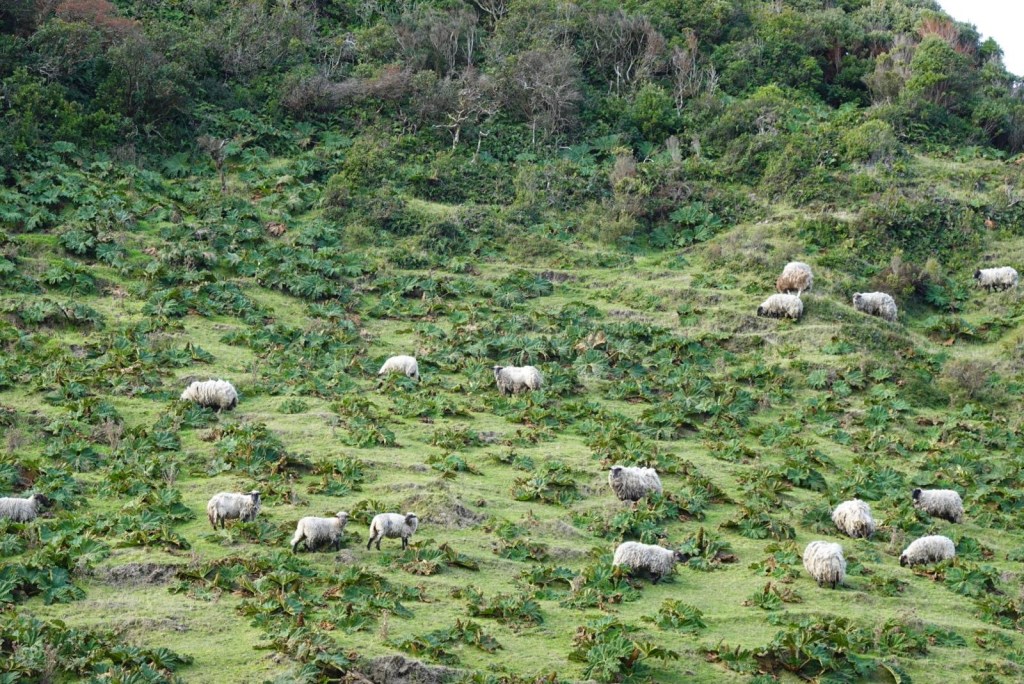
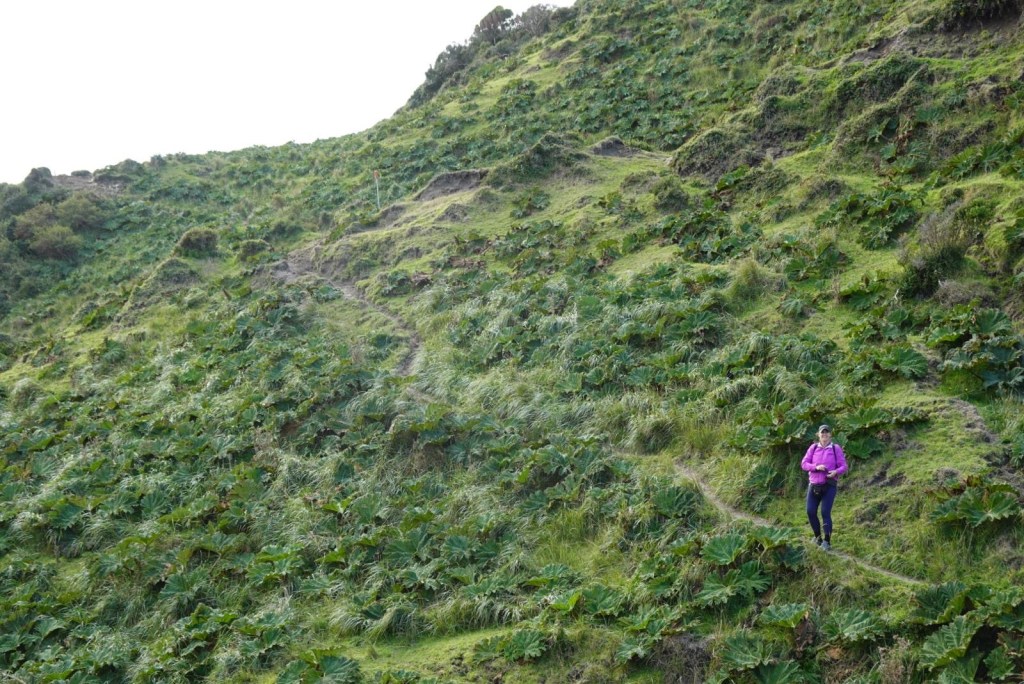
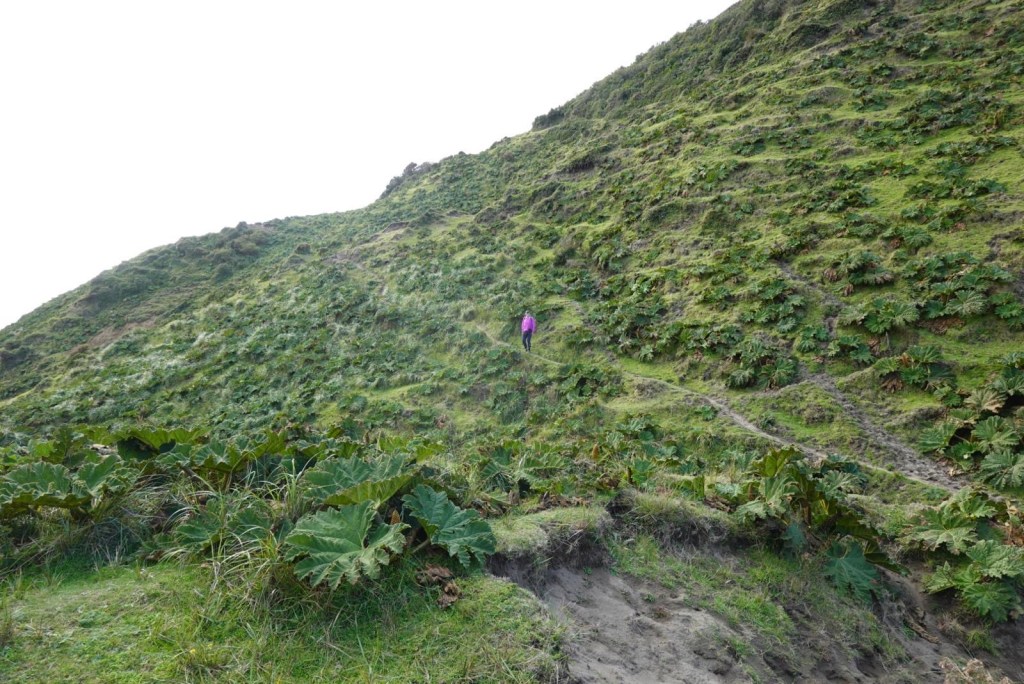
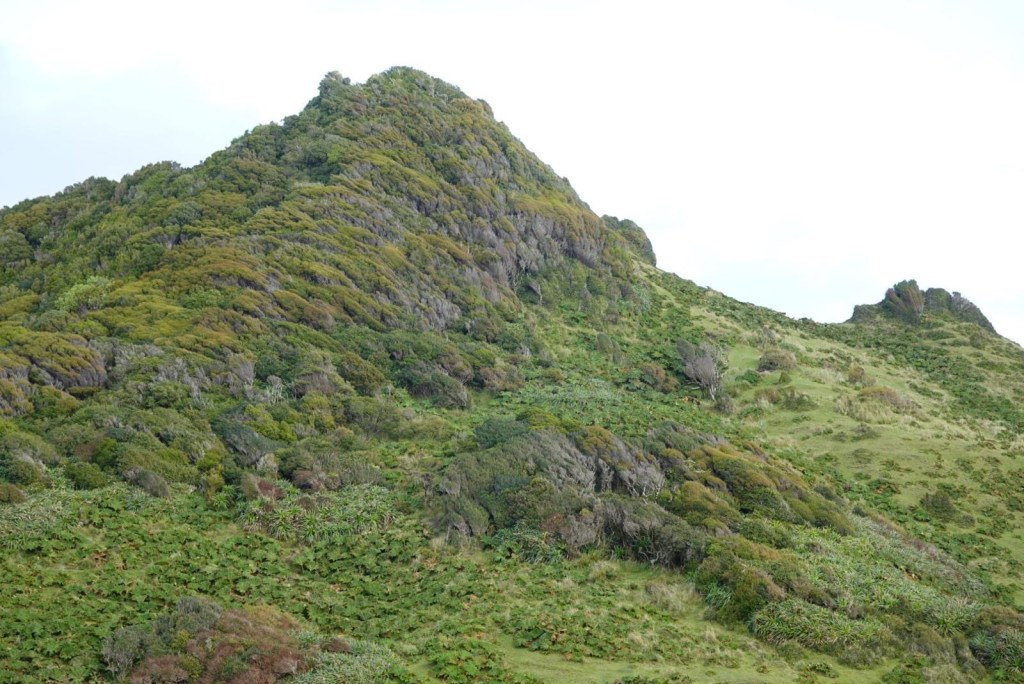
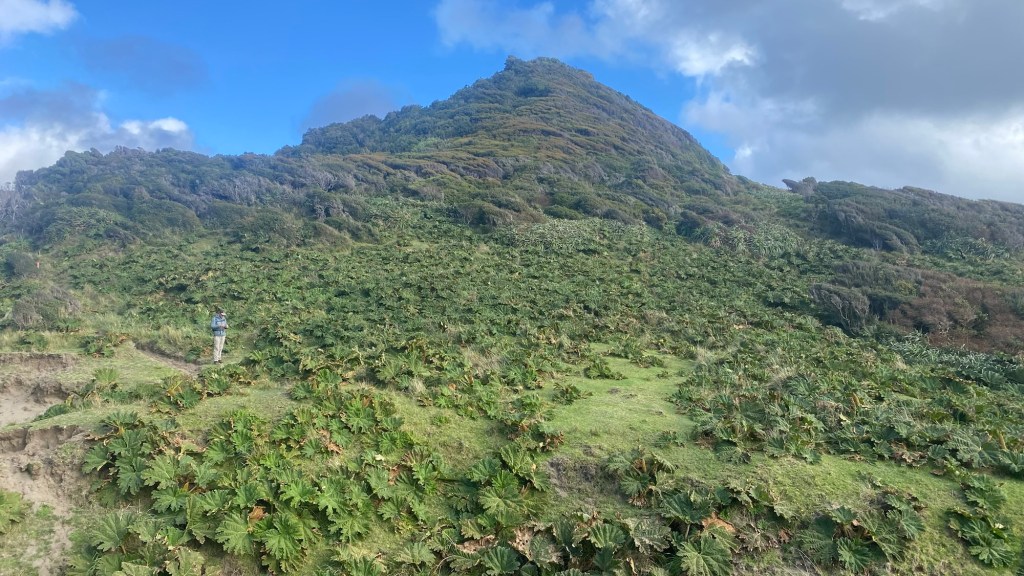
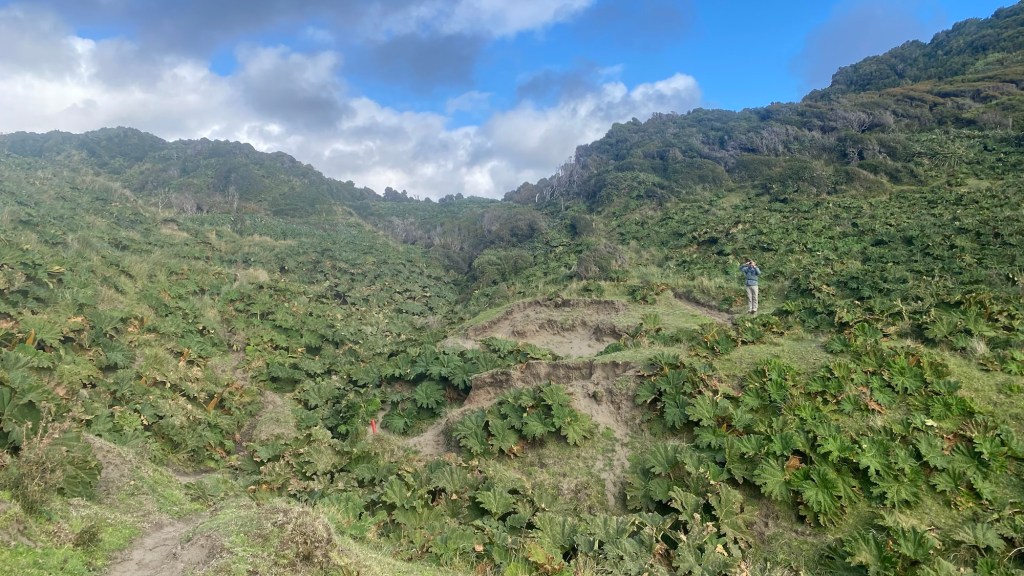
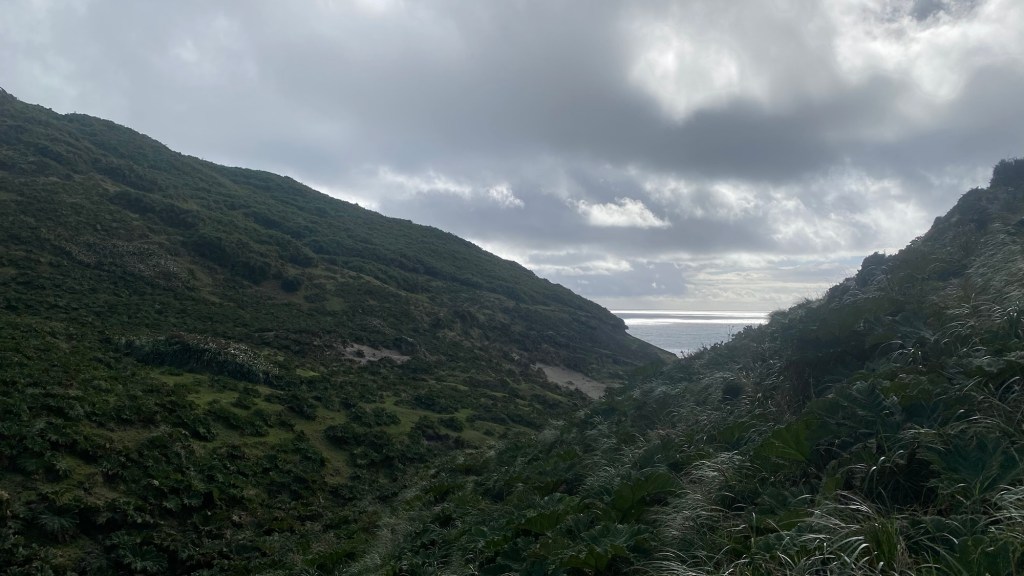
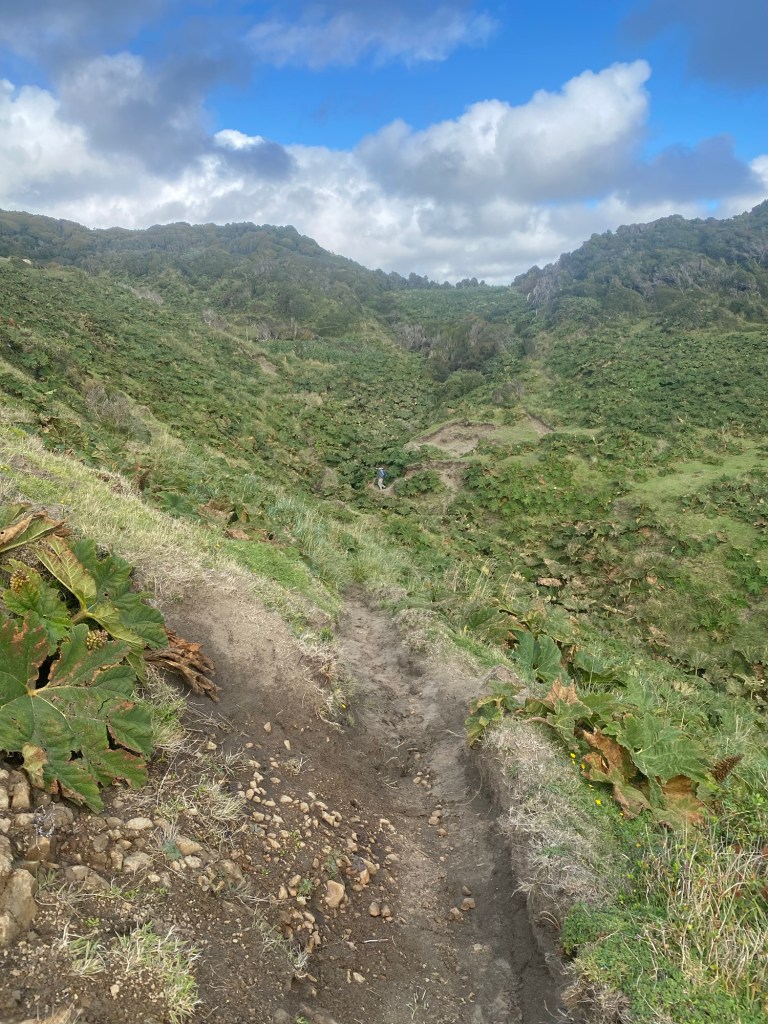
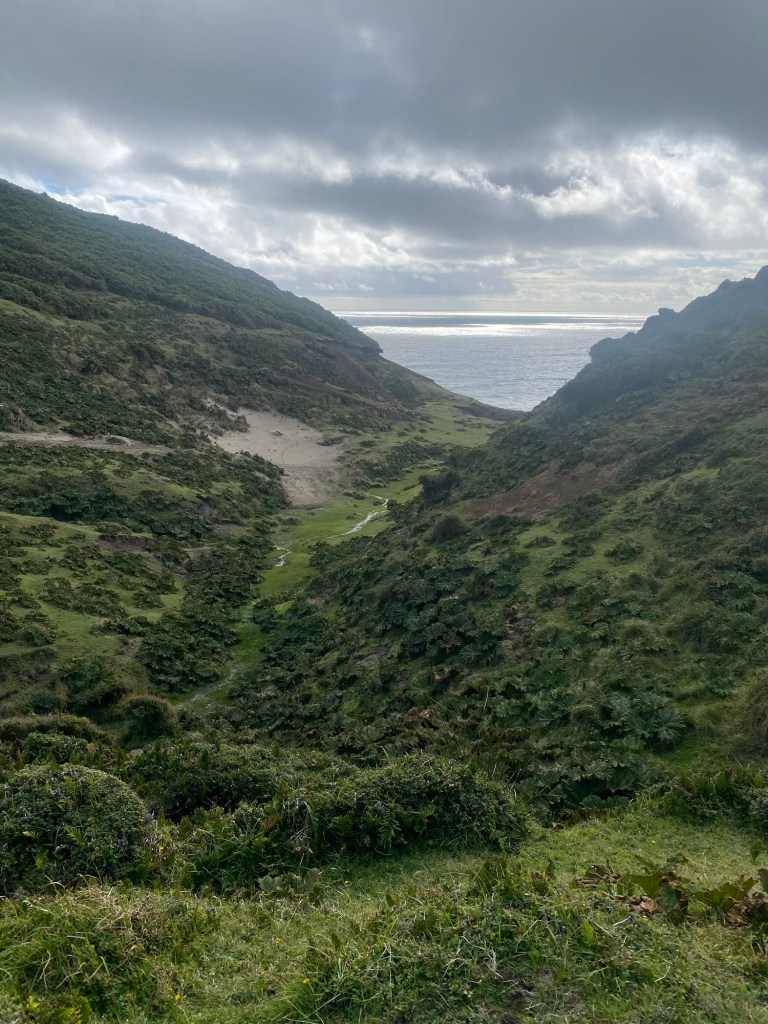
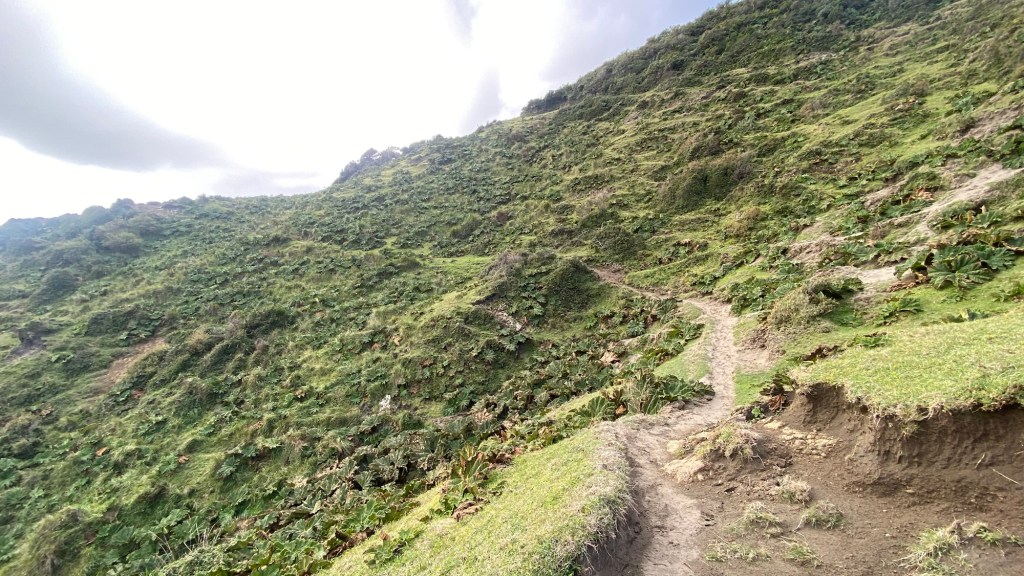
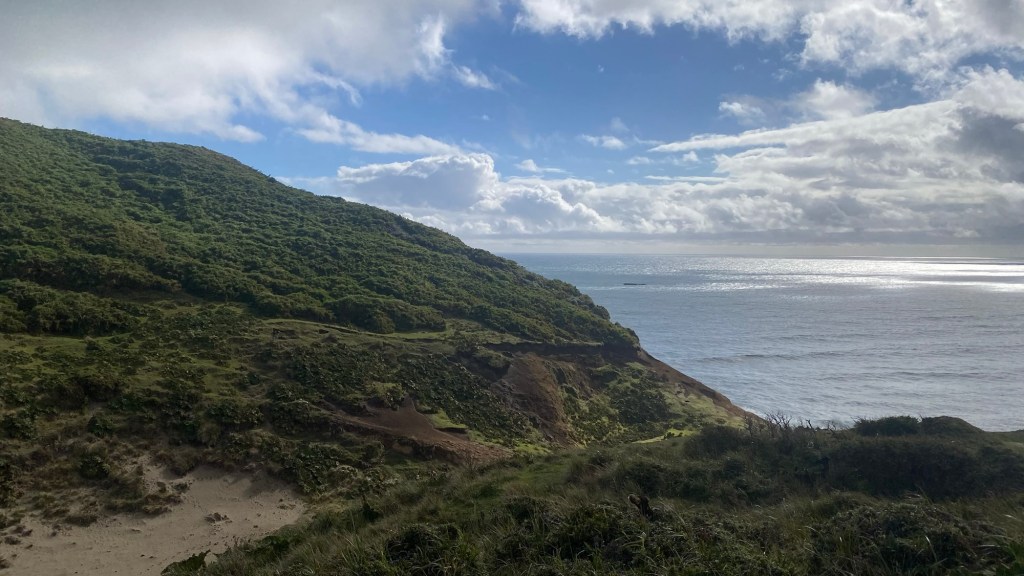
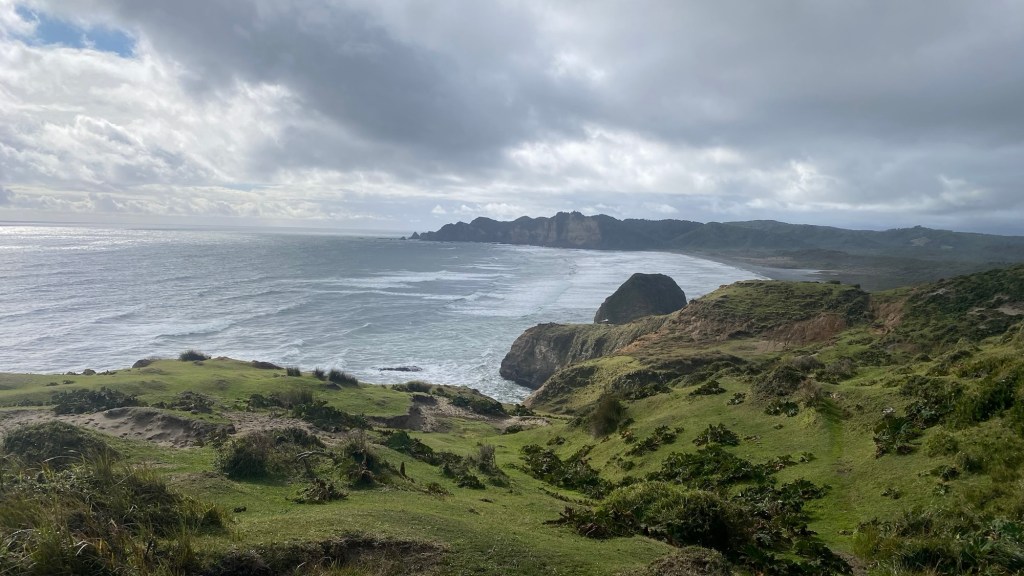
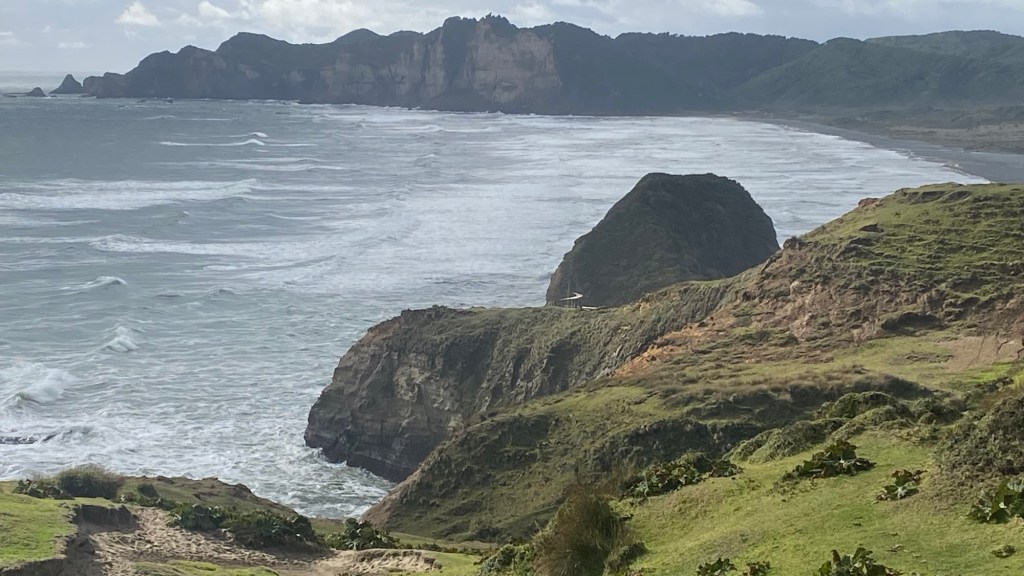
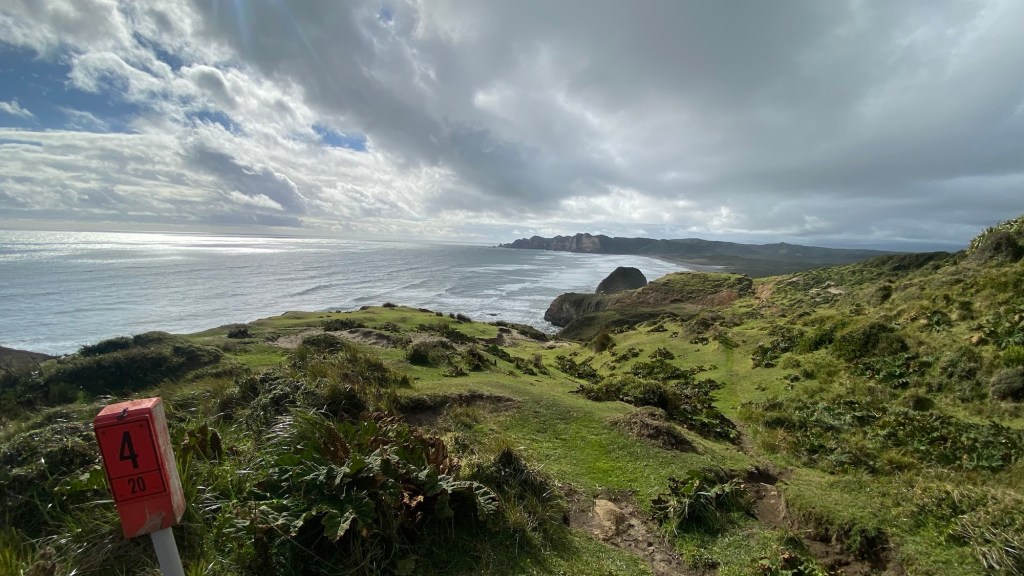
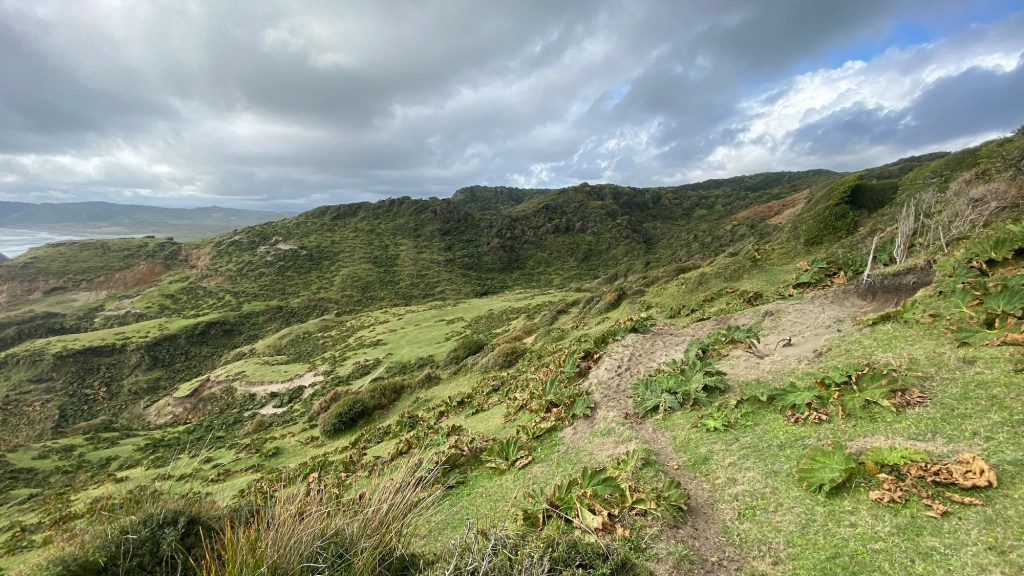
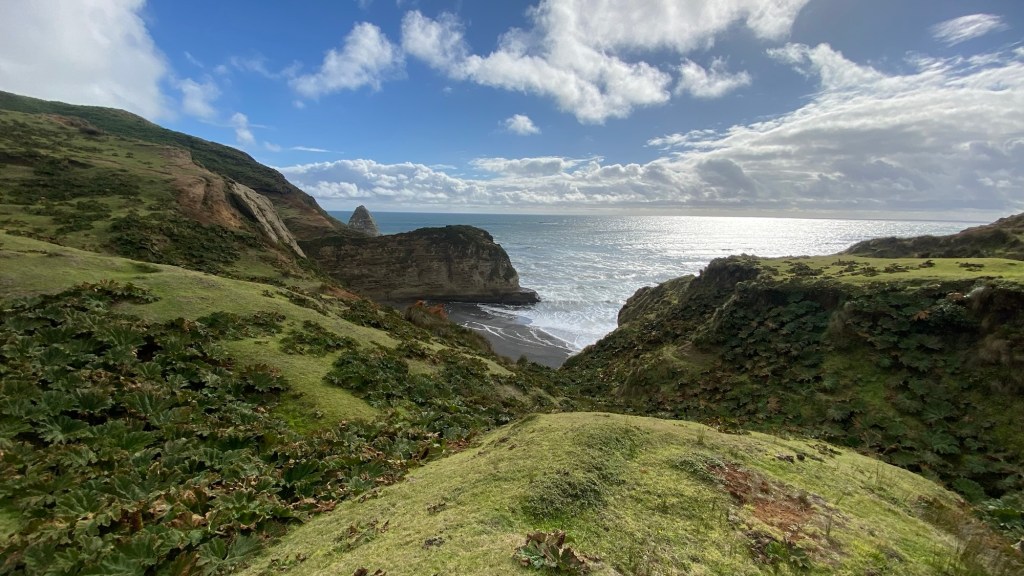
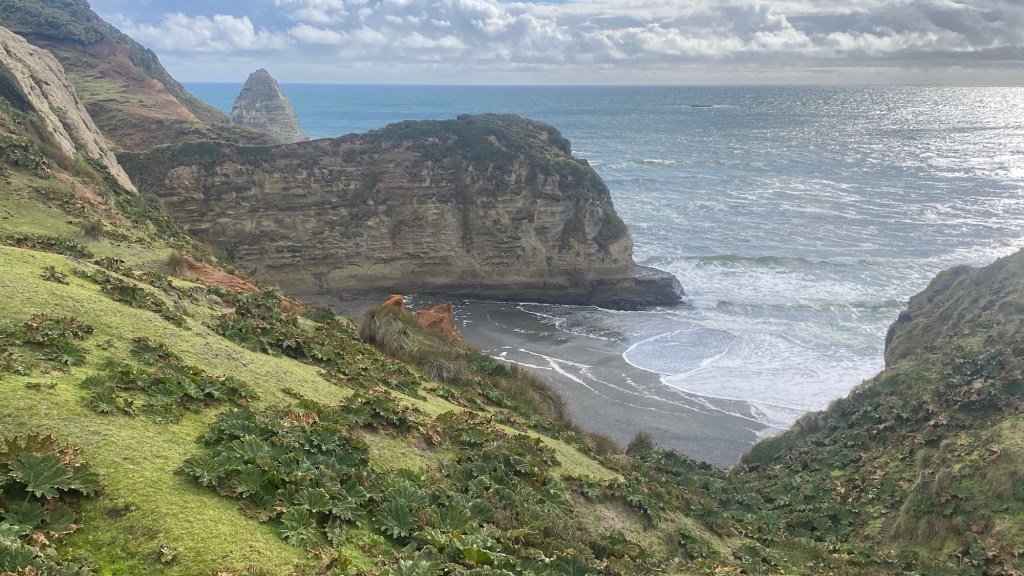
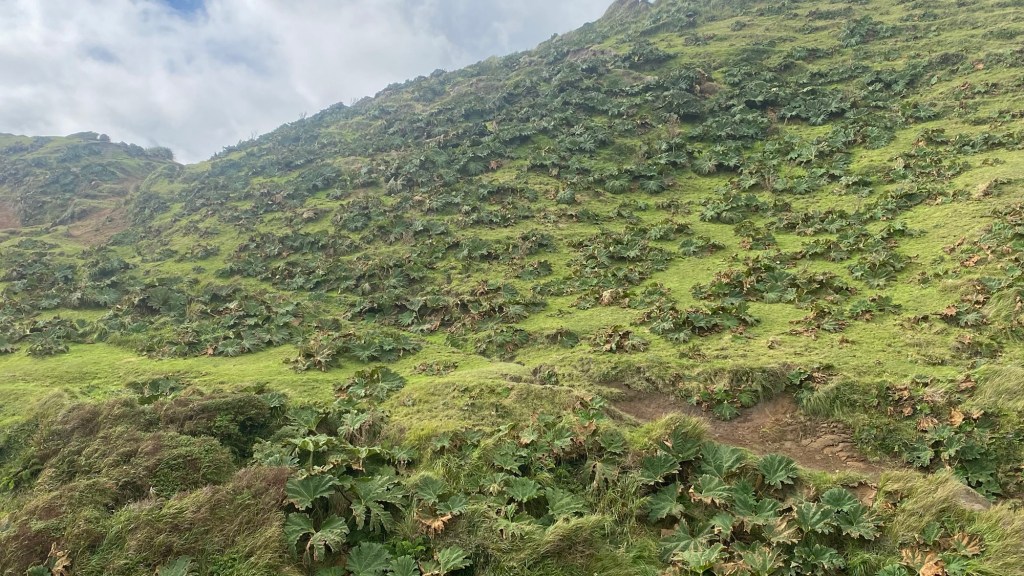
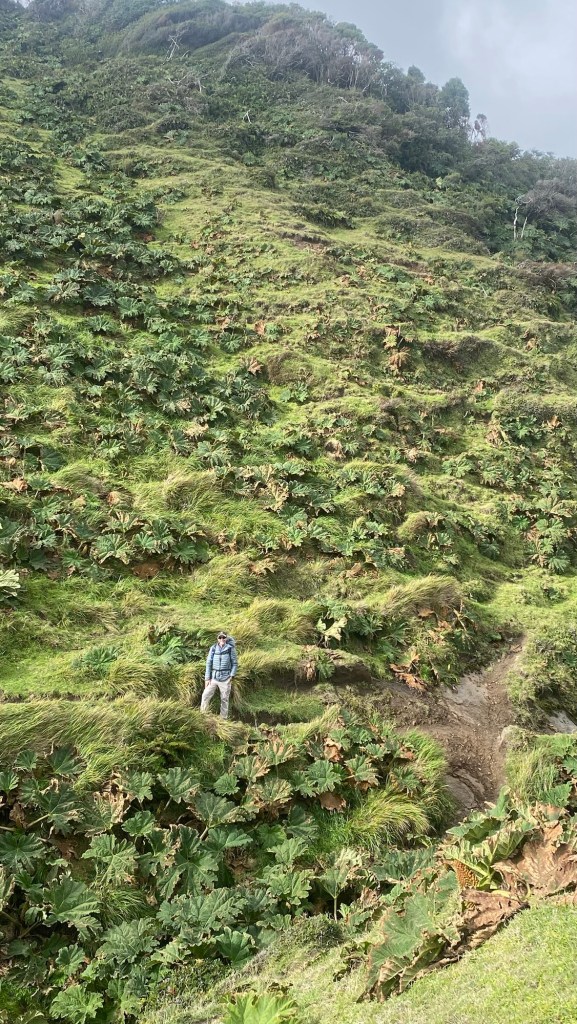
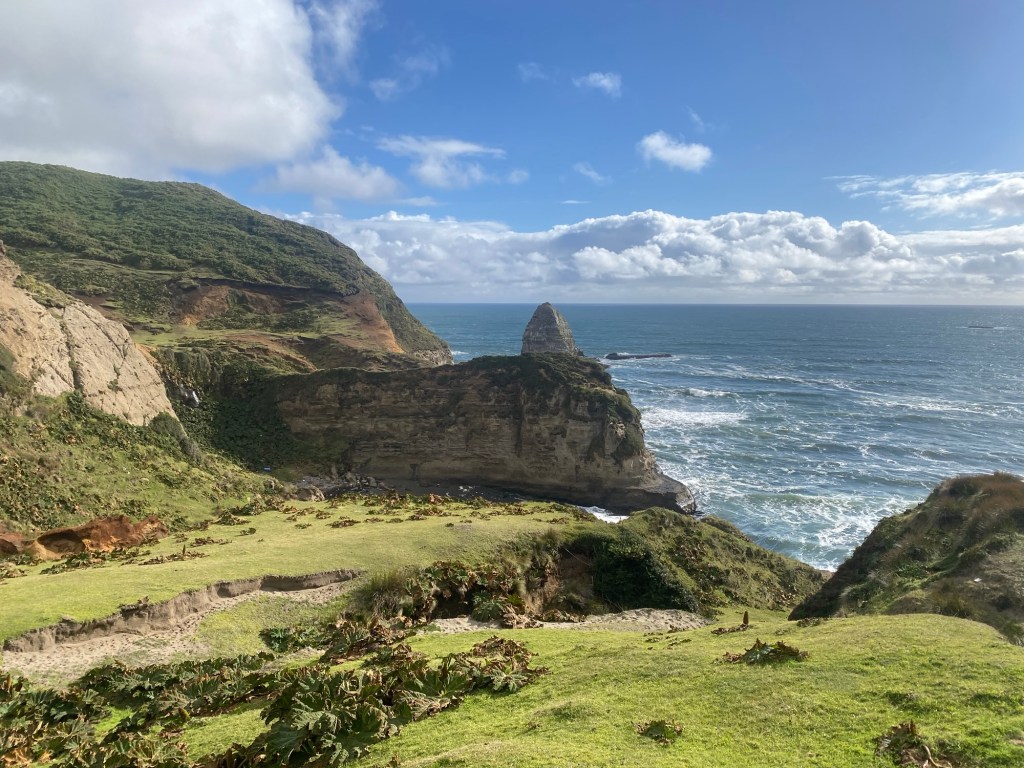
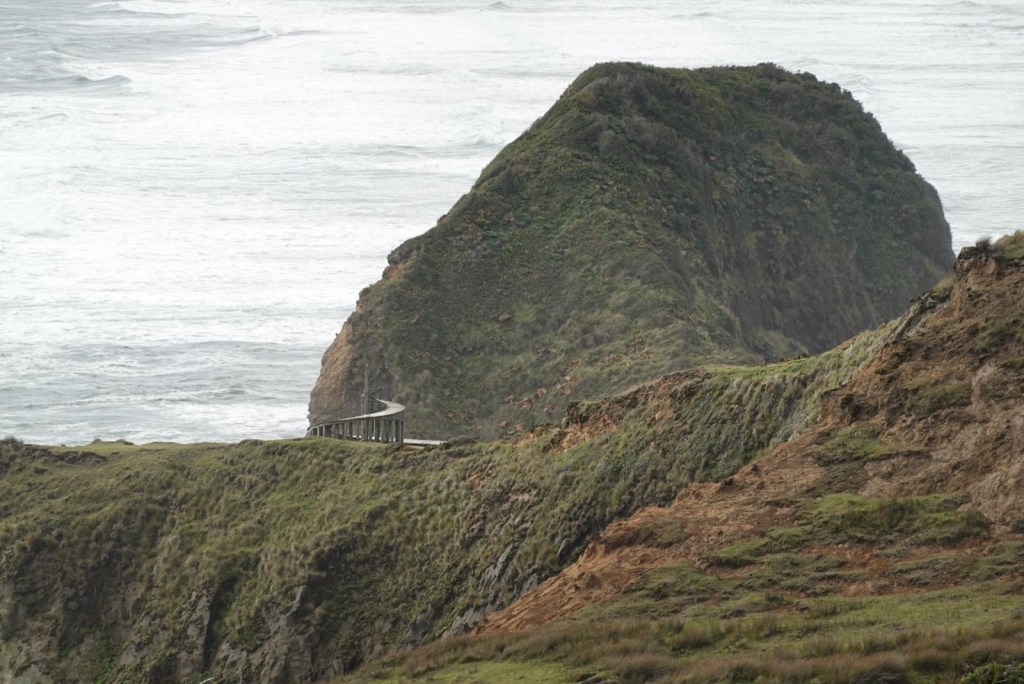
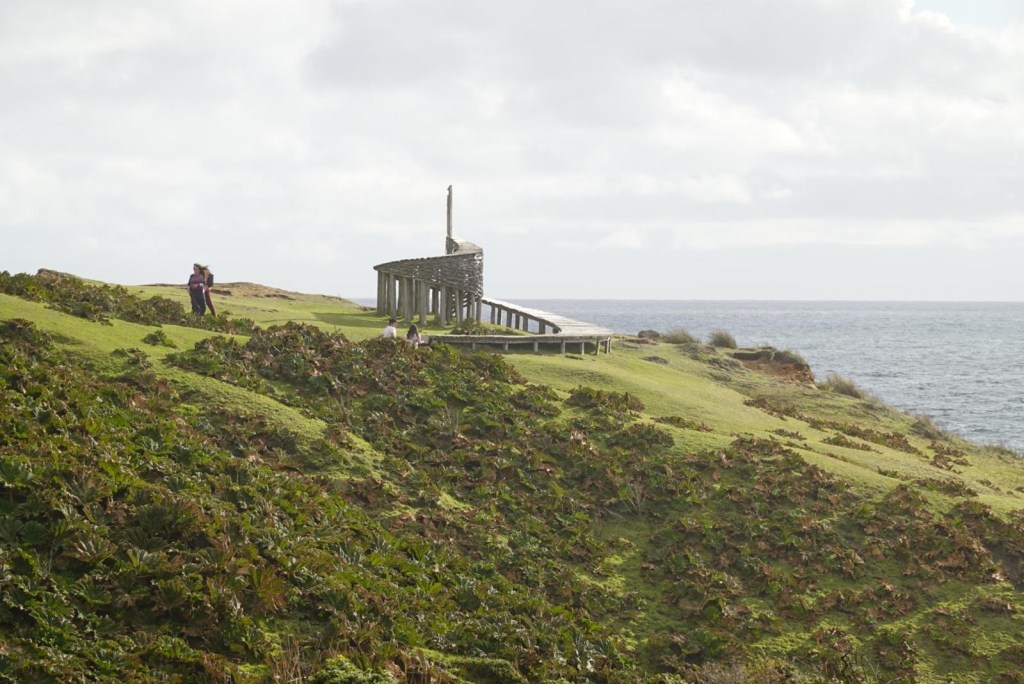
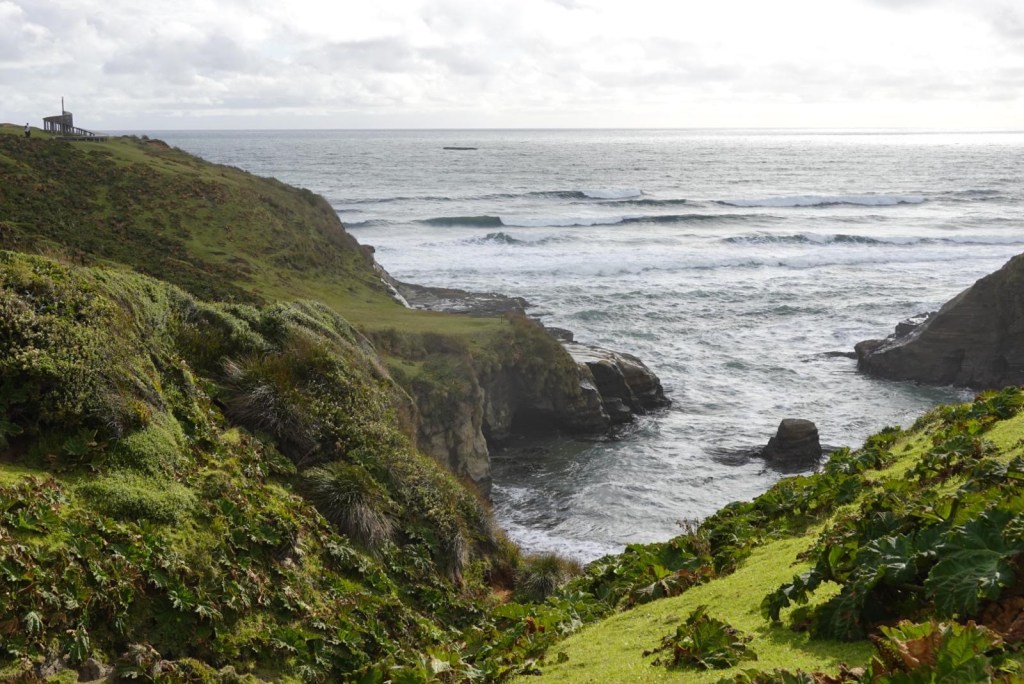
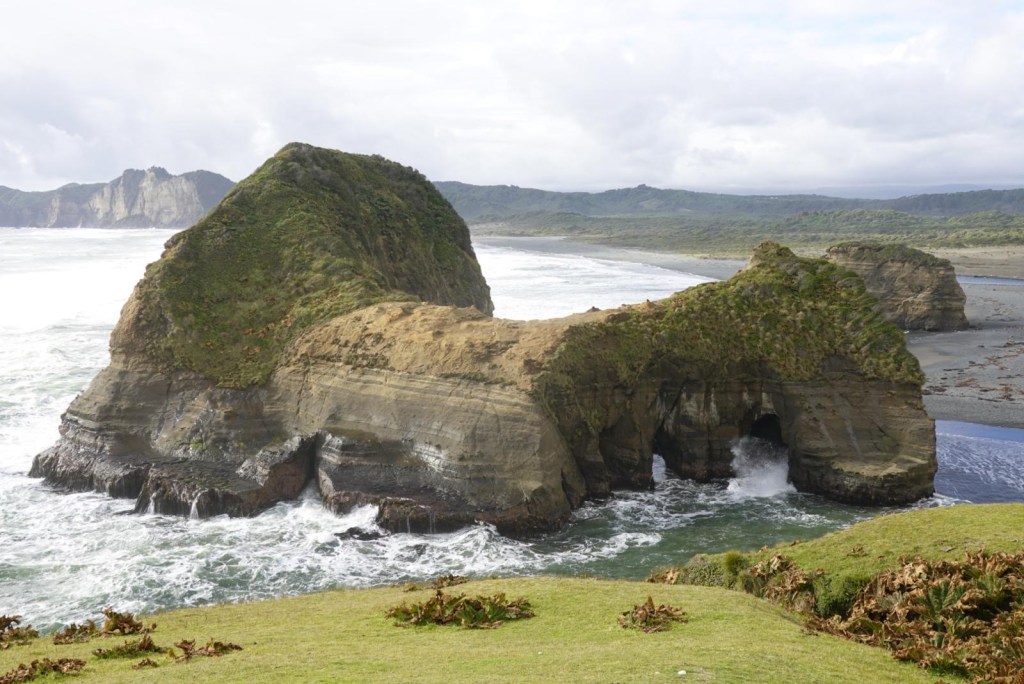
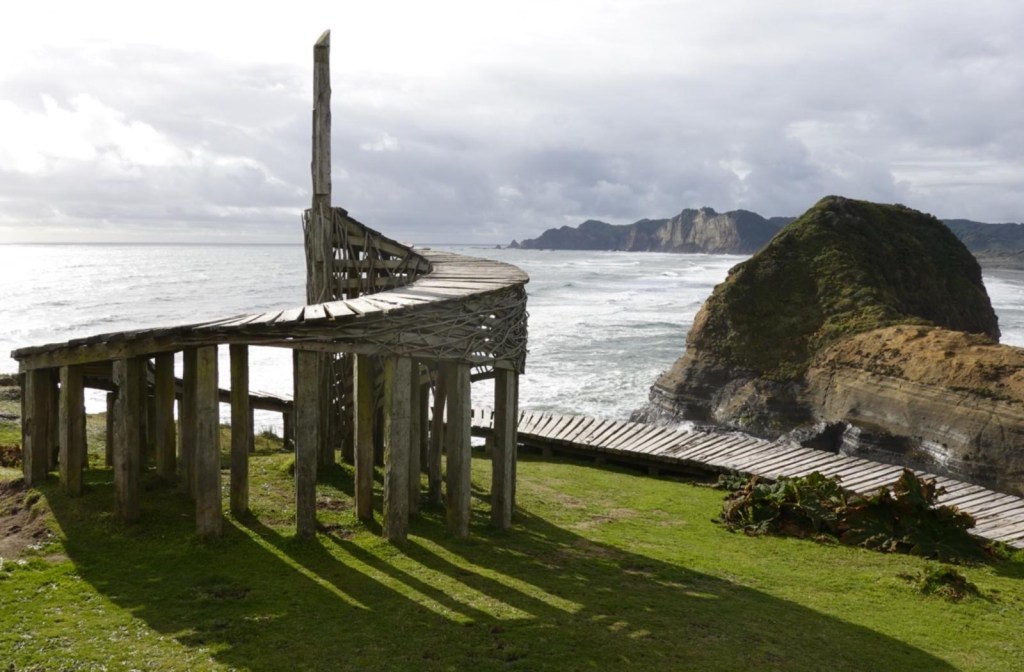
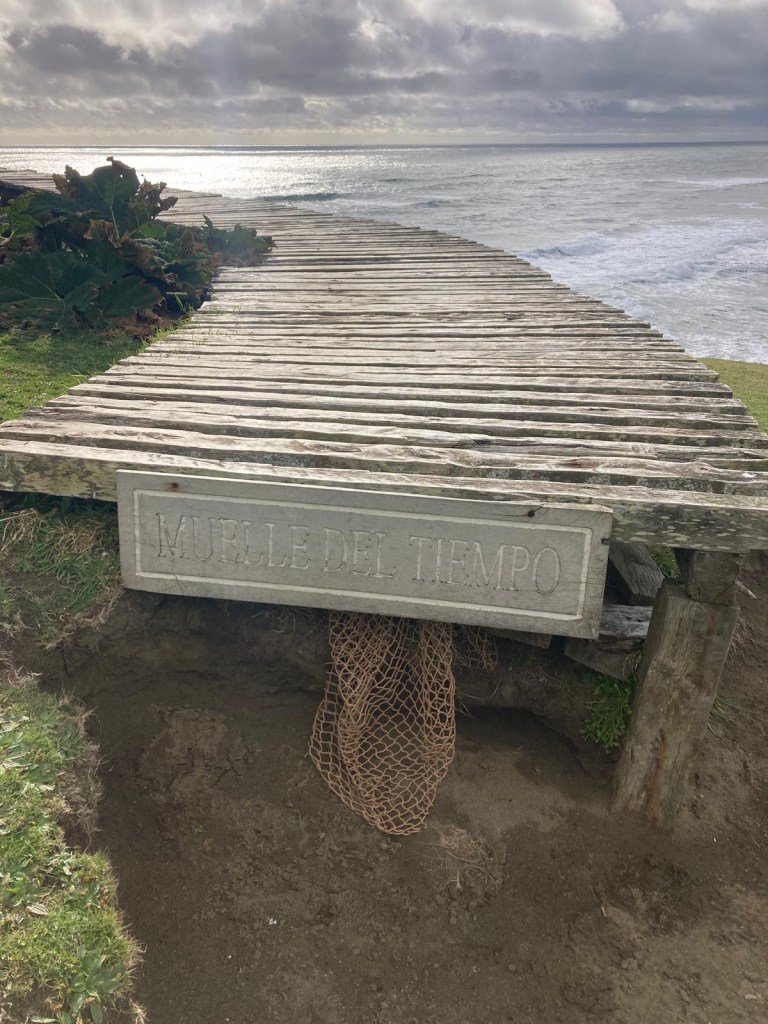
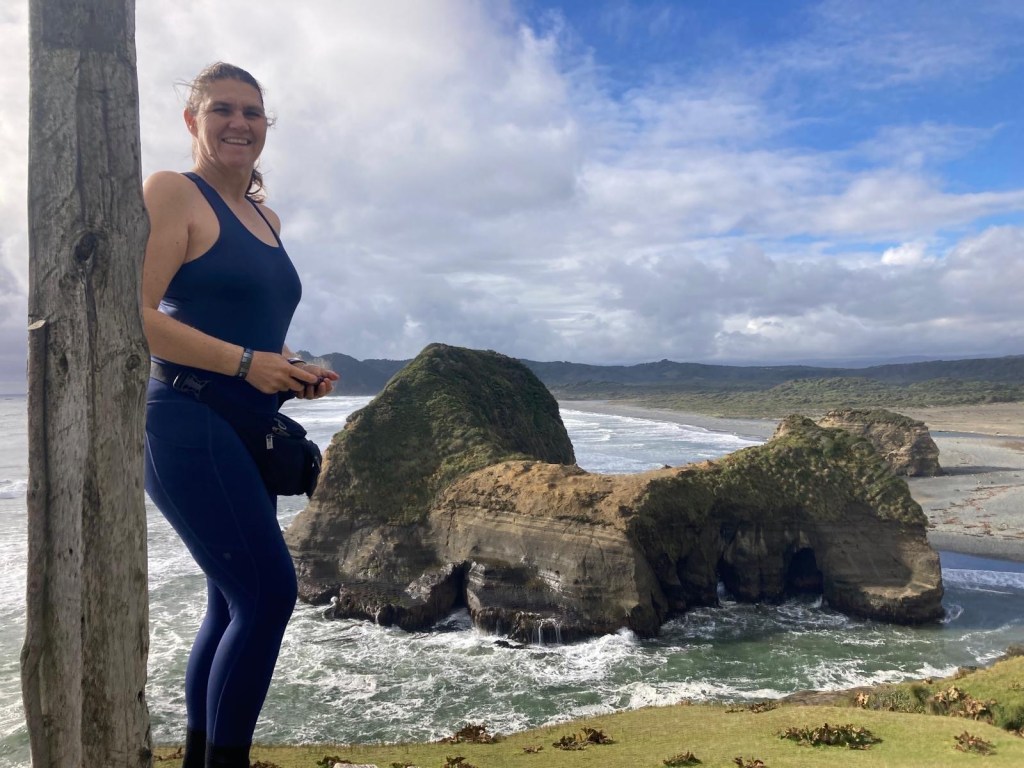
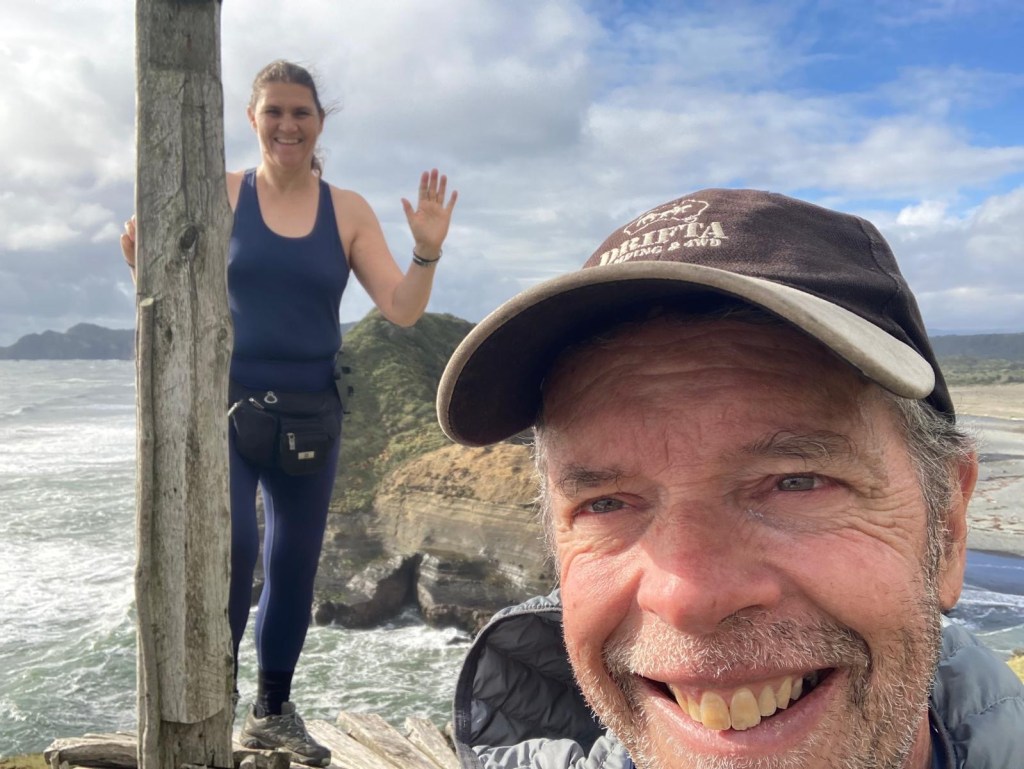
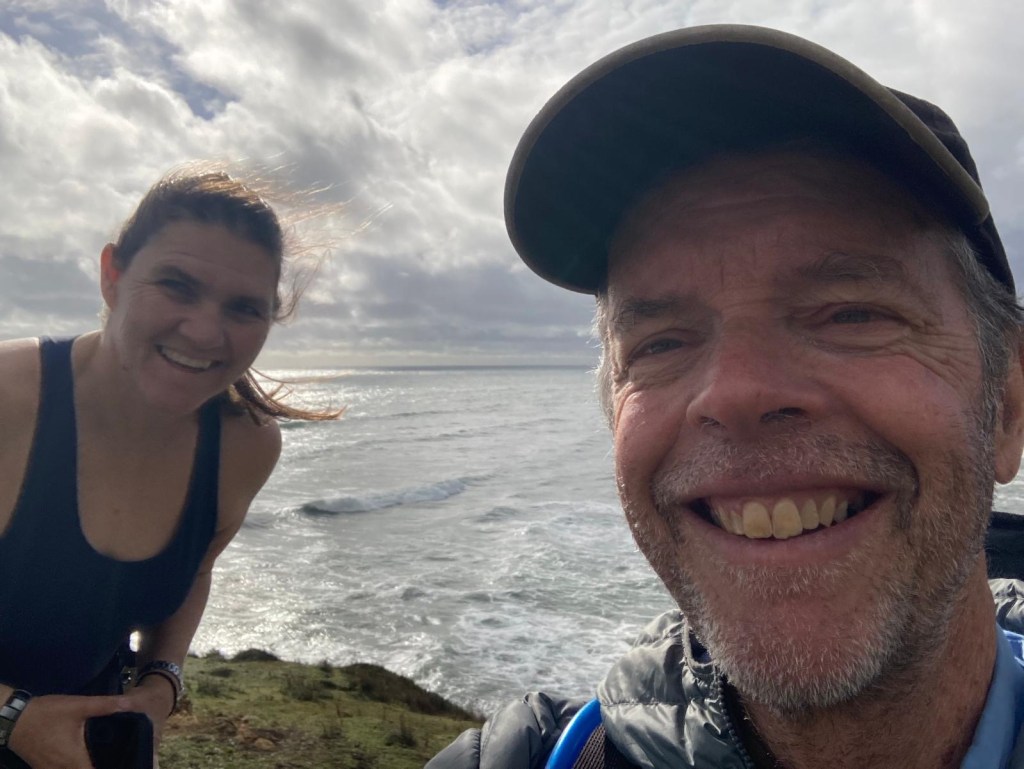
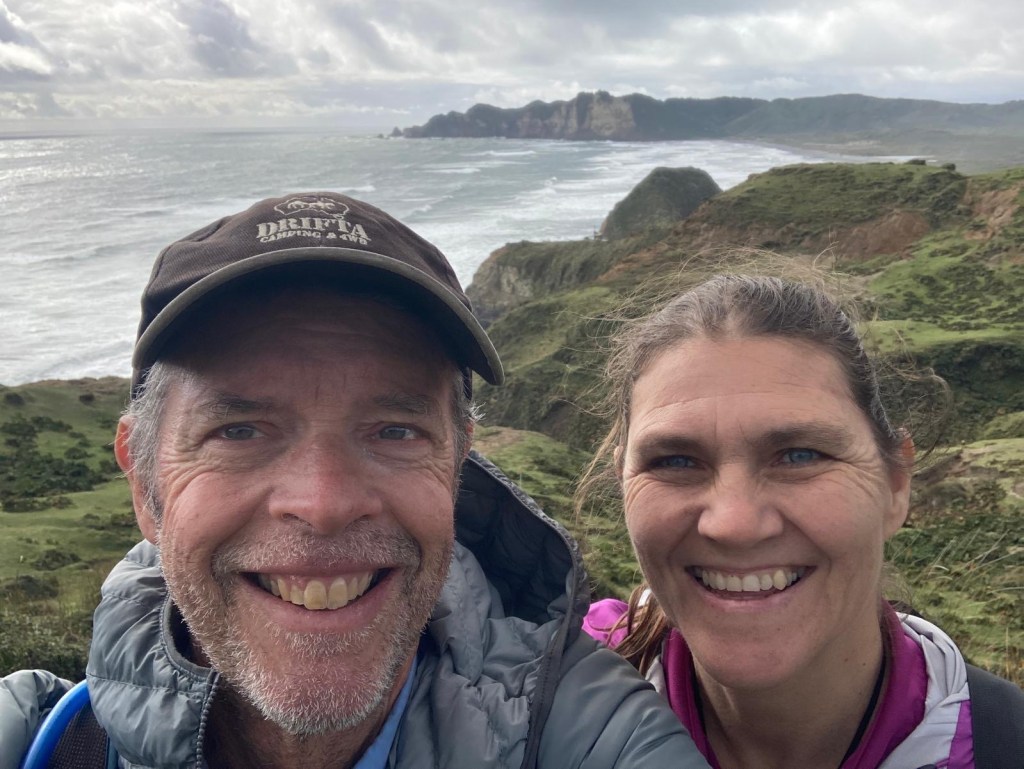
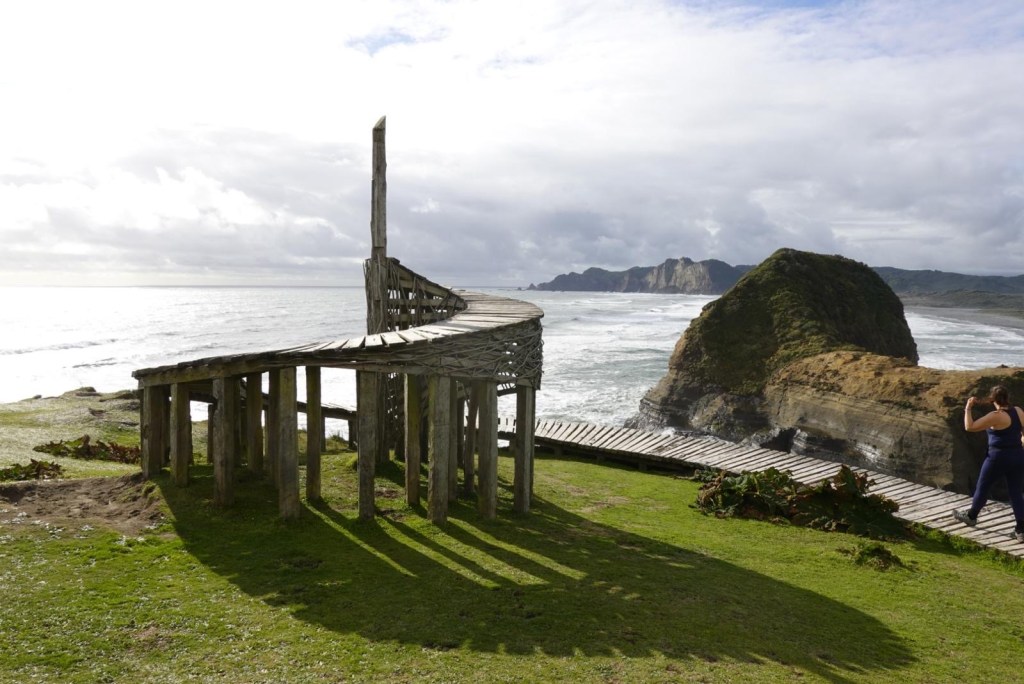
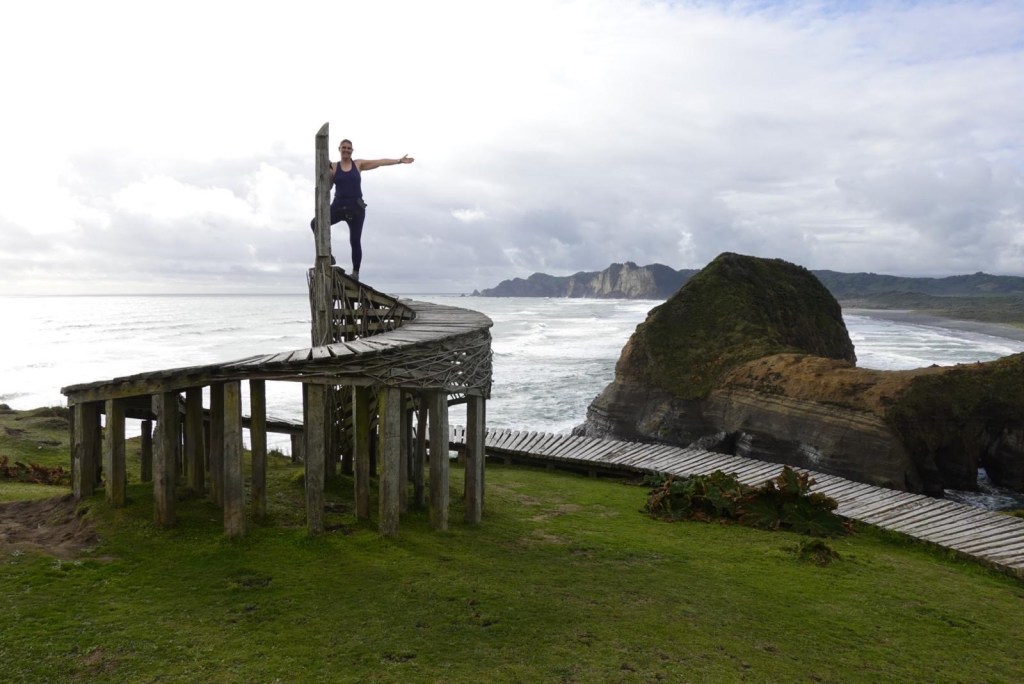
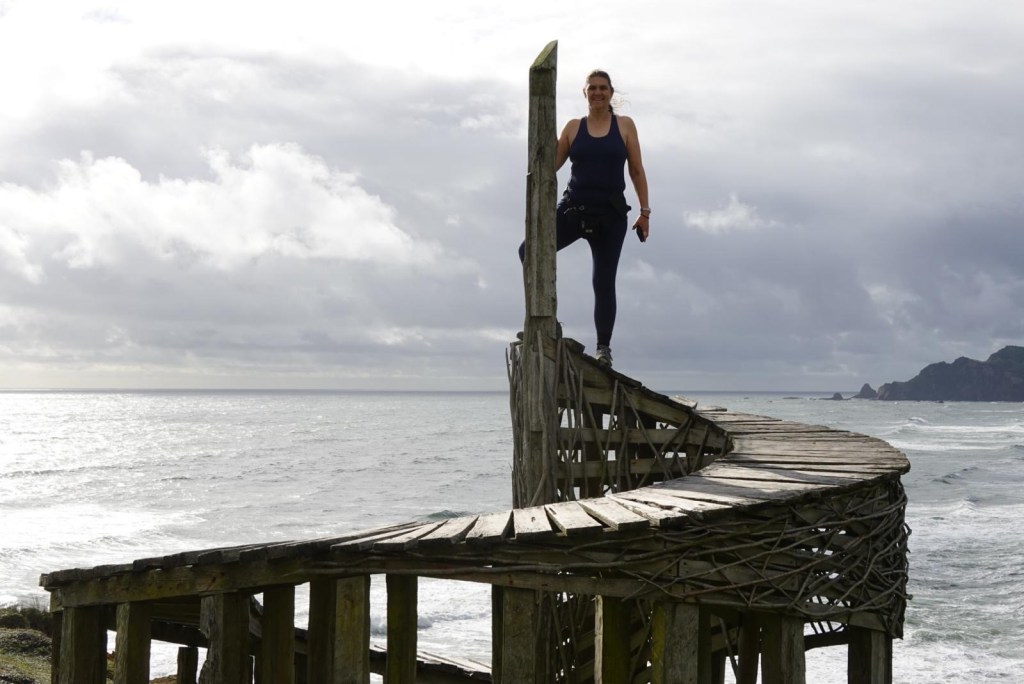
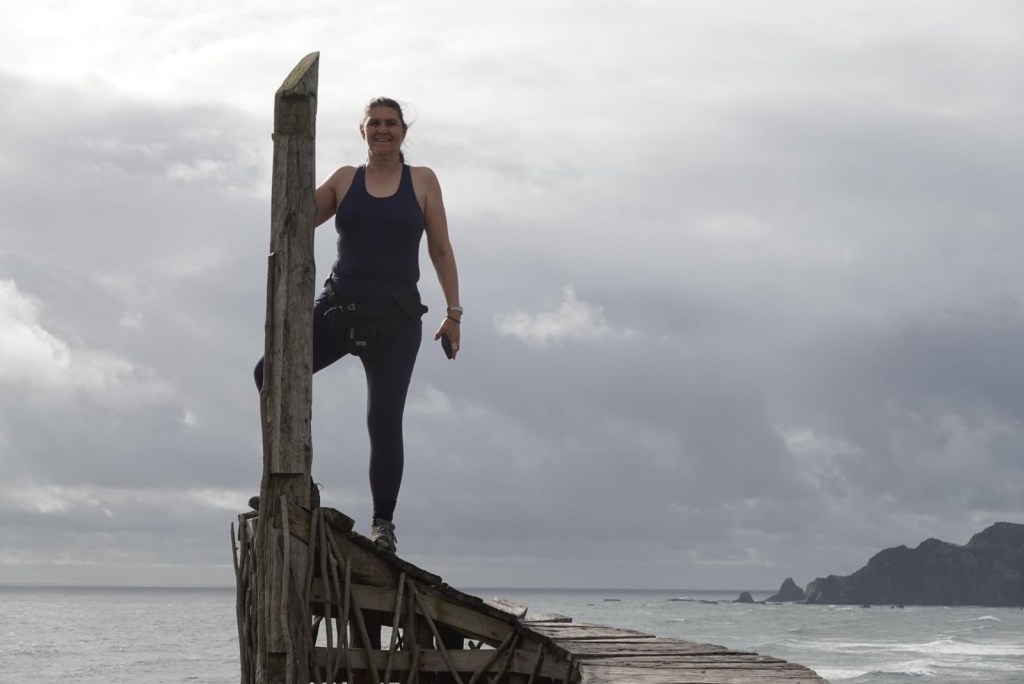
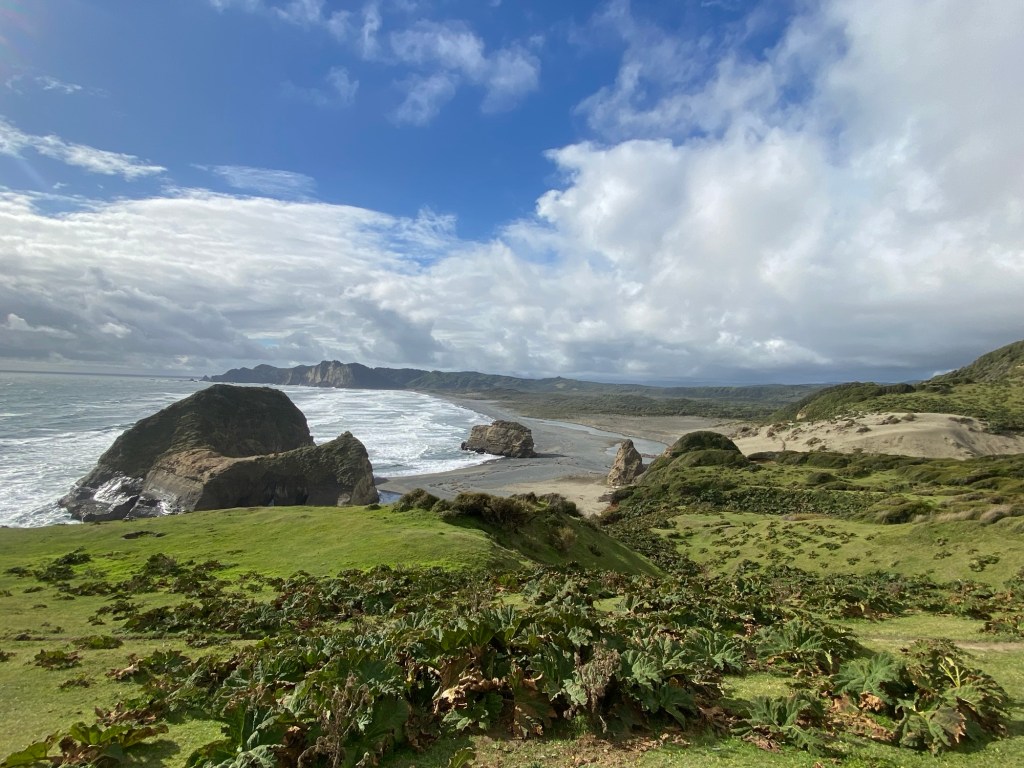
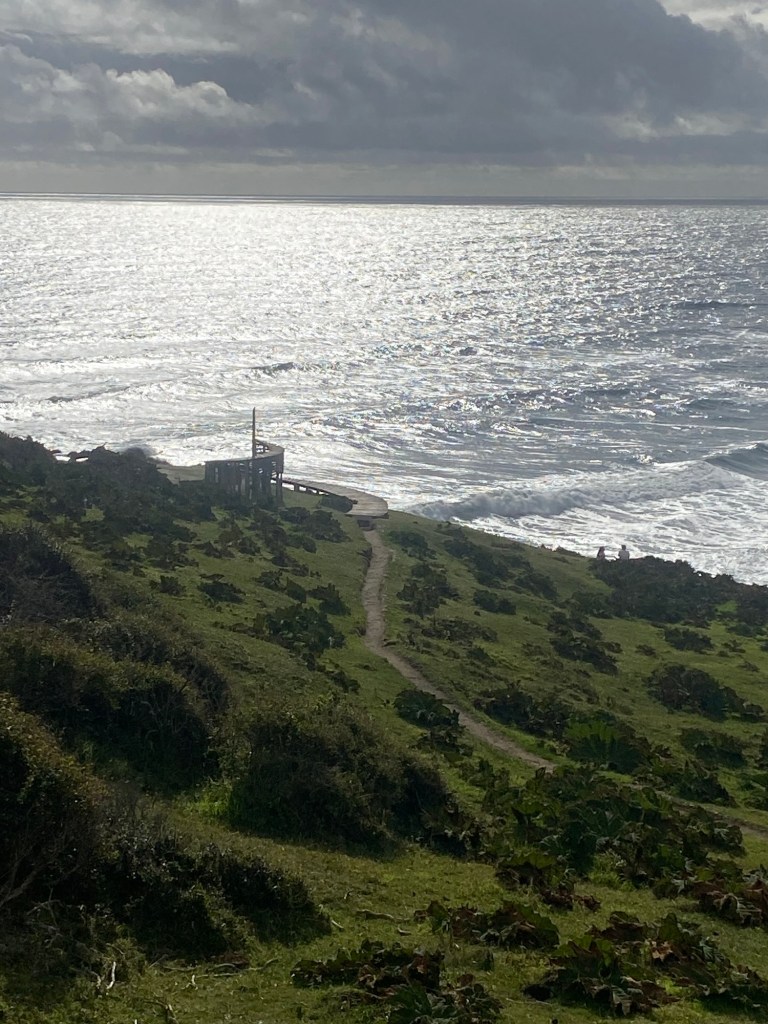
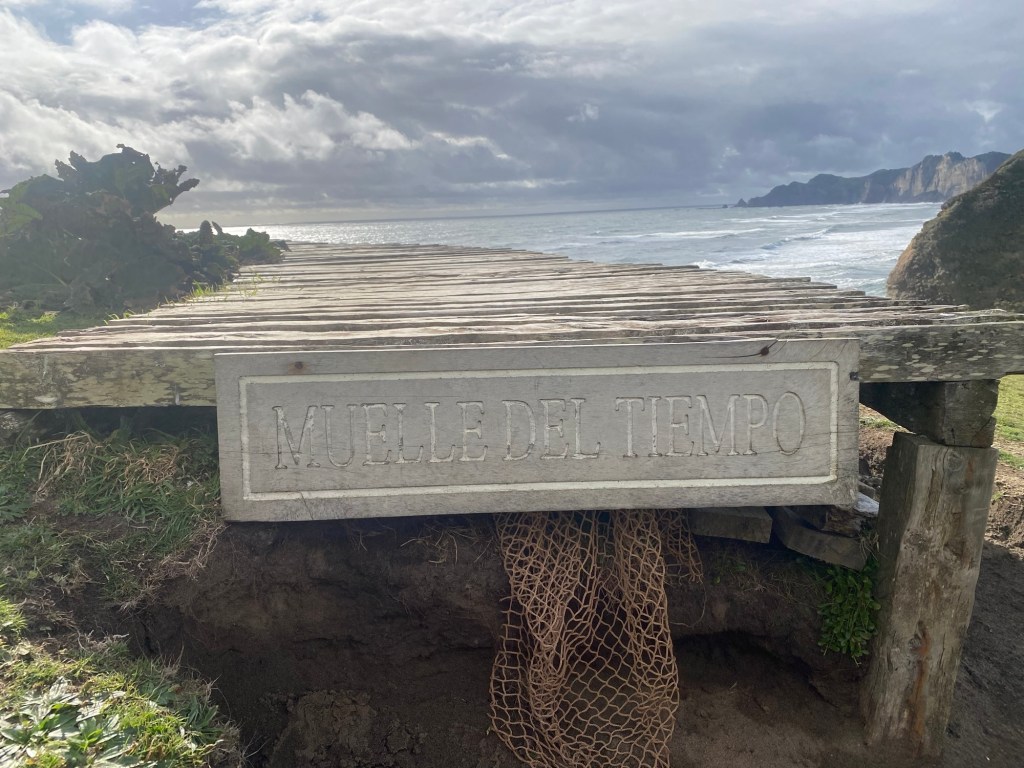
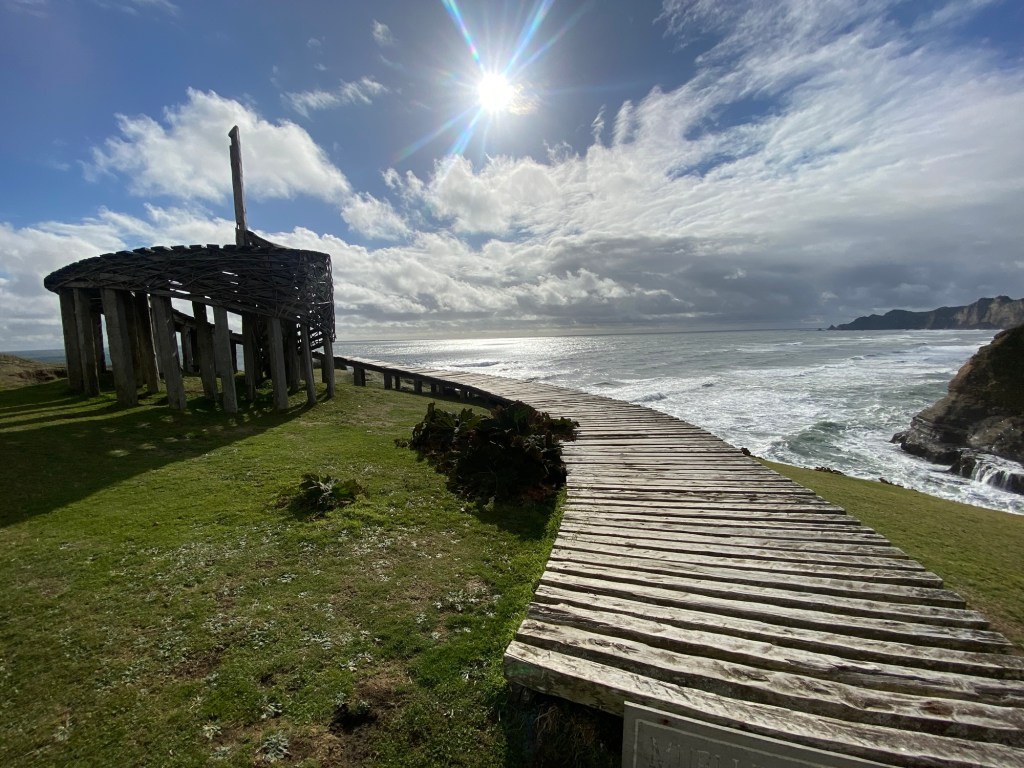
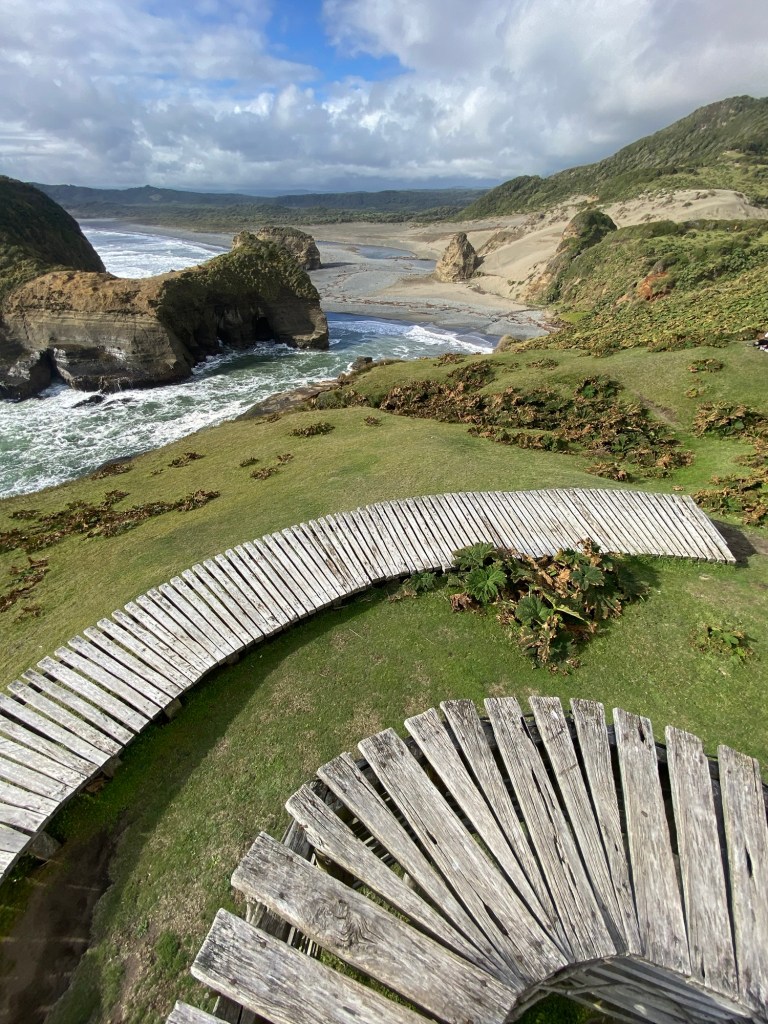
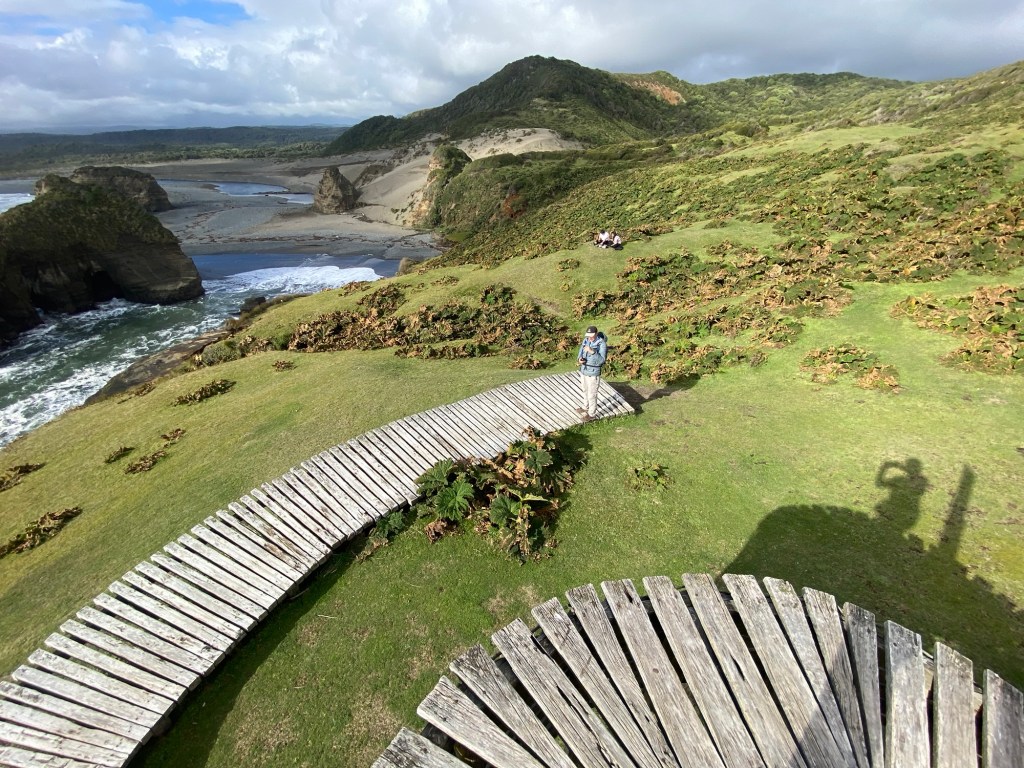
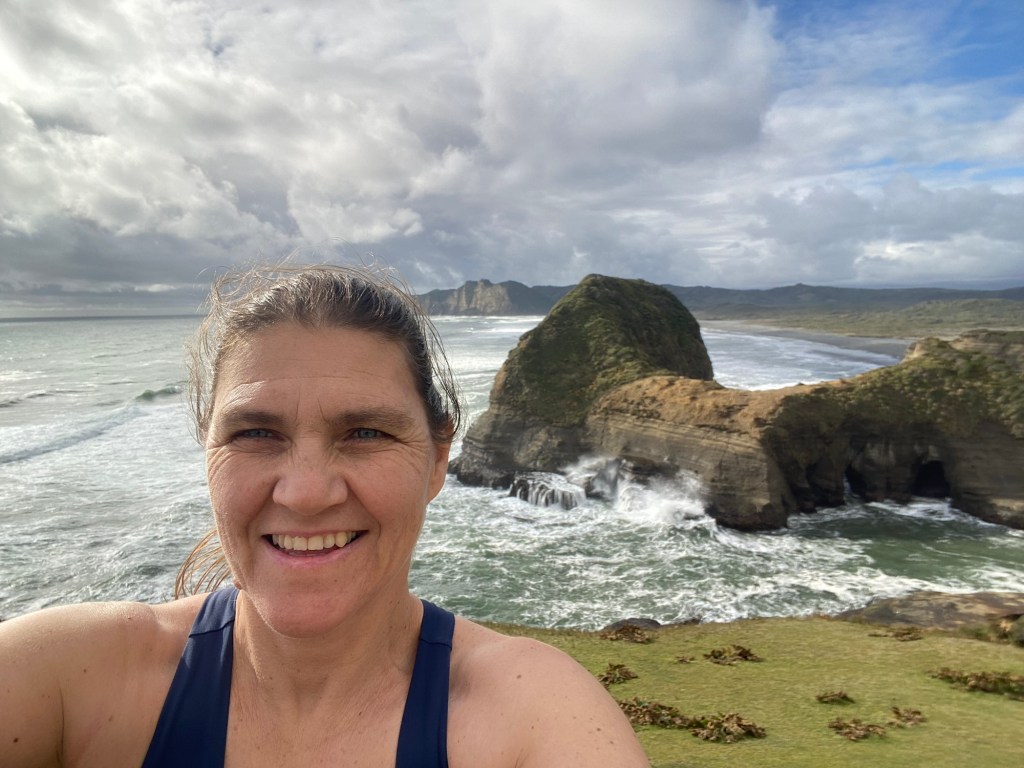
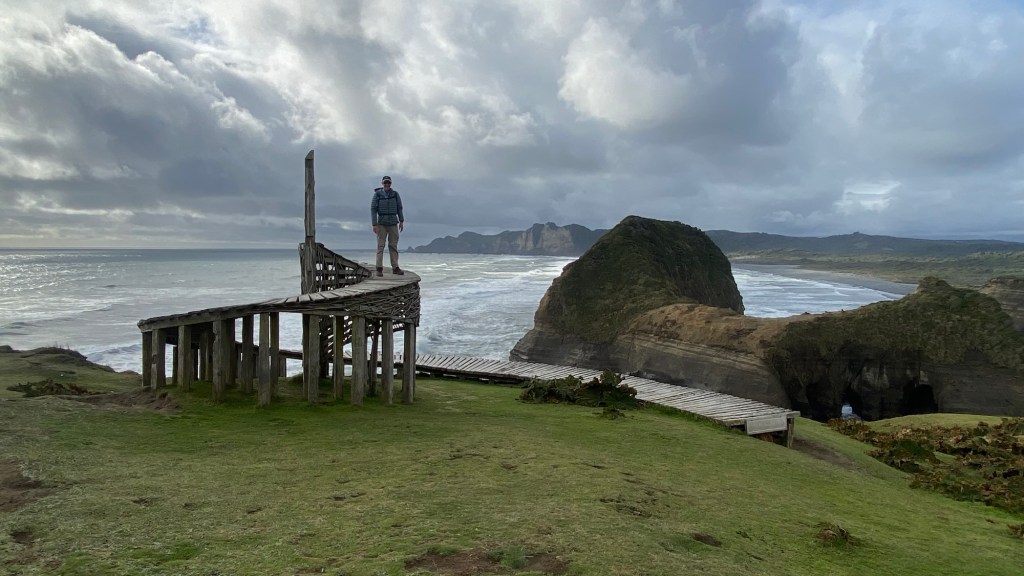
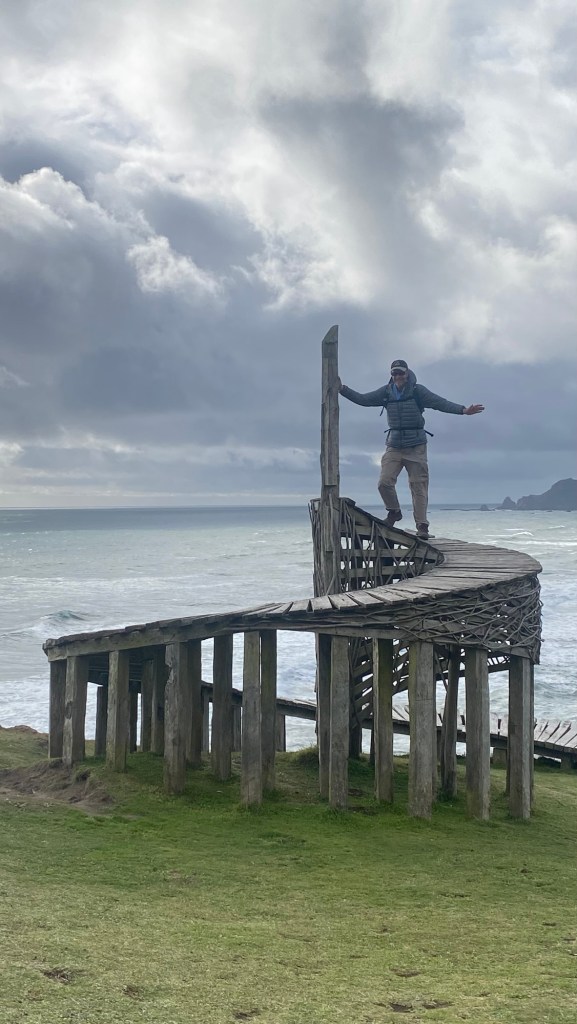
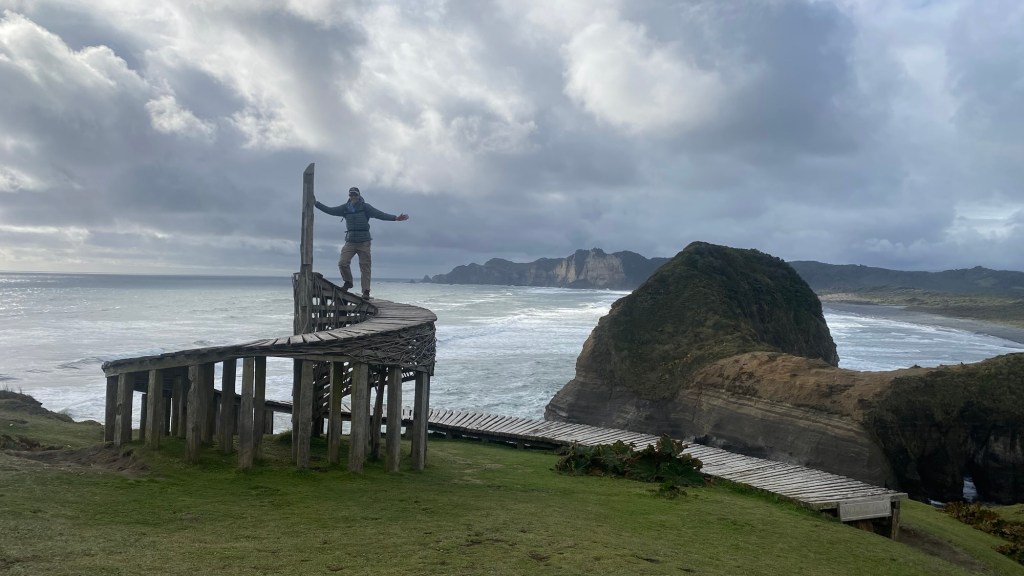
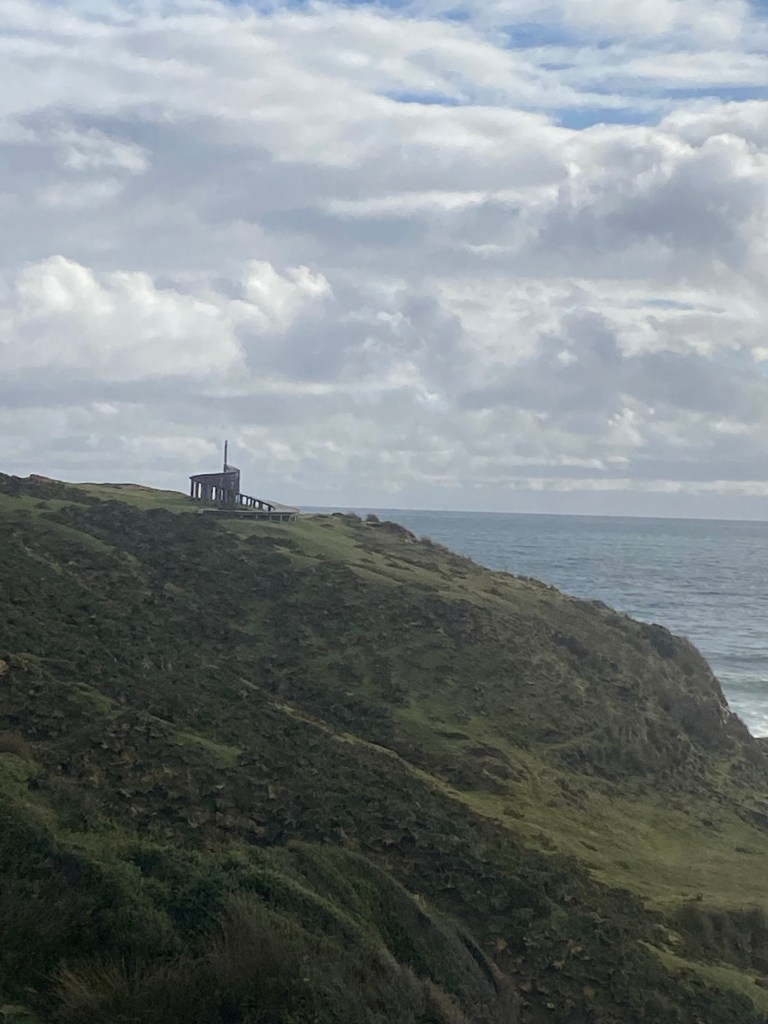
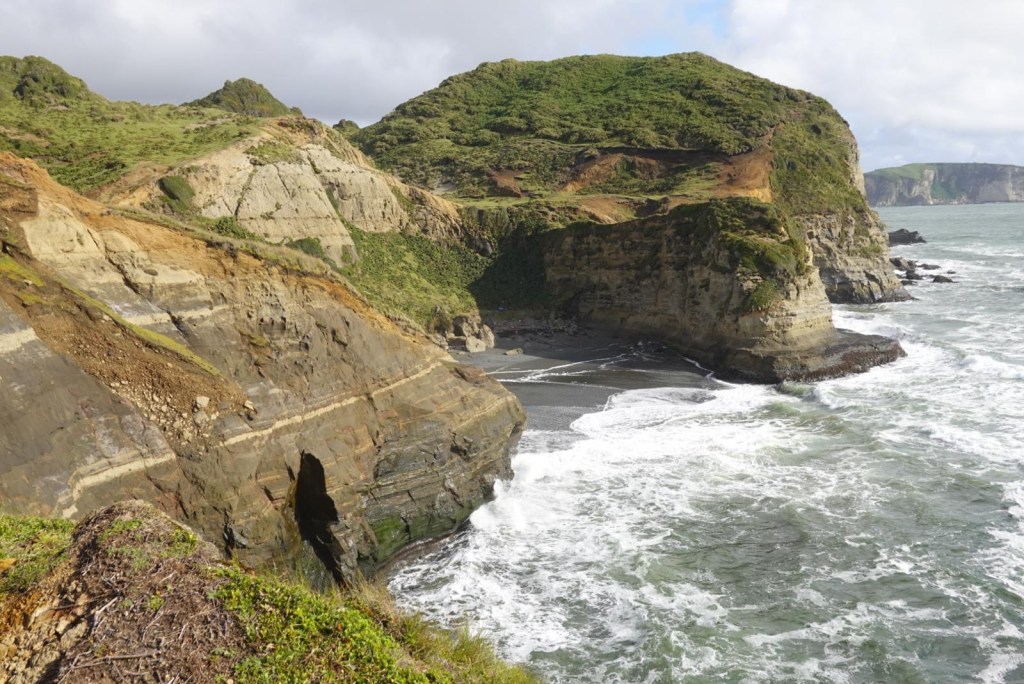
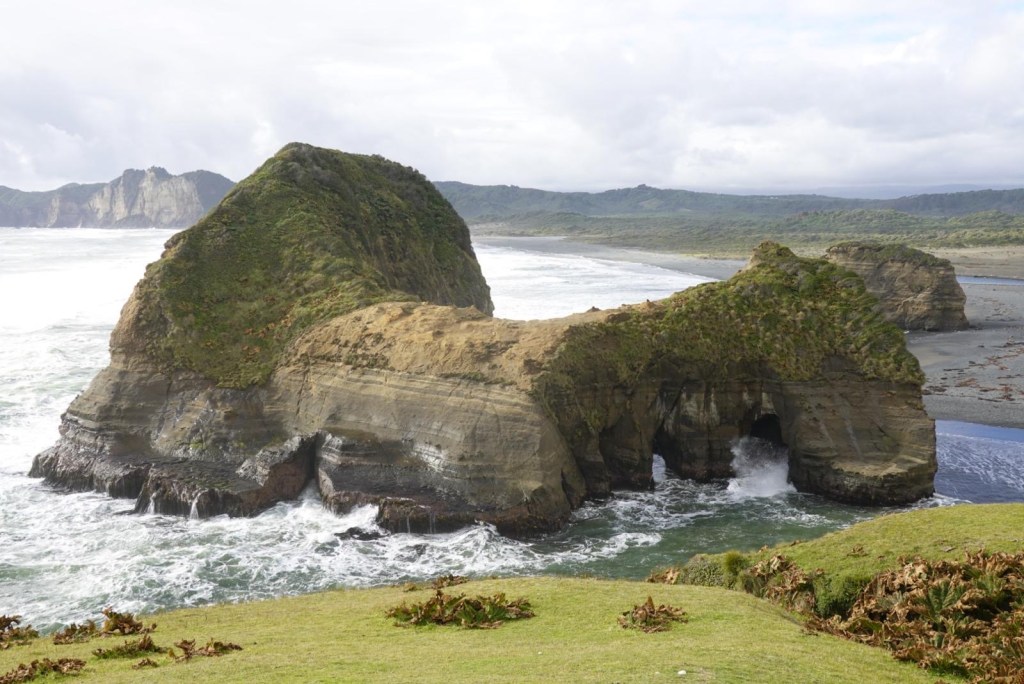
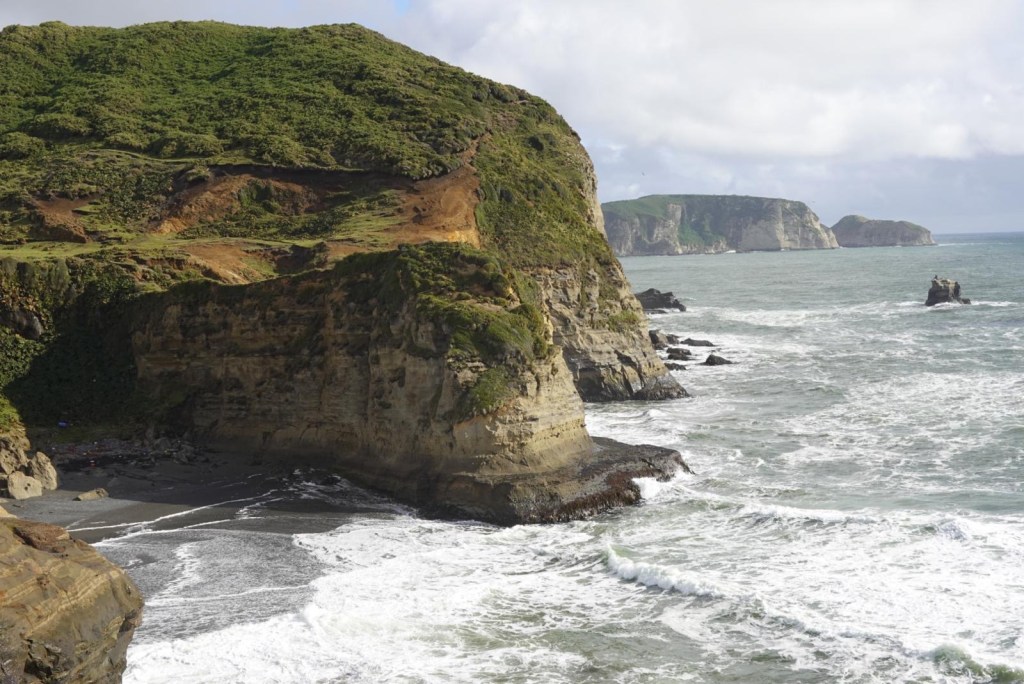
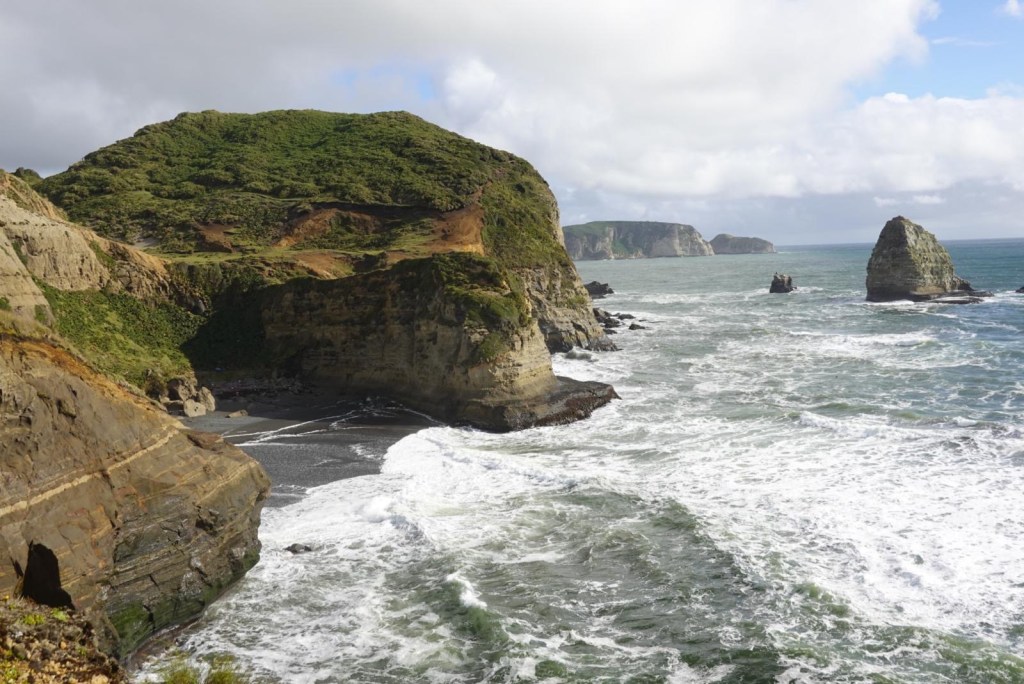
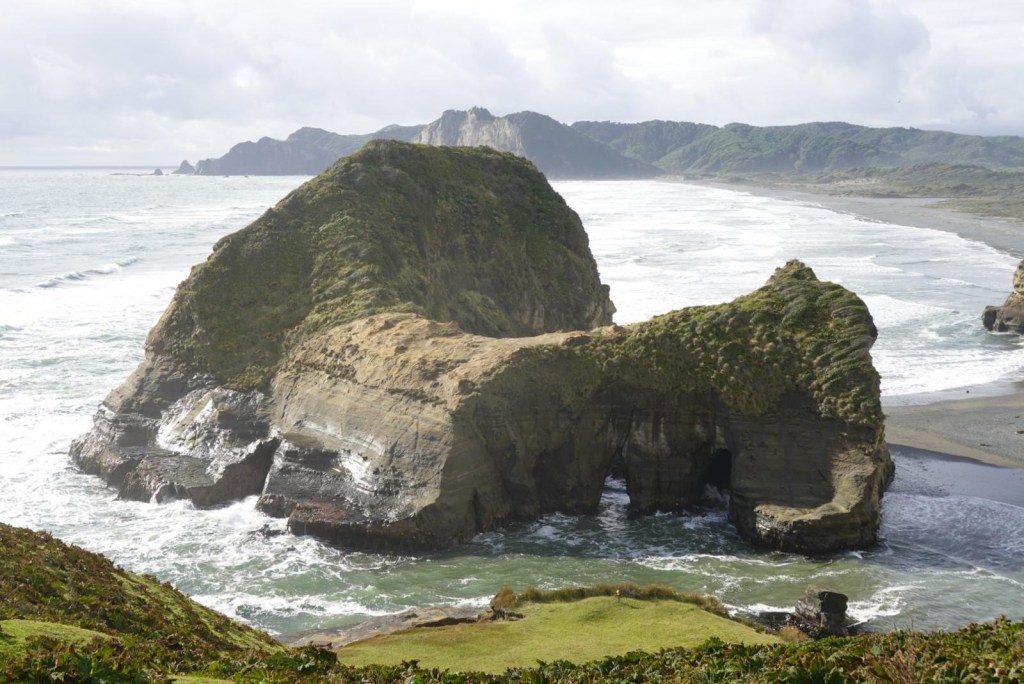
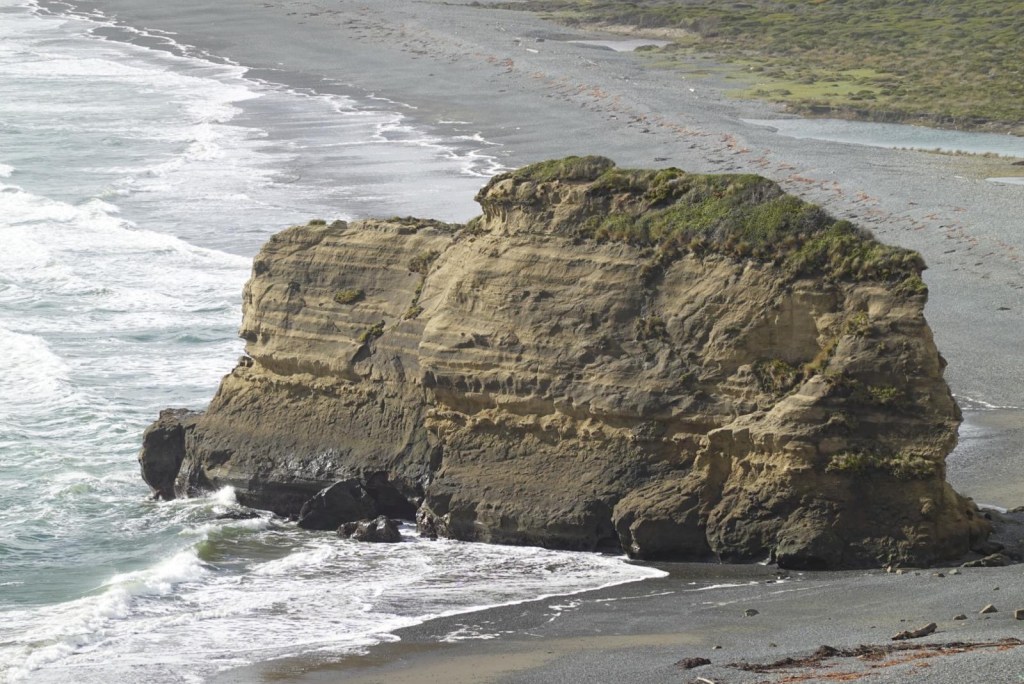
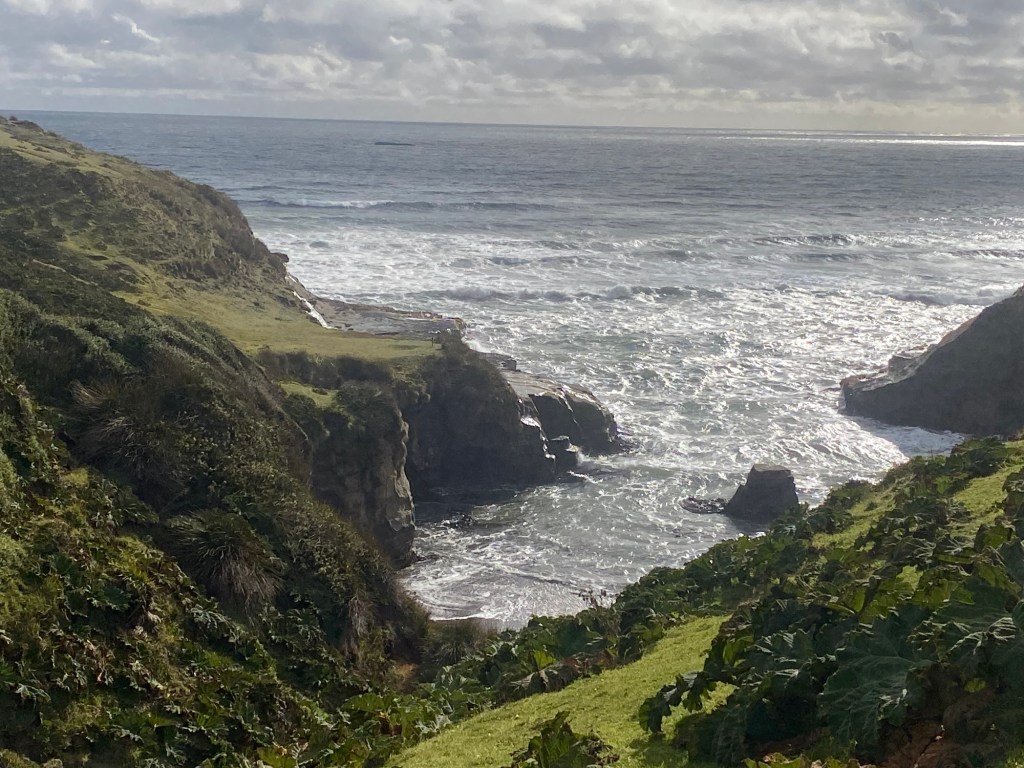
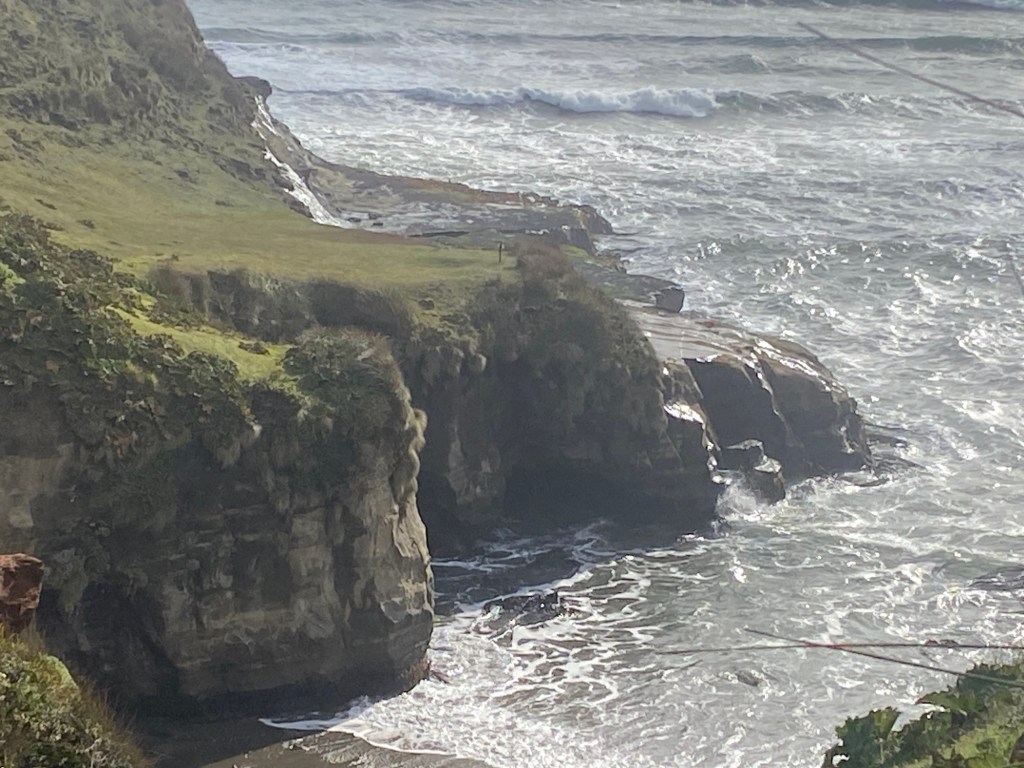
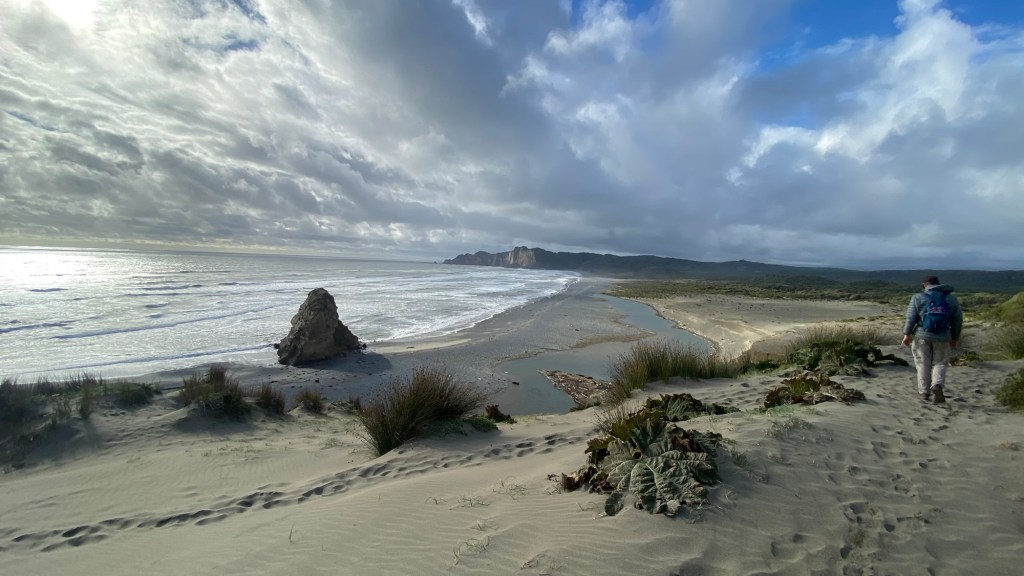
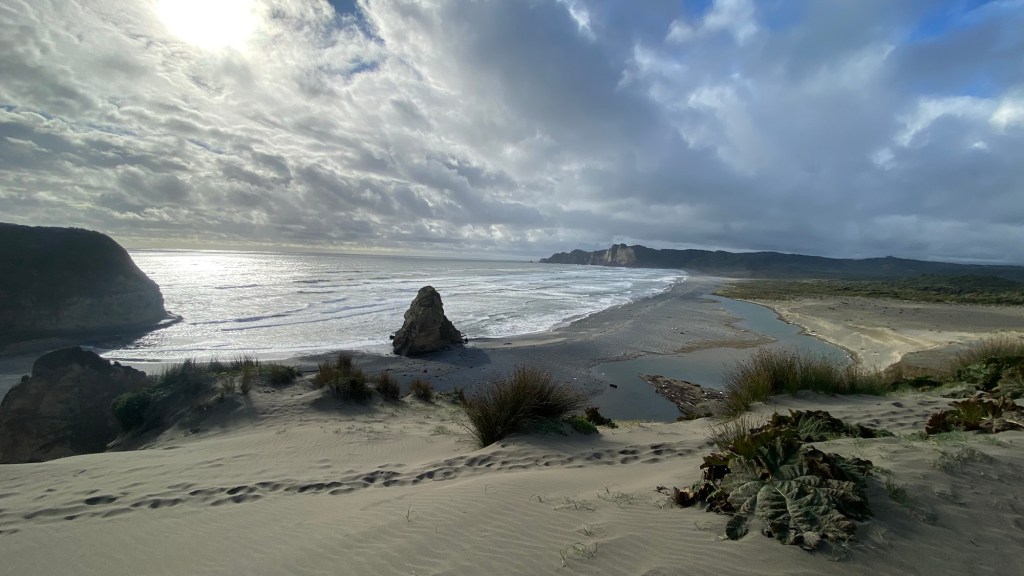
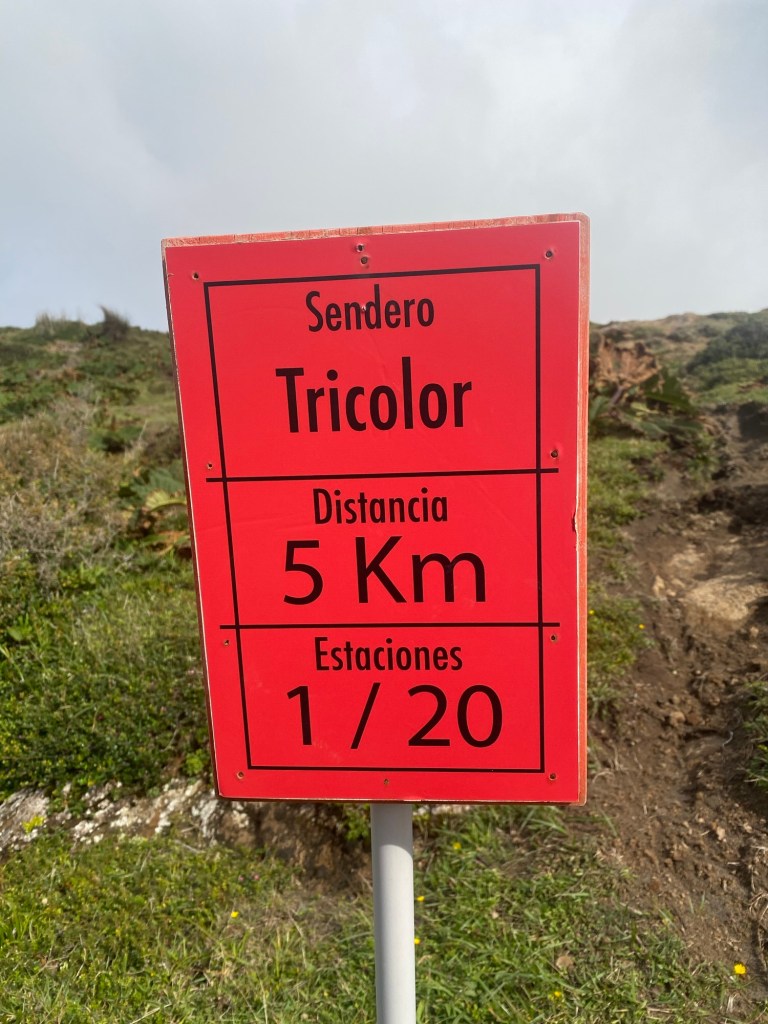
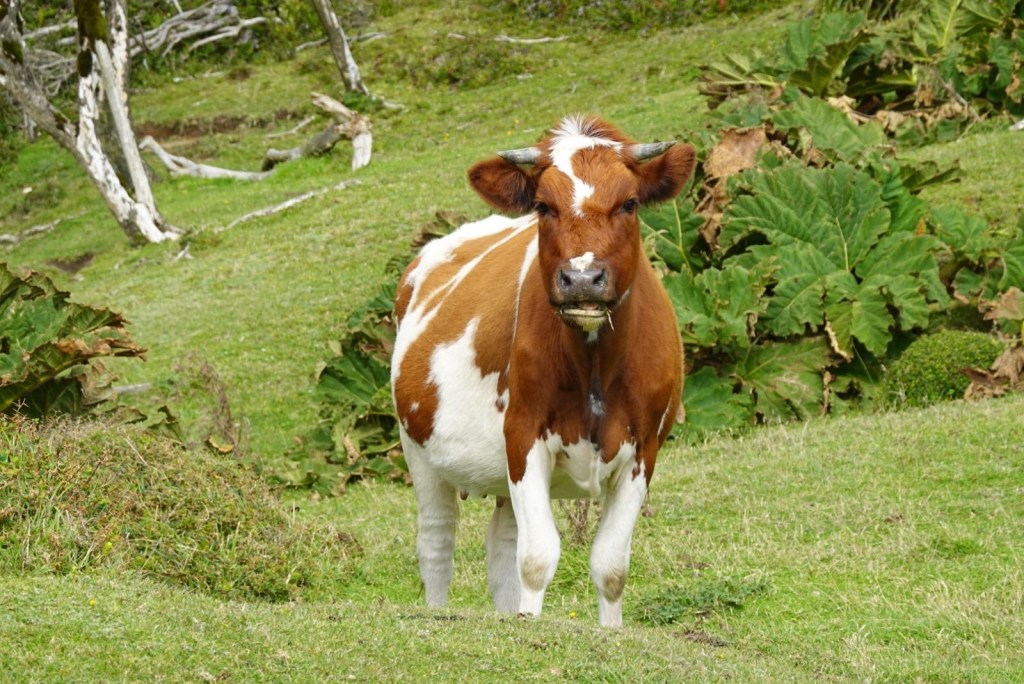
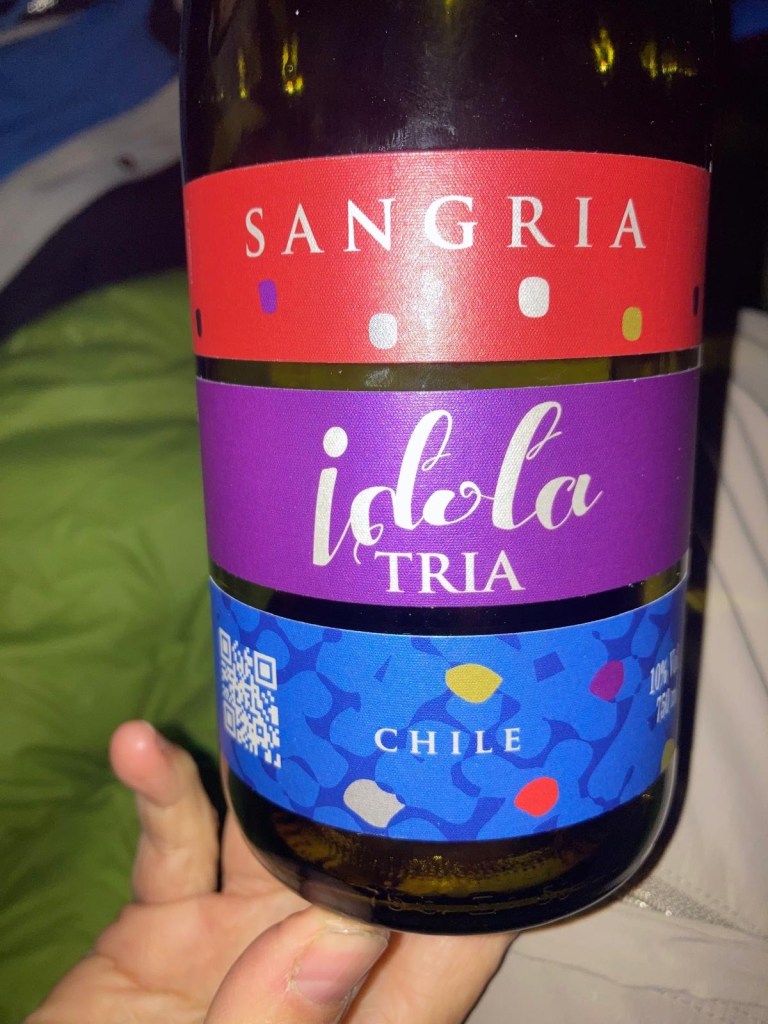
We continued walking on the 2km long access road until we reached the start of the pink trail – Sendero Las Ñochas. We hiked the entire 2km pink trail which was through thick forests up high and meandered around waterfalls we could hear but not see due to the dense vegetation. The trail was narrow, muddy and along steep drop-offs. We heard a woodpecker but could not see it. The path eventually descended a muddy slope with steps until we reached coastal grassland and the end of the road and carpark with toilets. From there the yellow trail (Sendero del Tiempo) started which we hiked through coastal farmland with cows grazing until we reached the intersection of the end of the red trail (Sendero Tricolor). Nikolás had recommended to walk the red trail in reverse as it would make for more spectacular views. The ranger passed us on a horse while we were still on the first section of the yellow trail. The red trail led up a narrow path overgrown with bushes and Chilean rhubarb and reached two sand dunes which we traversed. At the larger sand dune we saw wild horses. As we reached the coast, breathtaking views of the coastline and the Pacific Ocean were visible. We crossed over the Paso del Toro and had our lunch in a spot sheltered from the wind with large birds of prey soaring high in the sky above us. The path continued along very steep slopes without any protection or ropes and one wrong step would have meant a fall a long way down the slopes – for someone with fear of heights this was certainly a challenging path inducing hyperventilation and I had to force myself to look up or ahead in order to prevent a slight panic attack 😂 but the views of the steep green slopes where sheep grazed high above us and of the cliffs along the coastline where the waves of the Pacific Ocean splashed up in the late afternoon sunshine was so breathtakingly beautiful that it was hard not to take hundreds of pictures. Eventually we caught the first glimpse of the Muelle del Tiempo structure. We arrived at the wooden structure and took turns walking up to it. We continued the second part of the yellow track back to the car park where we arrived by 6:30pm. It just started drizzling rain and we had walked 12.4 kms in 5 hours and would have had to walk another 5km along the road back to the campsite and we decided to ask the people of one of the cars still in the carpark to get a lift back. We hitched a ride in a Subaru Forester and arrived at the campsite and cooked our pasta with lentils and enjoyed a bottle of Sangria. We ate in drizzling rain and had an early night. It rained all night and pretty much all day the next day and we sat in the Pizzeria most of the day and continued catching up on our blog and talked to Nicholás and played memory and looked through books and identification charts of animals and fungi. In one book, there were several published research articles and I found an interesting article on ectomycorrhiza and how eucalyptus plantations reduced the diversity of ectomycorrhiza – maybe a collaborative research project with Jonathan P. waiting to be initiated – csn’t stop being a scientist 😂👍 and this place is a paradise for anyone studying fungi. We ate pizza and ice cream and headed back to the tent for another very wet night finishing our bottle of sangria. I loved the sound of the croaking frogs, the roaring ocean waves in the distance and the rain falling on the tarpaulin. The only other place I remember where I was listening to the ocean and to frogs at the same time while camping in the rain was with Judy and the kids over Easter at Tallow beach campground. I tried to record the frogs croaking in the tent but it did not really capture how loud it sounded and is barely audible.
I fell asleep to the frog concert and the rain still marvelling about the amazing hike and views and changing vegetation along the way – another amazing highlight of our trip.
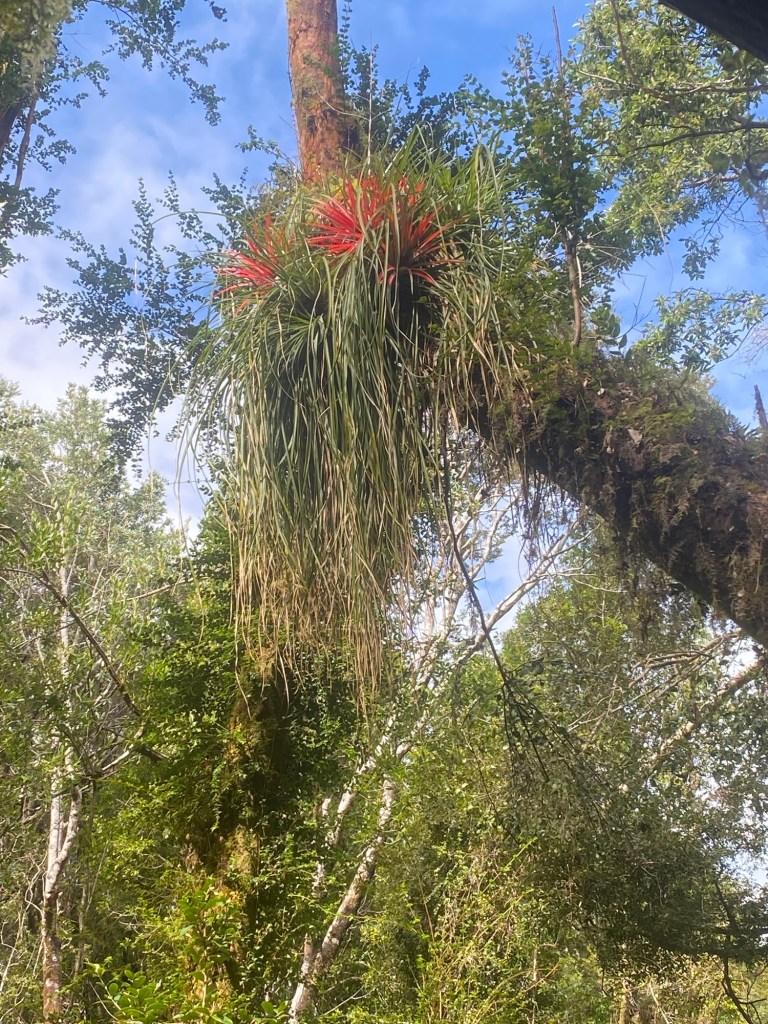
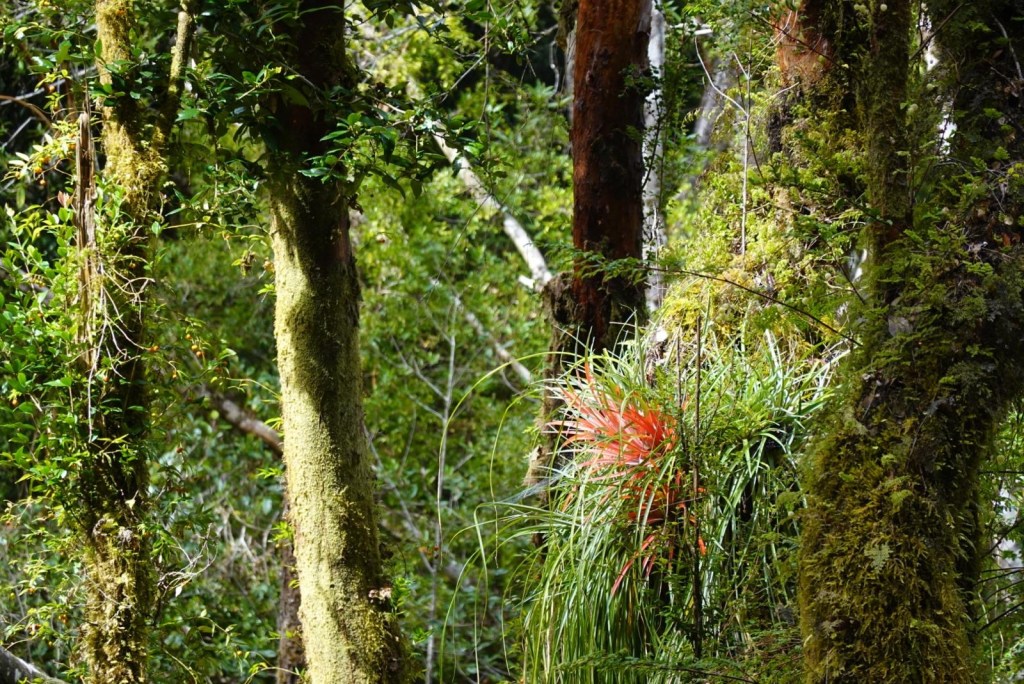
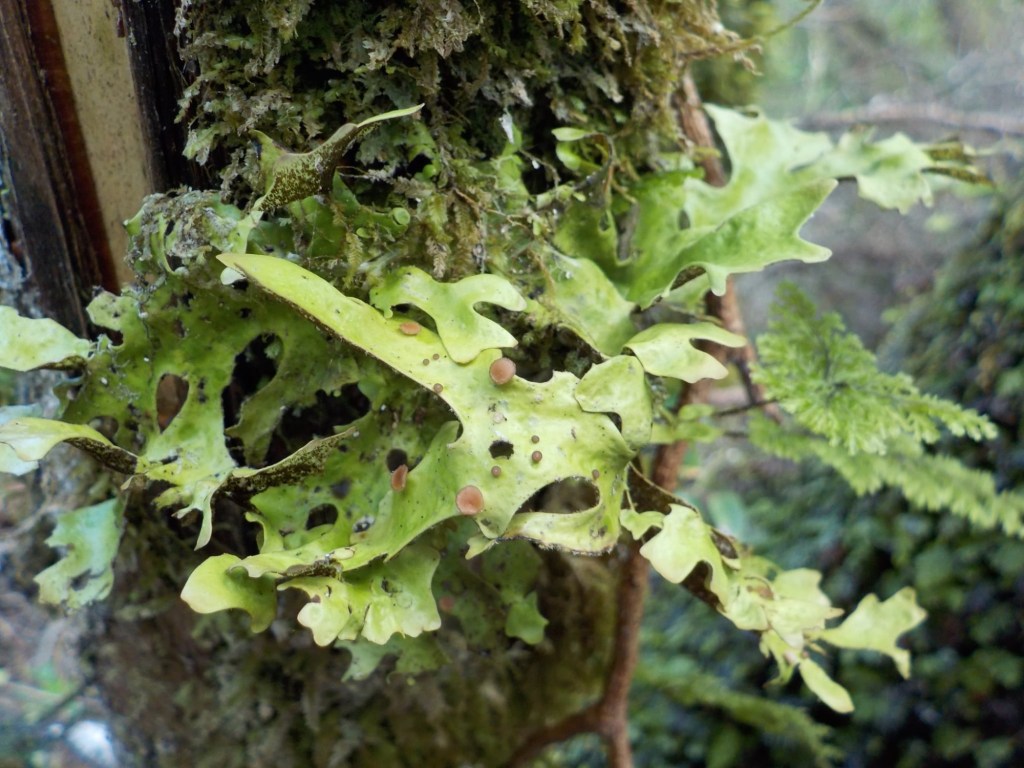
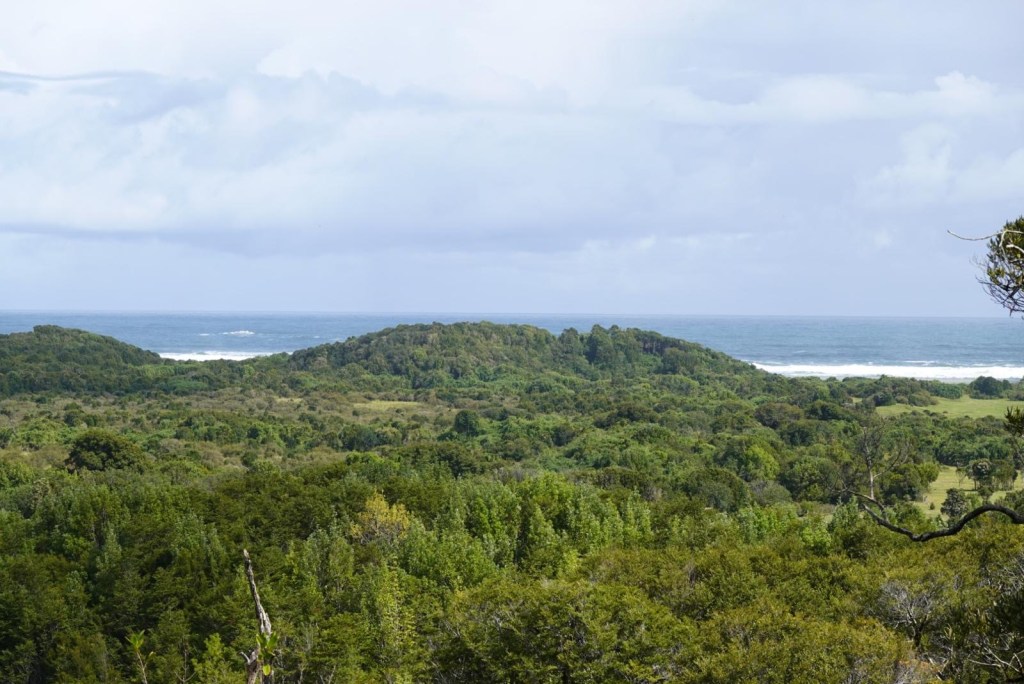
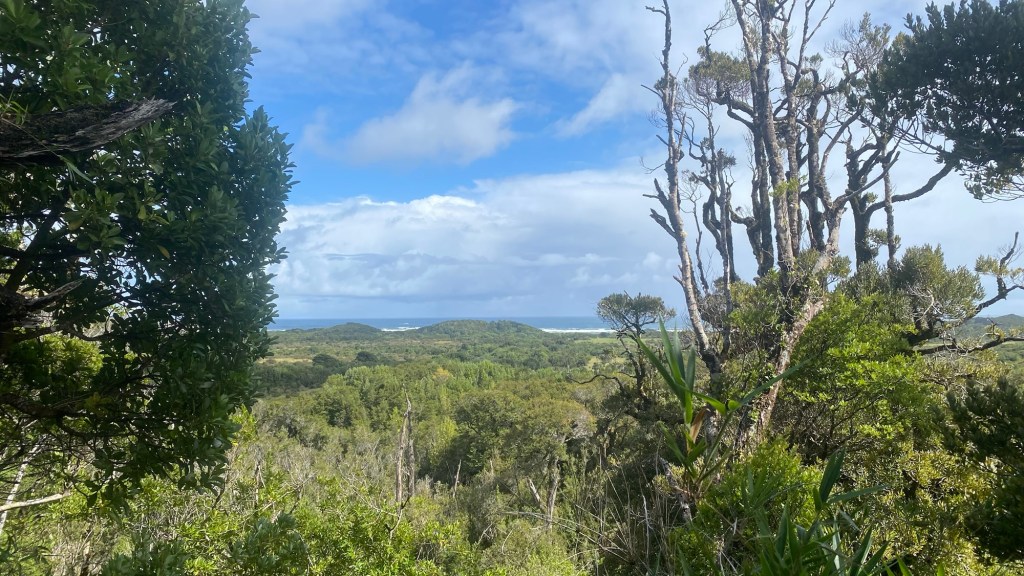
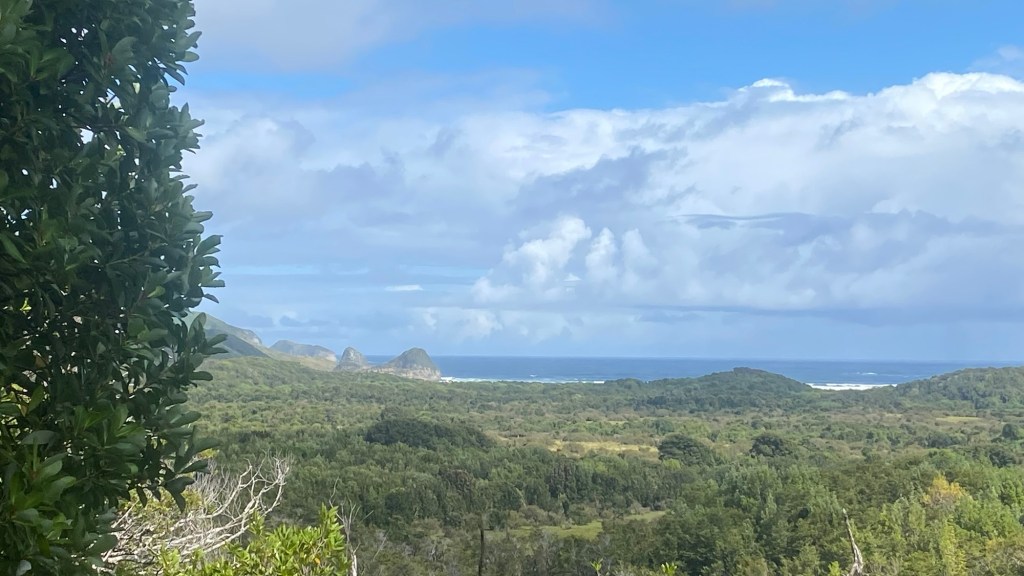
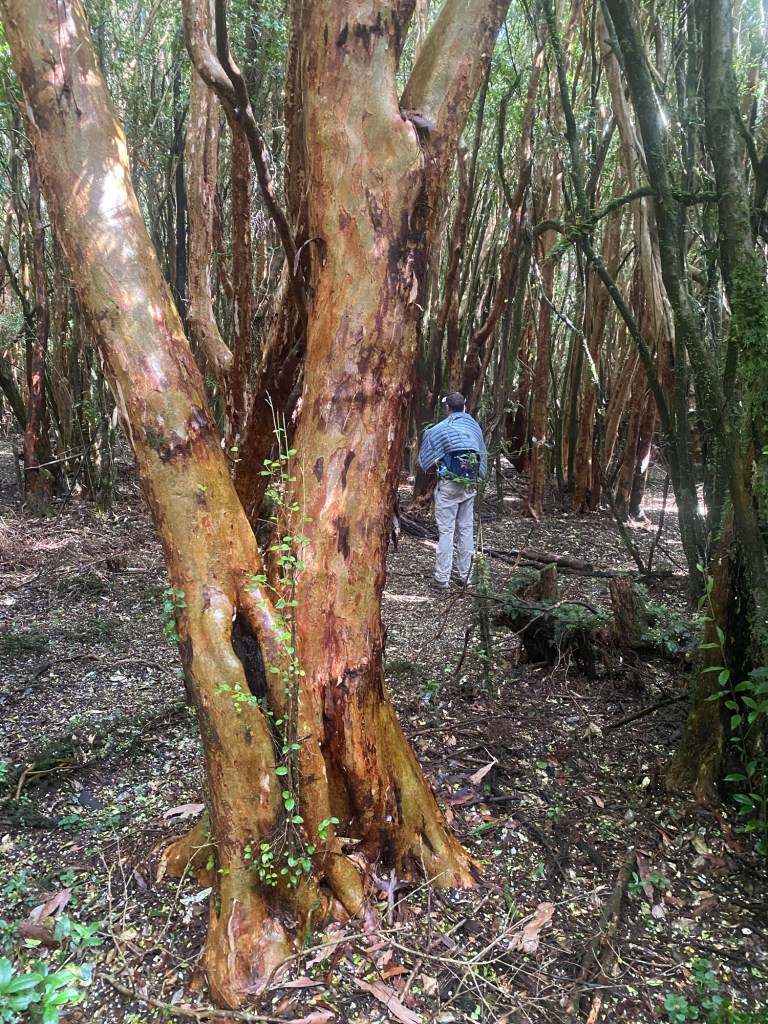
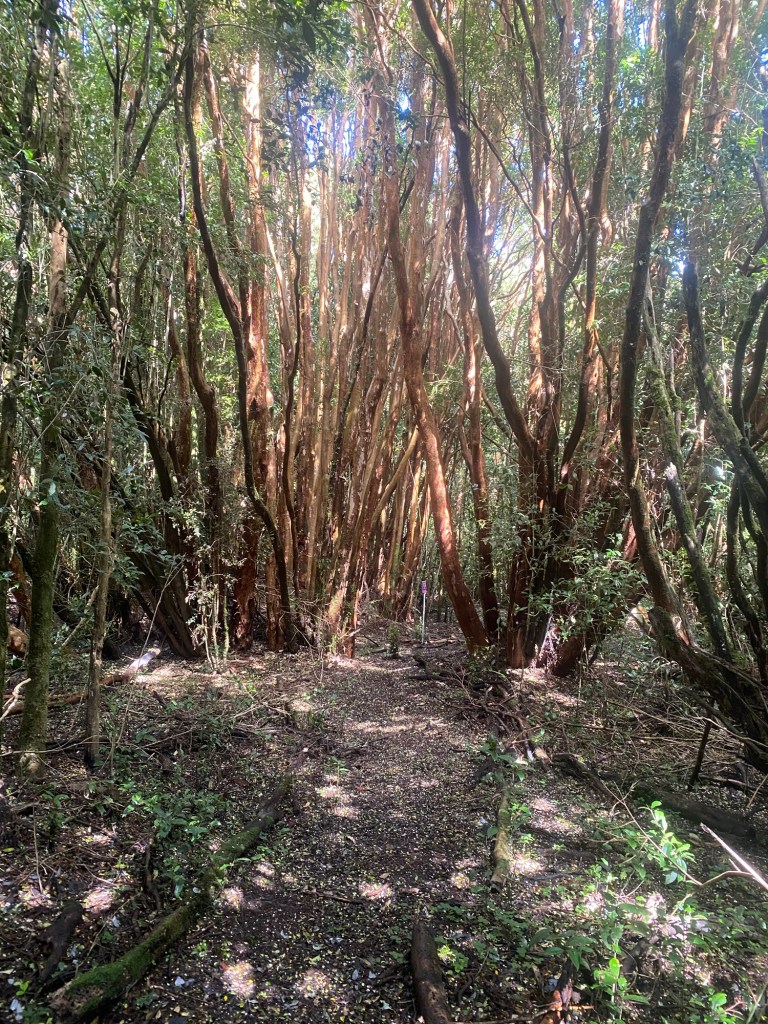
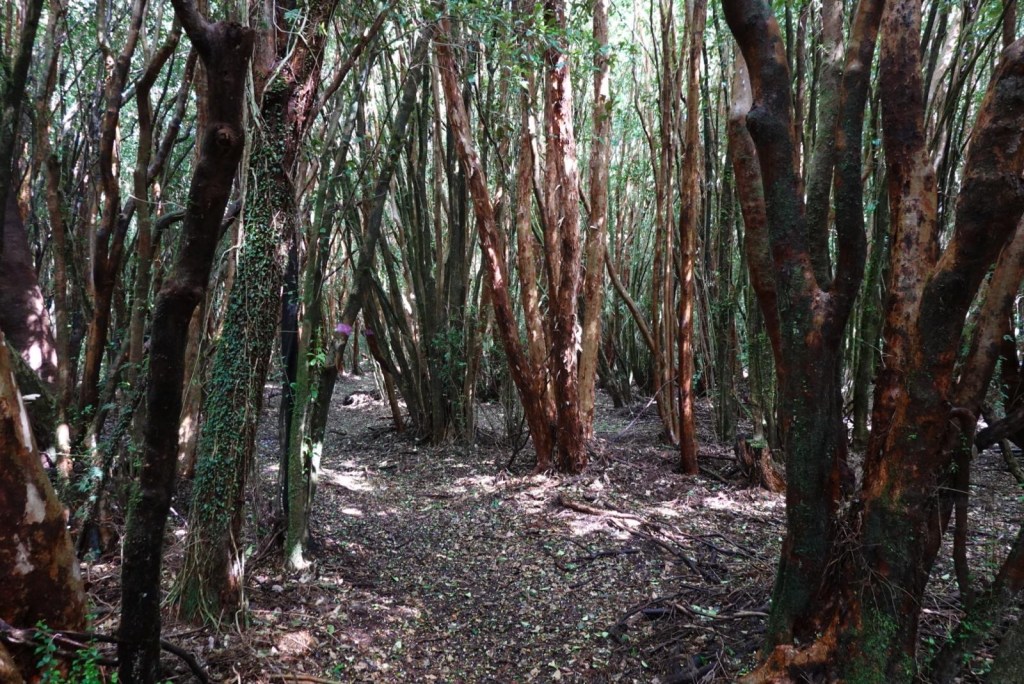
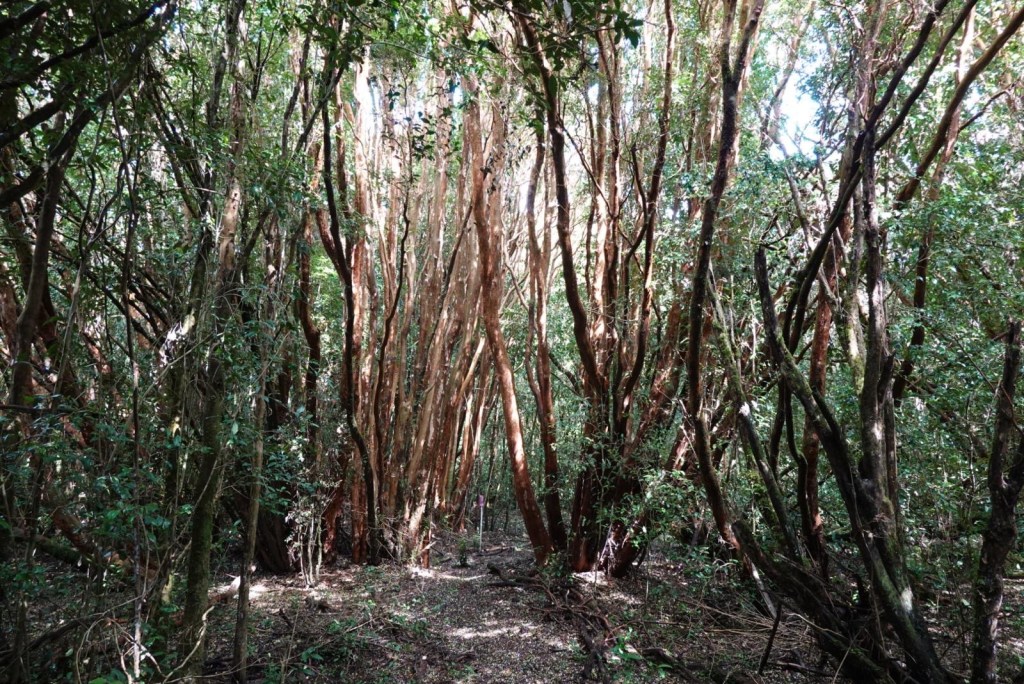
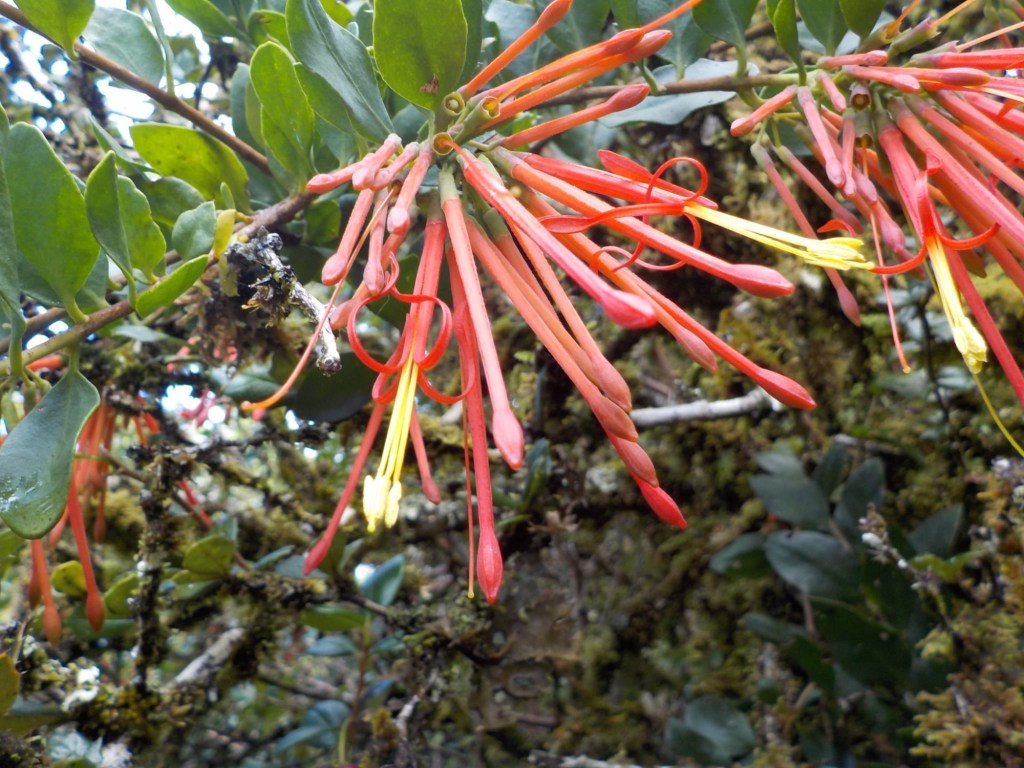
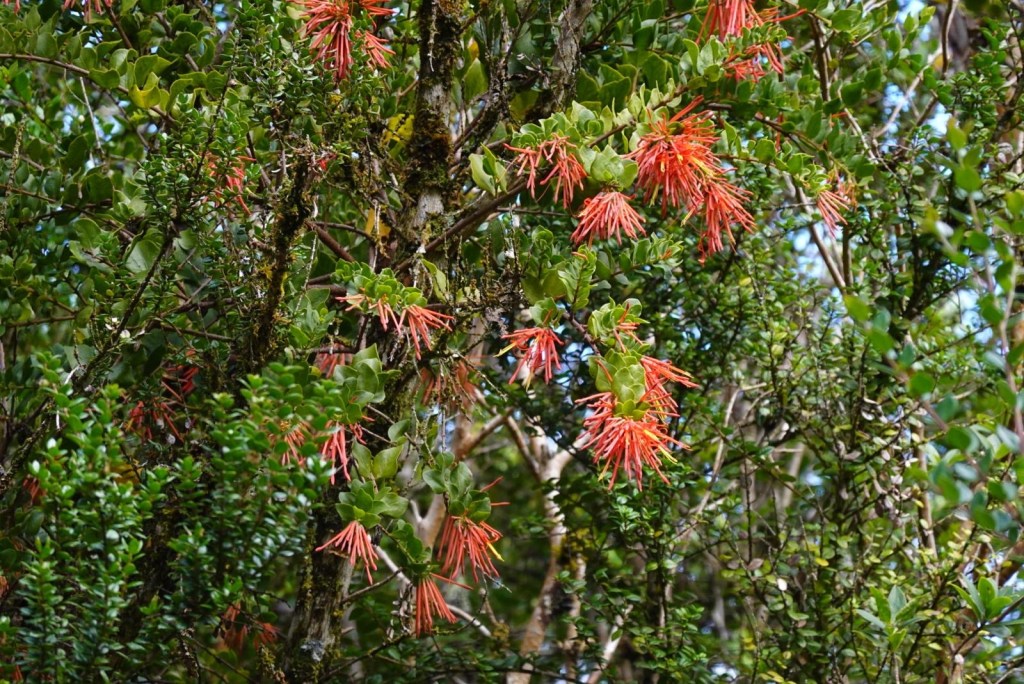
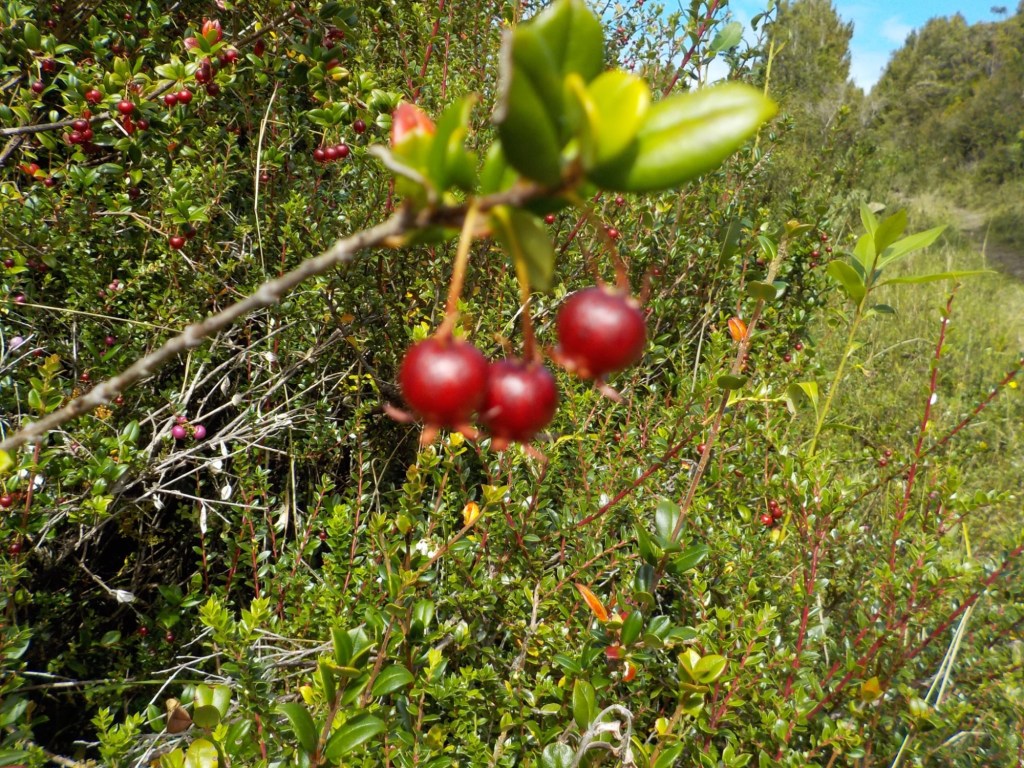
murta or murtilla (Ugni molinae)
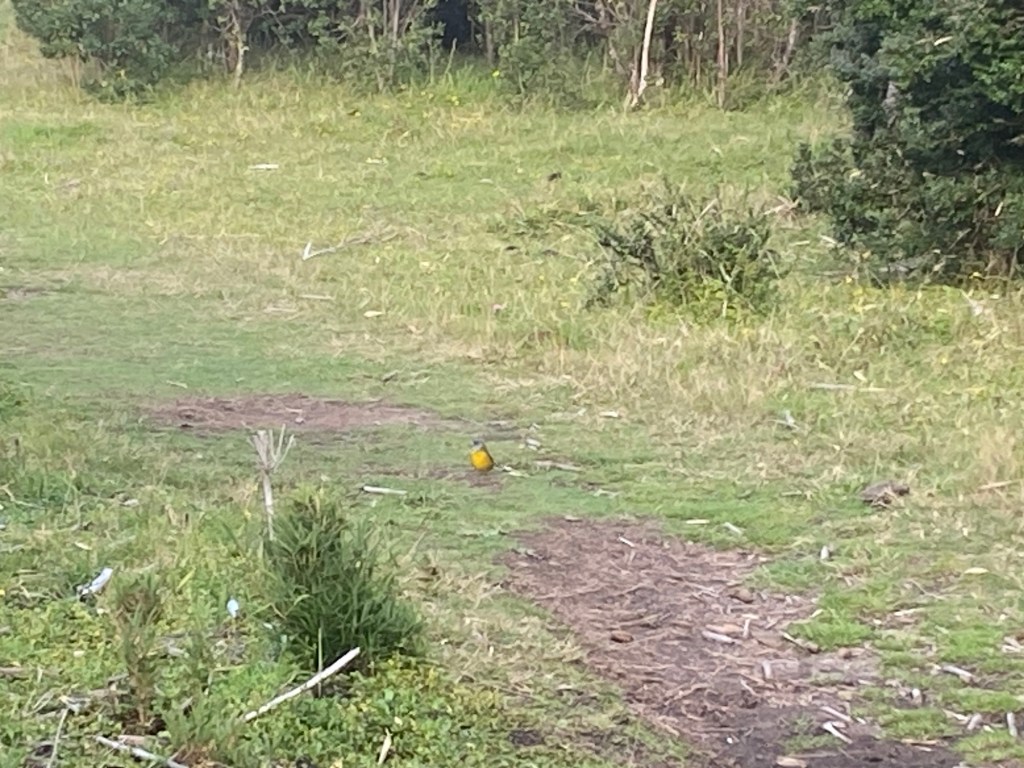
Grassland Yellow-Finch (Sicalis luteola)
Green-backed Firecrown (Sephanoides sephaniodes)

 sandaridesouthamerica.blog
Love to hear from you